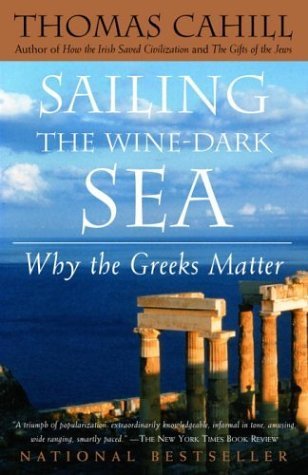
Sailing the Wine-Dark Sea: Why the Greeks Matter
Book Description
The echoes of ancient Greece resonate through time, shaping our world in ways we often overlook. Thomas Cahill embarks on a breathtaking journey, illuminating the triumphs, tragedies, and transformative ideas that forged the foundations of Western civilization. With vivid storytelling and insightful analysis, he reveals how Greek philosophy, art, and politics ignited a cultural revolution that still influences us today. As he navigates the turbulent seas of history, a powerful question lingers: what timeless lessons from the ancients can guide us in confronting the complexities of our modern lives?
Quick Book Summary
"Sailing the Wine-Dark Sea: Why the Greeks Matter" by Thomas Cahill is an engaging exploration of ancient Greek civilization and its enduring influence on Western culture. Cahill traces the remarkable journey of the Greeks, delving into their inventions in philosophy, democracy, art, and literature. Through vivid anecdotes, he reveals their curiosity, individualism, and sometimes paradoxical attitudes toward life. The book celebrates the intellectual spirit that drove the Greeks to ask profound questions about morality, beauty, and the nature of the universe. By examining their triumphs and failings, Cahill shows how Greek ideals, from Socratic inquiry to the Olympic pursuit of excellence, continue to shape the values and institutions of the modern world. Ultimately, the book invites readers to reflect on the lessons the ancient Greeks offer for navigating contemporary challenges.




Summary of Key Ideas
Table of Contents
The Birth of Critical Inquiry and Reason
Cahill opens his account by examining how the Greeks' relentless curiosity led to the birth of critical inquiry. Unlike neighboring cultures, ancient Greeks sought explanations for natural phenomena rooted in rational thinking, paving the way for philosophy and science. Figures like Socrates, Plato, and Aristotle questioned everything from ethics to the cosmos, insisting on dialogue and debate rather than dogma. This intellectual revolution established a foundation on which Western thought would be built for millennia.
The Legacy of Democracy and Civic Engagement
The development of democracy and civic participation distinguishes Greek society from many other ancient civilizations. In Athens, citizens—though a restricted class—governed themselves, creating unprecedented systems of law and public discourse. Cahill describes how public life was a central value, with both its rewards and shortcomings, including the exclusion of women and slaves. The Greek experiment with self-governance laid the groundwork for later political philosophies and modern democracies.
Celebration of Human Excellence and Individualism
A defining feature of Greek culture was its celebration of arete, or excellence, in all aspects of human endeavor. From the Olympic Games to the epics of Homer, the Greeks exalted human achievement and individuality. This focus on pursuing one's potential—balanced by humility in the face of fate—is presented as a central tenet that has inspired countless generations to strive for greatness, in arts, athletics, and intellect.
The Tensions Between Rationalism and Emotion
Cahill highlights the tensions inherent in Greek culture—between reason and emotion, freedom and order, logic and myth. Tragic playwrights like Sophocles and Euripides explored the nuances of the human condition, acknowledging both the power and peril of passion. These works underscored the limits of reason and the importance of empathy, creating a literary legacy that remains deeply resonant in the modern psyche.
The Enduring Influence of Greek Art and Storytelling
The book concludes by considering the enduring influence of Greek art, architecture, and literature. The Greek penchant for storytelling, visual harmony, and balanced proportion has permeated Western aesthetic ideals, from Renaissance painting to contemporary drama. Through these creations, Cahill demonstrates, the Greeks continue to inspire a search for meaning, beauty, and truth, offering lessons that remain relevant for navigating the vicissitudes of the modern world.
Download This Summary
Get a free PDF of this summary instantly — no email required.