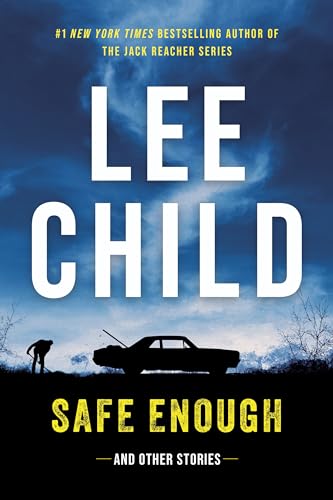
Safe Enough: Crime Stories by the Author of Jack Reacher
Book Description
What happens when safety is an illusion and trust becomes a dangerous gamble? In "Safe Enough," Lee Child delivers pulse-pounding short stories that plunge into the murky depths of crime and betrayal. Each gripping tale unravels the lives of characters teetering on the edge of moral chaos, where every decision could lead to salvation or destruction. With razor-sharp tension and unexpected twists, these narratives weave a chilling exploration of vulnerability in a world fraught with peril. Can anyone truly be safe enough?
Quick Book Summary
"Safe Enough: Crime Stories by the Author of Jack Reacher" is a collection of tightly woven thrillers where Lee Child explores the uneasy boundaries of trust, morality, and vulnerability. Each story plunges readers into scenarios where safety is fragile and social contracts are tested by crime and betrayal. Child deftly crafts characters who navigate unpredictable dangers, often forced to make snap decisions with lasting repercussions. The collection shifts between classic whodunits, gritty confrontations, and psychological suspense, highlighting characters teetering on the edge of right and wrong. With hallmark tension and surprising twists, "Safe Enough" probes the illusions of security and consequence, leaving readers questioning whether true safety is ever attainable in a world rife with deception and risk.



Summary of Key Ideas
Table of Contents
Illusion of Safety and Vulnerability
The collection opens by dissecting the layers of safety that people construct in their daily lives, often believing themselves insulated from harm. Lee Child crafts settings where the appearance of normalcy barely conceals lurking peril. In these stories, safety is a temporary state, easily shattered by unforeseen circumstances or cunning adversaries. Characters often discover that the routines and precautions they trust can dissolve in a moment, exposing them to danger and forcing them to reassess their understanding of "safe enough."
Moral Ambiguity and Difficult Choices
Within these precarious environments, characters must confront thorny moral choices. Lee Child explores scenarios where the line between right and wrong blurs, pushing protagonists into ethically complex situations. Whether an ordinary person is compelled to commit a crime for survival, or a detective bends the rules in pursuit of justice, each narrative pivots on crucial decisions. The stories emphasize that in high-stakes situations, morality is flexible—a survival tool as much as a guiding principle. Ultimately, these tales question whether being "good" ensures protection, or whether pragmatism wins out when lives are at risk.
Trust as a Risky Proposition
Trust emerges as both a lifeline and a liability throughout the book. Child’s characters frequently grapple with whom to trust—partners, witnesses, strangers, or even themselves. Betrayal is a constant threat, and misplaced faith can accelerate disaster. The dynamic tension in these stories often stems from the risk inherent in relying on others, as alliances shift and secrets are revealed. Trust, Child suggests, is not only a social asset but a dangerous gamble that can spell either salvation or ruin.
Consequences of Betrayal
The consequences of betrayal ripple through the collection, delivering both immediate thrills and lingering psychological effects. Each story demonstrates how deceit and double-crossing unravel not only personal relationships but also entire plans and investigations. Child examines the fallout from betrayal, showing how characters wrestle with shock, anger, and an urge for retribution. These moments drive the narratives to their most intense points, demonstrating that in a world saturated with risk, betrayal is both ubiquitous and transformative.
The Unpredictability of Human Nature
Finally, the stories probe the erratic, sometimes irrational nature of human behavior under stress. Lee Child’s characters, whether victims or perpetrators, are complex and unpredictable. Reactions to danger range from heroic to desperate, with some individuals rising to the occasion and others succumbing to panic or opportunism. This unpredictability keeps each narrative fresh and engaging, reinforcing the central theme: that in the face of crime and chaos, no one can ever be certain that they are truly “safe enough.”
Download This Summary
Get a free PDF of this summary instantly — no email required.