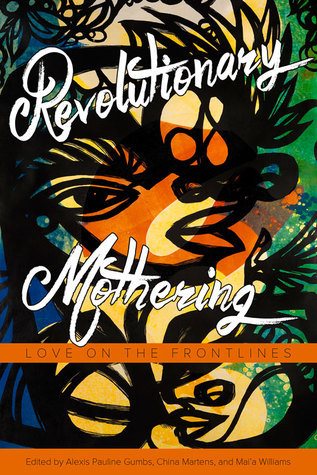
Revolutionary Mothering: Love on the Front Lines
Book Description
What does it mean to be a revolutionary mother in a world steeped in chaos? *Revolutionary Mothering: Love on the Front Lines* dives deep into the fierce and tender dimensions of motherhood that challenge societal norms. Through a powerful anthology of voices, this collection sparks a fire to redefine nurturing amidst struggle, resilience, and radical love. Experiences collide and intertwine, revealing the strength of maternal bonds that defy oppression and ignite change. As the pages unfold, the heartbeat of mothers rises to meet the call for justice and community. How far will love go to transform the future?
Quick Book Summary
"Revolutionary Mothering: Love on the Front Lines," edited by Alexis Pauline Gumbs, is a groundbreaking anthology that reimagines motherhood as an act of social resistance. Drawing from diverse experiences—Black, Indigenous, queer, and marginalized voices—contributors explore how maternal love and care can confront systemic injustices like racism, sexism, and economic inequality. The collection blends essays, poetry, and personal narratives, painting motherhood as an expansive, community-oriented practice that transcends biological ties. It challenges mainstream notions of what mothers should be, highlighting the political potency of nurturing and collective mothering, especially within marginalized communities. Ultimately, the book argues that mothering is a radical, revolutionary act capable of forging new forms of justice, resilience, and transformative power.


Summary of Key Ideas
Table of Contents
Mothering as Collective and Community Resistance
The anthology opens by situating mothering as a collective and communal practice that extends beyond conventional, individualistic definitions. Instead of viewing motherhood as the sole responsibility of a biological parent, contributors illustrate how communities—particularly those marginalized by race, sexuality, and class—create webs of support to nurture and protect each other. This shared labor of love becomes essential in contexts where mainstream society often fails to value or recognize certain families and caregiving structures. By highlighting stories from queer, Black, and Indigenous mothers, the book demonstrates how community mothering is revolutionary, forming resistant spaces of care and survival.
Redefining Motherhood Beyond Biology
Throughout the collection, voices disrupt the idea that motherhood is limited to those who give birth. The book insists on an inclusive interpretation that makes space for chosen families, non-biological caregivers, and those who "mother" from the margins. Parenting becomes an intentional, creative act open to anyone committed to sustaining and uplifting the next generation. These narratives assert that child-rearing in the context of adversity is inherently political and that mothering, as a concept, must be reclaimed from heteronormative, patriarchal frameworks to truly reflect the expansive reality of lived experience.
Motherhood and Social Justice Activism
Social justice activism pulses through the essays and poems, as contributors describe mothering as a site of resistance against systemic oppression. Motherhood is portrayed not only as a means of survival but also as a foundation for teaching activism, instilling values of justice, and sustaining communities through love. Through stories of mothers facing deportation, poverty, or state violence, the anthology reveals how fighting for their children’s futures becomes entwined with broader struggles for equity and dignity. Mothering itself is depicted as both a political stance and a tool for community organizing.
Navigating Oppression, Resilience, and Radical Love
Many contributors discuss the daily realities of raising children in hostile environments characterized by racism, homophobia, transphobia, and economic instability. Their narratives capture the profound resilience required to nurture children while simultaneously challenging pervasive social barriers. Acts of radical love, even amid scarcity, become transformative, modeling for children—and for the wider community—how to persist and flourish against the odds. The book illustrates that mothering in these contexts can be a healing practice, cultivating strength and hope amidst adversity.
The Transformative Power of Nurturing
Ultimately, the anthology argues that nurturing has transformative and revolutionary potential far beyond the family unit. By reframing mothering as an act that is both tender and fierce, it uplifts all those who labor to create a more just world for future generations. "Revolutionary Mothering" invites readers to imagine new futures built on radical care, solidarity, and the recognition of mothering’s power to challenge and reimagine the status quo. The work serves as both a celebration of maternal creativity and a call to collective action.
Download This Summary
Get a free PDF of this summary instantly — no email required.