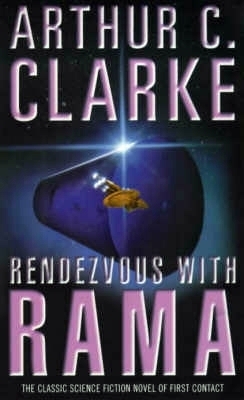
Rendezvous with Rama
Book Description
A mysterious object hurtles through the solar system, and all of humanity holds its breath. When a team of explorers boards the monstrous, enigmatic spacecraft known as Rama, they uncover breathtaking landscapes and mind-bending technology that could alter the course of history. Tensions rise as they battle the clock and their own fears, driven by the question: what secrets does Rama hold? Each discovery leads to more questions, blurring the lines between wonder and dread. Can they unlock the mysteries of this alien titan before it vanishes forever? Will they learn the truth, or is some knowledge better left untouched?
Quick Book Summary
"Rendezvous with Rama" by Arthur C. Clarke is a classic science fiction novel that explores humanity’s first contact with an enigmatic alien artifact. When a massive cylindrical object, designated Rama, enters the solar system, an exploration team is dispatched to investigate before it disappears again. Inside, they find a wondrous, self-contained world brimming with unfathomable alien technology but devoid of life—at least at first glance. As the explorers unravel Rama's secrets, they are tantalized by the sheer scale and complexity of the object. The novel meditates on the limits of human understanding and the nature of intelligence, portraying humanity’s awe, curiosity, and humility in the face of the unknown. With its meticulous attention to detail, "Rendezvous with Rama" captures the sense of wonder and danger inherent in confronting an alien civilization's legacy.


Summary of Key Ideas
Table of Contents
First Contact with the Unknown
After a catastrophic asteroid strike in the early 22nd century, humanity becomes vigilant about tracking objects in space—leading to the discovery of a massive, fast-moving cylinder entering the solar system. Christened "Rama," its origins and intentions are a mystery. The United Planets Space Survey, under Captain Bill Norton, is tasked with intercepting Rama before it leaves the sun's vicinity. The mission reflects the cautious optimism and scientific zeal that characterize humanity’s drive to understand the cosmos, setting in motion an unprecedented first-contact scenario.
Exploration and the Nature of Discovery
Upon entering Rama, the crew encounters a vast, cylindrical world lit by artificial sunlight and lined with intricate, unfamiliar structures. As they traverse the landscape—"cities" on the walls, deep trenches, and a mysterious cylindrical sea—the explorers are struck by the scale and elegance of alien design. The environment is initially inert, lending an uncanny stillness to their journey. Gradually, signs of internal mechanisms and enigmatic robotic entities—"biots"—emerge, hinting at Rama’s hidden life and purpose.
Alien Technology and Mystery
Encounters with Rama’s technology leave the crew awestruck and wary. The object’s systems activate with increasing energy, revealing cycles tied to its solar encounter. The explorers discover the biots cleaning and maintaining Rama, but are unable to decipher their full intent or communication methods. Each new discovery, from the ice-bound “cylindrical sea” to the dynamic shifts in the environment, raises more questions than answers, deepening the novel’s tension between curiosity and fear.
Human Unity and Tension in the Face of the Other
Interpersonal and political tensions arise among the crew and Earth's governments as speculation grows over Rama’s potential threat or value. The temptation to interfere, sabotage, or exploit Rama is ever-present, testing the explorers’ ethics and sense of global unity. The pressure of time builds as Rama’s departure approaches, compelling the crew to weigh risk against discovery, and underscoring broader themes of human cooperation in the face of the unknown.
Limits of Human Understanding
When Rama resumes its journey out of the solar system, humanity is left with more questions than answers. The novel ends with a reflection on the limits of human comprehension, as even the best scientific minds cannot fully penetrate Rama's mysteries. Clarke invites readers to contemplate cosmic humility: our place in the universe, the possible existence of vastly superior intelligences, and the enduring drive to reach out—even when true understanding remains elusive.
Download This Summary
Get a free PDF of this summary instantly — no email required.