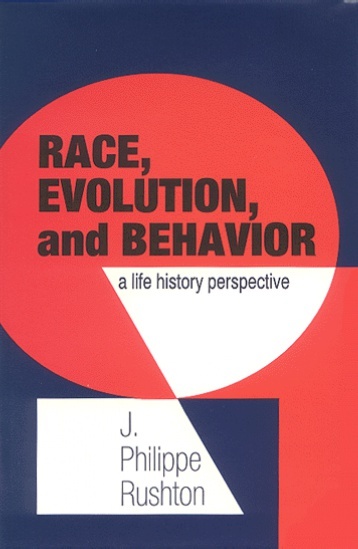
Race, Evolution, and Behavior: A Life History Perspective
Book Description
What if our very survival hinges on understanding the complex interplay of race, evolution, and behavior? J. Philippe Rushton's groundbreaking exploration dives deep into how human behaviors and life histories are shaped by evolutionary forces. With compelling insights and eye-opening data, this thought-provoking work challenges prevailing ideas and ignites crucial conversations about race and biology. Each page reveals the intricacies of human nature and the biological underpinnings that define us. As society grapples with issues of identity and division, what truths will emerge about our shared humanity?
Quick Book Summary
Race, Evolution, and Behavior: A Life History Perspective by J. Philippe Rushton explores how evolutionary biology influences human behavioral differences among races, using a life history theoretical framework. Rushton asserts that observed group variations in traits like intelligence, sociability, aggression, sexual behavior, and fertility are rooted in evolutionary adaptations. He presents an array of psychological and biological data to argue that different races developed distinct 'life history strategies'—patterns of development, reproduction, and parenting—driven by their ancestral environments. Rushton's work has ignited debate for its controversial claims regarding the genetic basis of group differences, challenging conventional understandings of race, social behavior, and equality. The book remains influential and widely discussed, provoking both criticism and support within scientific, political, and ethical conversations.


Summary of Key Ideas
Table of Contents
- 1. Life history theory and its application to humans
- 2. Genetic roots of behavioral and psychological differences
- 3. Patterns in intelligence, fertility, and social behavior
- 4. Evolutionary explanations for racial group differences
- 5. Societal implications and controversies of biological perspectives
Life history theory and its application to humans
Rushton frames his argument around life history theory, an evolutionary biology model describing how organisms allocate resources to growth, reproduction, and survival. He posits that human races have adapted to their ancestral environments by evolving unique life history strategies—some favoring faster maturation and higher reproduction rates, while others emphasize slower development, longer parenting, and fewer offspring with greater parental investment. According to Rushton, these strategies manifest in measurable differences in onset of puberty, longevity, reproductive behaviors, and other life milestones.
Genetic roots of behavioral and psychological differences
The author compiles and interprets data on psychological and behavioral traits, such as intelligence, aggression, sociability, law-abidingness, and sexuality. Drawing on studies from psychology and anthropology, he claims consistent and statistically significant differences in test scores, temperament, crime rates, and family stability among different racial groups. Rushton attributes these trends primarily to evolutionarily-driven adaptations rather than solely to culture or environment. He maintains that behavioral differences can be mapped onto life history continua.
Patterns in intelligence, fertility, and social behavior
Rushton delves into the genetic basis for these variations, referencing heritability studies, endocrinological data, and correlations involving brain size, hormone levels, gestation periods, and other biological markers. He argues that certain environmental conditions facing ancestral populations led to adaptations affecting intelligence, brain development, and social behaviors. Natural selection, he asserts, influenced the emergence of traits best suited to either more stable or harsher, unpredictable ecologies, reinforcing group-level genetic tendencies over generations.
Evolutionary explanations for racial group differences
Critically, Rushton extends his evolutionary framework to controversial claims regarding the origins and persistence of racial inequalities. He contends that much of the global variation in socioeconomic success, crime rates, and family structures can be partially explained by inherited, biologically-based differences shaped by deep evolutionary processes. The work frequently challenges prevailing social science views that emphasize environment and culture as primary explanatory variables for group disparities.
Societal implications and controversies of biological perspectives
The book concludes by reflecting on the broader implications of these theories for science, policy, and societal discourse. Rushton acknowledges the contentious nature of his work and urges open scientific inquiry while cautioning against misapplication of research for discrimination. By linking biology, race, and behavior, he invites ongoing debate over the ethical and empirical dimensions of evolutionary explanations for human diversity.
Download This Summary
Get a free PDF of this summary instantly — no email required.