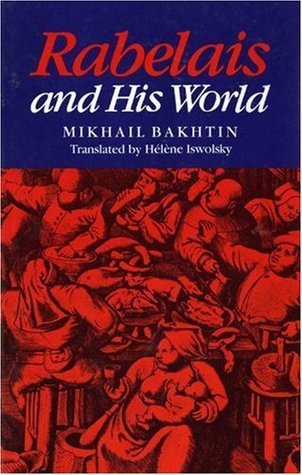
Rabelais and His World
Book Description
Step into a world where laughter and chaos collide, where laughter reigns supreme in the face of authority. Mikhail Bakhtin unveils the vibrant spirit of the Renaissance, exploring the subversive power of the grotesque and carnival in Rabelais' works. Through raucous feasts and liberating satire, the book uncovers the fierce dynamic between popular culture and the rigid structures of society. As voices clash and hierarchies crumble, the essence of human folly and joy bursts forth. How can the spirit of Rabelais inspire a revolution of laughter in our own troubled times?
Quick Book Summary
"Rabelais and His World" by Mikhail Bakhtin is a profound analysis of the works of François Rabelais, focusing on the cultural and philosophical significance of humor, grotesque realism, and carnival in Renaissance society. Bakhtin illuminates how Rabelais' writings celebrate the power of the collective body and folk culture to subvert established norms and authorities. Through the concept of the "carnivalesque," the book showcases a world turned upside down, where laughter, parody, and excess challenge hierarchy and repression. Bakhtin’s work is not just literary criticism, but a sweeping theory of how popular culture, via the grotesque and the festive, can liberate societies. "Rabelais and His World" inspires readers to recognize laughter as a force for renewal and resistance in their own times.




Summary of Key Ideas
Table of Contents
The Carnivalesque and Social Inversion
Bakhtin’s exploration centers on the concept of the carnivalesque—a vibrant mode of social life that erupts during festivals, subverting official norms and hierarchies. In the world Bakhtin describes, carnival is a communal spectacle: hierarchies are overturned, the high and the low intermingle, and society momentarily experiences freedom from repression. Through Rabelais’ depictions of fairs and feasts, Bakhtin observes a culture where the boundaries between people are dissolved in collective laughter, engendering a spirit of equality and grotesque celebration.
Grotesque Realism and the Body
Grotesque realism forms a crucial pillar of Bakhtin’s analysis. Rabelais’ focus on the human body—its functions, appetites, and materiality—is not merely comic, but philosophical. The grotesque body, ever expanding and interconnected with the world, becomes symbolic of unfinished transformation and renewal. Deformity and excess, celebrated through bodily images, defy aesthetic and moral constraints. For Bakhtin, this focus disrupts established ideals, making the body a vital site of resistance against authority and closed systems.
Ambivalent Laughter as Subversion
Laughter, according to Bakhtin, is deeply ambivalent: it is both liberating and communal, yet also capable of exposing human folly and leveling pretensions. This laughter, rooted in the folk tradition, is not trivial but subversive. It undermines grand narratives of power by revealing their provisional, changeable nature. By embracing ambivalence, Rabelais’ humor becomes a weapon against dogmatism and censorship, creating a literary space where contradiction flourishes and new meanings are born.
The Interaction Between Official and Popular Cultures
Bakhtin draws a strong distinction between the "official" culture of the Renaissance, governed by authority and restraint, and the unruly "popular" culture of the marketplace. His analysis reveals how Rabelais, by integrating the language of the people—profane, irreverent, and free—disrupts the dominance of official discourse. The interaction between these cultures in Rabelais’ work models a dynamic tension that allows for critique, transformation, and the assertion of human plurality.
Laughter as Liberation and Renewal
The enduring legacy of Bakhtin’s study lies in his framing of laughter as a transformative, revolutionary force. Laughter destroys to renew: it erodes fear, shakes off old systems, and affirms the vitality of life. In times of repression or crisis, the spirit of Rabelais—and Bakhtin’s interpretation—encourages us to reclaim the subversive joy at the heart of humanity. It is through laughter, celebration, and the grotesque that societies can imagine new possibilities and challenge the grip of authority.
Download This Summary
Get a free PDF of this summary instantly — no email required.