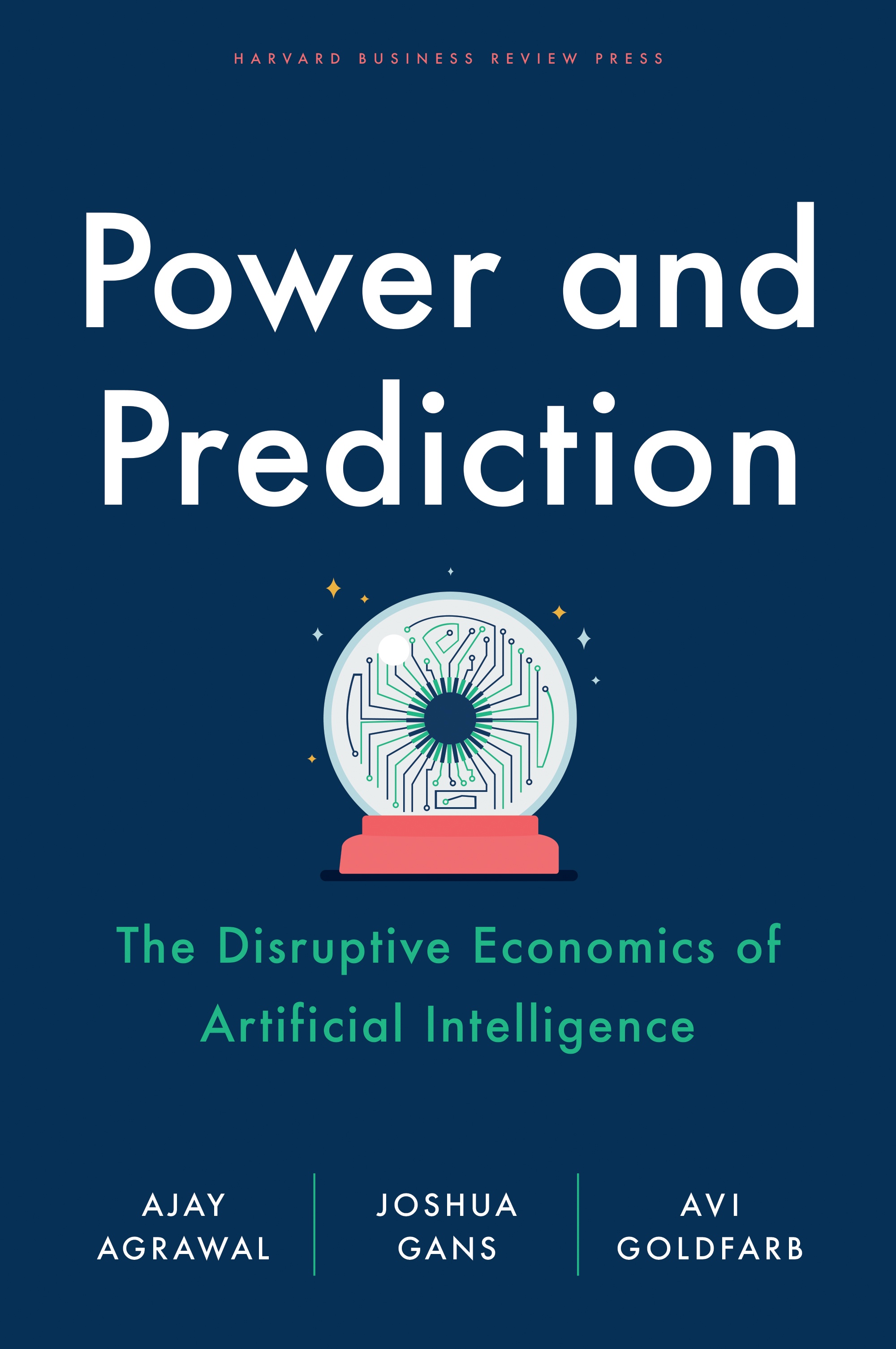
Power And Prediction: The Disruptive Economics of Artificial Intelligence
Book Description
Welcome to the frontier of tomorrow, where the lines between prediction and power blur in a race against time. "Power and Prediction" deconstructs the revolutionary impact of artificial intelligence on economies and societies, revealing how prediction is becoming the new currency. As industries grapple with sudden shifts and unforeseen consequences, the stakes rise—transforming entire business landscapes and challenging the very framework of decision-making. With compelling insights and urgent questions, this book urges you to confront a critical reality: Can humanity harness the predictive prowess of AI to shape a better future, or will it unleash chaos in its wake?
Quick Book Summary
"Power and Prediction: The Disruptive Economics of Artificial Intelligence" by Ajay Agrawal explores how AI-driven prediction transforms industries, alters the nature of power, and challenges established economic paradigms. The book argues that prediction is the fundamental capability AI excels at, enabling more accurate forecasts in fields ranging from medicine to finance. However, as prediction becomes cheap and plentiful, processes, rules, and business models built around expensive and uncertain predictions must adapt or face obsolescence. The authors discuss winners and losers in this new landscape, the importance of complementary changes to realize AI’s full potential, and the societal implications of rapid technological shifts. Ultimately, the book prompts readers to consider whether humanity can harness AI’s powers for positive change or if unchecked disruptions will undermine long-standing institutions.



Summary of Key Ideas
Table of Contents
The Transformation of Prediction into a Commodity
The fundamental premise of the book is that artificial intelligence, at its core, is a powerful prediction technology. AI dramatically increases the speed, accuracy, and scalability of forecasts, turning what was once an expensive and uncertain process into an abundant and cheap resource. This shift redefines the role of prediction across the economy, impacting every industry reliant on informed guesswork—from estimating consumer demand to anticipating machinery failures or diagnosing patients. As a result, decision-makers—from CEOs to clinicians—must adapt strategies in the face of a new economic order where data-driven predictions drive value creation.
The Shift in the Balance of Power
The proliferation of AI-led prediction brings about a marked redistribution of power. Organizations and individuals who can harness AI effectively gain a competitive edge, potentially seizing control of entire markets or creating new ones. The book illustrates how dominant firms invest in and deploy AI to optimize supply chains, personalize services, and even automate core business functions. This raises critical questions about market concentration, competitive dynamics, and the emergence of new gatekeepers. Agrawal emphasizes that access to data, talent, and computational resources becomes a key source of power, accentuating inequalities unless carefully managed.
The Need for Complementary Innovations
However, the benefits of AI prediction are not automatic or universal. The authors stress the crucial need for complementary innovations—organizational changes, new workflows, and revised regulatory frameworks—to fully unlock AI's value. Existing systems are often built around the limitations of human judgement, so businesses must redesign processes and even entire business models to integrate constant, high-quality prediction. Without these complementary changes, the deployment of AI risks inefficiency or outright failure, as legacy structures struggle to adapt.
Decision-Making Redefined by AI
AI's disruptive power goes beyond boosting efficiency; it reshapes decision-making itself. With AI delivering better, faster forecasts, the traditional boundaries between who predicts, who decides, and who acts begin to blur. The disaggregation of these roles leads to new decision architectures, where machines and humans collaborate or even compete in rendering judgements. The implications stretch across governance, finance, healthcare, and more, as leaders contend with how to balance human intuition with algorithmic precision—and as ethical considerations around transparency, bias, and accountability grow more urgent.
Societal Risks and Opportunities
Finally, the societal dimension of AI-driven prediction looms large. While AI has potential for immense positive impact—improving productivity, advancing science, and solving complex problems—it also introduces risks. Rapid disruption can leave workers and businesses behind, exacerbating inequality or eroding social trust. The authors advocate for thoughtful policy interventions, inclusive innovation, and vigilant oversight to ensure that AI’s predictive prowess is harnessed for broadly shared prosperity, not instability or harm. Ultimately, the book calls for collective foresight and responsibility as humanity navigates the power and prediction at AI’s frontier.
Download This Summary
Get a free PDF of this summary instantly — no email required.