
Point and Line to Plane
Book Description
Colors collide and shapes dance in a mesmerizing exploration of artistic expression. Kandinsky unveils the emotional depth hidden within the simplest lines and forms, revealing how they connect to the soul and resonate with human experience. This is not just a treatise on abstraction; it’s a revolutionary manifesto that transforms perception and challenges conventions. Each chapter pulsates with the vibrancy of ideas, inviting creativity to break free from the mundane. As tensions between art and reality blur, one question lingers: Can the language of shapes and colors unlock the mysteries of our deepest emotions?
Quick Book Summary
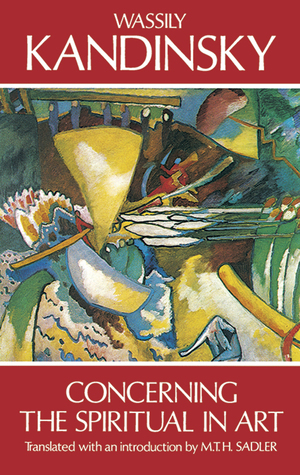
"Point and Line to Plane" by Wassily Kandinsky is a groundbreaking exploration of the fundamental elements of abstract art. Through the careful dissection of points, lines, and planes, Kandinsky delves into how these basic forms resonate deeply with human emotions and perceptions. He argues that visual elements, when consciously composed, possess an expressive power capable of evoking spiritual responses independent of representation. Integrating philosophical ideas with artistic practice, Kandinsky presents a bold vision: art as a language capable of communicating inner experiences through pure form and color. The book challenges readers to see beyond the surface of visual reality, inviting artists and viewers alike to participate in the alchemy of artistic creation. Ultimately, Kandinsky's manifesto transcends technical analysis, offering a profound meditation on the spiritual promise of abstraction.

Summary of Key Ideas
Table of Contents
Emotional Resonance of Forms
Kandinsky begins his treatise by reducing artistic elements to their most basic forms: the point, the line, and the plane. He meticulously examines how a point, once set into motion, becomes a line, and further, how lines interact to define planes. Each form is imbued with expressive qualities, serving as a conduit for emotion. Kandinsky argues that even a single point, depending on its placement within the composition, holds immense psychological and compositional weight. This approach leads readers to appreciate the latent energy within even the simplest visual gestures, fostering a new awareness of art’s building blocks.
The Language of Abstraction
The heart of Kandinsky’s thesis lies in abstraction’s communicative potential. He asserts that true artistic creation is liberated from the traditional task of representation. Instead, forms and colors function like words in a language, communicating directly with the viewer’s soul. By stripping away external associations, Kandinsky believes artists tap into universal feelings and ideas, transforming visual art into a pure dialogue of inner experiences. This shift challenges entrenched conventions and invites both creators and audiences to seek fulfillment in the emotive power of abstraction.
Dynamic Tensions in Composition
Central to Kandinsky’s analysis is his exploration of dynamic tensions within compositions. The interaction between points and lines, the opposing forces of angular and curved forms, and the strategic use of space all generate rhythm and movement. Kandinsky draws analogies to music, suggesting visual art can orchestrate contrasts and harmonies that stir the viewer emotionally. Through such dynamic relationships, artworks become living organisms, resonating with intensity and vitality that transcend fixed meaning.
The Spiritual Role of the Artist
Kandinsky places great responsibility on the artist, whom he describes as both a visionary and a spiritual messenger. The artist’s role is to penetrate the material world, extracting profound spiritual truths through the manipulation of abstract elements. Kandinsky equates this creative process to alchemy, emphasizing intuition, insight, and a devotion to inner necessity. The artist’s spiritual sensitivity allows them to construct compositions that communicate at levels deeper than intellect, forging pathways between the outer world and the inner life.
The Evolution of Artistic Perception
Concluding his manifesto, Kandinsky reflects on the evolving perception of art throughout history. He charts the rise of abstraction not as a rejection of tradition, but as a natural and necessary expansion of the artist’s expressive toolkit. He anticipates that as audiences acclimate to the language of pure form and color, new modes of seeing and feeling will emerge. Kandinsky’s vision is optimistic: through the reduction of art to its elemental syntax, both artists and viewers are empowered to unlock profound emotional and spiritual mysteries behind visual experience.
Download This Summary
Get a free PDF of this summary instantly — no email required.