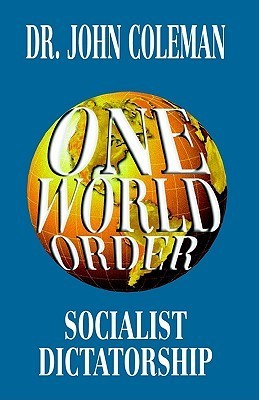
One World Order: Socialist Dictatorship
Book Description
What if a shadowy elite conspired to unite the world under a single, oppressive regime? In "One World Order: Socialist Dictatorship," John Coleman unveils a chilling narrative of power, deception, and the relentless quest for control. As governments crumble and freedom teeters on the brink, the stakes soar to unimaginable heights. With whistleblowers risking everything and resistance movements igniting across the globe, the battle between liberty and tyranny unfolds. Will humanity fight back against the looming darkness, or are they already ensnared in a web of totalitarianism from which there is no escape?
Quick Book Summary
"One World Order: Socialist Dictatorship" by John Coleman explores the theory that a clandestine group of global elites is working methodically to undermine nations and erode individual freedoms in pursuit of a unified, authoritarian world government. Drawing from historical events, political maneuverings, and the testimonies of alleged whistleblowers, Coleman alleges a web of interlocking organizations and agendas designed to concentrate power into the hands of the few. The book discusses how social, economic, and cultural instruments are manipulated to condition populations, quash dissent, and usher in a new era of centralized control. Skeptical of mainstream narratives, the book encourages readers to question governmental actions and remain vigilant against the slow but steady encroachment of totalitarian structures under the pretext of global cooperation, crisis management, or progress.



Summary of Key Ideas
Table of Contents
The Manipulation of Global Events
Coleman contends that history is driven less by spontaneous events and more by the deliberate manipulation of crises engineered by shadowy networks of elites. Wars, economic collapses, and even social unrest are examined as outcomes not of natural progression, but rather of calculated strategies meant to destabilize societies. By manufacturing threats and emergencies, these powers create a climate of fear and dependency, ultimately justifying increased governmental intervention and a loss of public freedoms.
Elites and Secret Societies
Central to Coleman’s thesis is the role of secret societies and transnational organizations, which he alleges form a coordinated hierarchy steering global affairs. These entities, including alleged cabals, international commissions, and think tanks, are depicted as the braintrusts behind shifts in world politics. The author lays out the supposed methods by which these groups recruit, indoctrinate, and place key loyalists within national governments, international agencies, and major media outlets to shape policy and opinion worldwide.
Mechanisms of Social Engineering
Social engineering, the book argues, is employed on a grand scale to mold public consciousness. Through education, media, and entertainment, populations are conditioned to accept policies eroding individual rights and nation-state autonomy. Coleman points to examples of shifting social values, the normalization of surveillance, and the framing of dissent as extremist. This “soft power” is, in his view, as crucial as any legislative or military measure in advancing the one world order agenda.
Suppression of Dissent and Whistleblowers
Those who oppose or expose this agenda—whistleblowers, independent journalists, dissidents—face severe consequences, Coleman claims. The book chronicles instances where resistance movements or outspoken critics are marginalized, discredited, or silenced outright, either through legal maneuvers or more covert actions. The chilling effect on free speech, civil liberties, and investigative journalism is highlighted as a warning sign of growing authoritarianism.
The Erosion of National Sovereignty
Ultimately, Coleman presents the erosion of national sovereignty as the linchpin of the one world order scheme. By subsuming local governance under supranational bodies and treaties, independence is sacrificed for the illusion of safety or prosperity. The author posits that only through awareness, civic engagement, and persistent vigilance can individuals hope to resist the advance of a centralized, socialist world government that, he warns, would stifle human freedom on a global scale.
Download This Summary
Get a free PDF of this summary instantly — no email required.