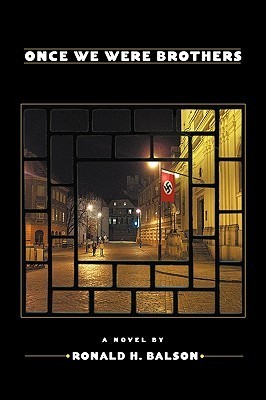
Once We Were Brothers
Book Description
Two men, once inseparable brothers, are drawn into a whirlwind of betrayal and dark secrets that transcend decades and continents. When an elderly Holocaust survivor seeks justice, a gripping legal battle unfolds, unearthing buried truths that challenge every bond of loyalty. As their shared past collides with the present, the lines between victim and perpetrator blur, and the haunting shadows of history threaten to consume them both. With each revelation, the stakes rise and loyalties are tested. Can a quest for closure restore a shattered legacy, or will it ignite a firestorm of vengeance that cannot be contained?
Quick Book Summary
"Once We Were Brothers" by Ronald H. Balson is a gripping historical novel that explores the enduring impact of the Holocaust on survivors and their families. The story revolves around Ben Solomon, an elderly Jewish man who accuses Chicago philanthropist Elliot Rosenzweig of being Otto Piatek, a former Nazi officer responsible for the destruction of Ben’s family. With the help of attorney Catherine Lockhart and investigator Liam Taggart, Ben pursues a legal case to expose the truth. As the narrative alternates between 1940s Poland and present-day Chicago, secrets unravel and moral complexities emerge, forcing all involved to confront the blurred lines between justice and vengeance. The novel probes forgiveness, loyalty, and the haunting legacy of memory.


Summary of Key Ideas
Table of Contents
The Enduring Trauma of the Holocaust
The narrative opens in contemporary Chicago, where Ben Solomon crashes a charity event to publicly accuse the wealthy benefactor Elliot Rosenzweig of being Otto Piatek, a former Nazi officer. His claim stuns the crowd and Elliot, who vehemently denies any such identity. Desperate for justice, Ben enlists lawyer Catherine Lockhart, sharing the long and painful story of his childhood in Zamosc, Poland. There, Ben and Otto grew up as close as brothers until Otto’s family converted to Catholicism and aligned themselves with the occupying Nazis during World War II.
Betrayal and Broken Brotherhood
Ben’s recollection painstakingly details the bond he shared with Otto, a relationship founded on loyalty and shared adversity. As the Nazis invaded Poland, the two families took divergent paths: Ben’s Jewish family faced escalating persecution, while Otto found favor among the Germans and began to embrace their ideology. Otto’s transformation, driven by survival instincts and moral ambiguity, sowed the seeds of ultimate betrayal and personal devastation for Ben’s family.
The Search for Truth and Justice
Catherine Lockhart’s involvement brings a modern legal and ethical lens to Ben’s pursuit. Her skepticism gives way to empathy as Ben recounts the horrors his family endured—deportation, murder, and separation—all at the hands of someone he once loved as a brother. Catherine and her partner, Liam Taggart, navigate significant obstacles to gather evidence and advocate for Ben’s case in a court of law. Their pursuit highlights broader issues of delayed justice for Holocaust survivors and the enduring scars of genocide.
The Complexities of Forgiveness and Revenge
As the legal battle intensifies, truths emerge that upend assumptions and challenge every character’s beliefs. The novel delves into the psychological and moral complexity of confronting one’s past, weighing the destructive potential of vengeance against the healing possibilities of forgiveness. Characters struggle with guilt, shame, and the longing for closure, illustrating how trauma can ripple across generations and reshapes identities.
The Power of Memory and Storytelling
By weaving together memories and legal drama, Balson underscores the potency of storytelling in bearing witness to atrocity and seeking reconciliation. In the end, Ben’s struggle is not merely for retribution but for recognition of truth and the preservation of memory. As secrets are exposed and identities reckoned with, the story poignantly affirms the necessity of confronting the past to achieve a measure of justice and peace for both the living and the dead.
Download This Summary
Get a free PDF of this summary instantly — no email required.