
On the Genealogy of Morals / Ecce Homo
Book Description
What if morality is just a mask for power? In "On the Genealogy of Morals / Ecce Homo," Friedrich Nietzsche unearths the tumultuous roots of our ethical beliefs, unraveling the web of guilt, guiltlessness, and the struggle for authenticity. He challenges the very essence of good and evil, exposing the shadows lurking behind cultural values. As humanity grapples with its own contradictions, Nietzsche's provocative insights ignite a philosophical fire. Dive into a world where truth is a battleground, and self-discovery is perilous. Are you ready to confront your own moral compass and the foundations upon which it stands?
Quick Book Summary
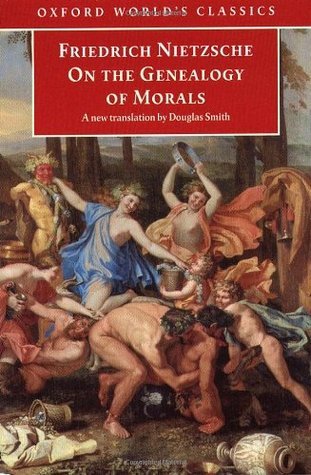
Friedrich Nietzsche's "On the Genealogy of Morals / Ecce Homo" challenges conventional understandings of morality, tracing ethical values to their origins in power struggles and psychological needs rather than universal truths. In "On the Genealogy of Morals," Nietzsche examines how concepts of guilt, good, and evil stem from cultural and historical developments—particularly the resentment-driven 'slave morality' that rose in response to dominant, powerful classes. Nietzsche relentlessly interrogates the motives behind our moral beliefs, revealing how self-denial and guilt have been valorized by religious and societal frameworks. In "Ecce Homo," he turns inward, exploring his own development and philosophy with witty self-reflection, advocating for authenticity, skepticism, and life-affirmation. Together, these works represent Nietzsche's radical critique of morality, an invitation to reevaluate our values and seek greater intellectual and spiritual freedom.




Summary of Key Ideas
Table of Contents
The Historical Roots and Evolution of Moral Concepts
Nietzsche begins his analysis by tracing the genealogy of our moral concepts, emphasizing that values such as 'good' and 'evil' are not innate or absolute, but rather shaped through complex historical and social processes. He argues that morality is fundamentally tied to power: those in control dictate what is considered virtuous, often to justify their dominance. Over time, the less powerful respond by redefining moral virtues, turning disadvantage into moral superiority and laying the foundations for a radically different set of values.
Master Morality vs. Slave Morality
A central theme is Nietzsche’s distinction between 'master morality' and 'slave morality.' Master morality arises from the strong, noble, and self-affirming individuals who identify 'good' with power, vitality, and excellence. In contrast, slave morality develops among the oppressed, who—out of resentment—reframe their weakness as moral virtue, privileging humility and compassion. This inversion, according to Nietzsche, results in a morality that praises self-restraint and denigrates natural human instincts.
The Psychology of Guilt and Conscience
Nietzsche further delves into the psychological dimensions of guilt and conscience. He contends that the evolution of society required internalizing aggression that could no longer be expressed externally due to social constraints. This internalization, particularly under religious influence, breeds a sense of guilt and self-punishment. The concepts of sin and bad conscience become psychological tools for controlling behavior, enforcing conformity, and maintaining the prevailing moral order.
The Critique of Ascetic Ideals and Religion
A major object of Nietzsche’s critique is ascetic ideals, especially as embodied in Christian morality. He sees self-denial, the celebration of suffering, and the devaluation of earthly life as life-negating forces. Religion, Nietzsche argues, transforms resentment into virtue, justifying weakness and passive acceptance. This undermines human flourishing, creativity, and the affirmation of life’s complexities and passions. Through his analysis, Nietzsche urges a reexamination of why certain values are held aloft, and who benefits from them.
Self-Reflection, Authorship, and the Affirmation of Life
In "Ecce Homo," Nietzsche applies his critical approach to his own works and philosophy. He reflects self-ironically on his intellectual journey, challenging the reader to confront the difficulties and provocations of his thought. Embracing honesty, skepticism, and self-overcoming, Nietzsche calls for an affirmation of life and individuality beyond conventional good and evil. The combined books serve as both searing critique and philosophical autobiography, encouraging profound self-examination and the courageous creation of new values.
Download This Summary
Get a free PDF of this summary instantly — no email required.