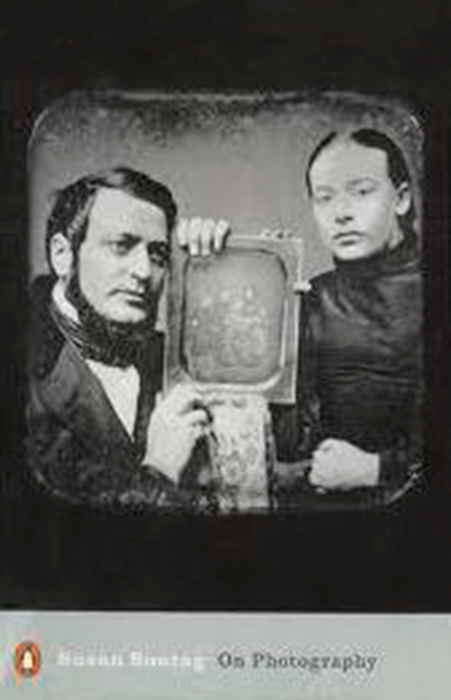
On Photography
Book Description
What if every snapshot told a story beyond perception? In "On Photography," Susan Sontag delves into the mesmerizing yet unsettling world of images, unraveling the profound impact of photography on art, culture, and our very understanding of reality. Each essay ignites a fiery conversation about the ethics of viewing, the nature of truth, and the relentless march of documentation. Sontag’s piercing insights challenge the viewer's complacency and expose the intricate dance between visibility and obscurity. As visual culture bombards us, how do we discern meaning amid the chaos of pictures?
Quick Book Summary
"On Photography" by Susan Sontag is a collection of incisive essays that examine the complex relationship between photographs and the world they represent. Sontag explores how photography shapes our perceptions of reality, memory, and history, often by distancing viewers from direct experience. Through her philosophical and critical lens, she investigates photography’s ability to democratize and commodify images, challenging assumptions about objectivity and truth. Sontag discusses the morality of viewing suffering, the seductions and manipulations of the camera, and the way constant exposure to images affects our ethical sensibilities. Her work stands as a rigorous interrogation of visual culture, urging readers to question the influence and responsibility behind every photograph they encounter.




Summary of Key Ideas
Table of Contents
Photography as a Way of Seeing and Knowing
Sontag begins by situating photography as a distinct way of seeing that radically changes how individuals relate to the world. She argues that photography is both an art and an act of acquisition, with every image representing a form of appropriation. Photographs freeze moments and create a way of knowing rooted in visual consumption. This process changes our engagement with reality, turning experiences into objects that can be collected, admired, and compared, influencing both personal identity and collective understanding.
The Ethics and Morality of Images
The book delves into the ethical ramifications of photography, especially in its depiction of suffering and violence. Sontag addresses the danger of voyeurism, suggesting that repeated exposure to images of pain can desensitize viewers and erode empathy. She critically questions the morality of looking at such images, probing whether photography can elicit compassion or merely satisfy curiosity and reinforce distance between subject and audience. Sontag’s analysis stresses the importance of acknowledging the power dynamic implicit in looking.
The Role of Photography in Shaping Memory and History
Sontag reflects on photography’s role in shaping memory and history, proposing that images alter how we remember and narrate events. Photographs become stand-ins for personal and historical moments, often overshadowing or simplifying complex realities. As visual records, they select and interpret, contributing to the construction of collective memory. Sontag challenges the notion of photographic objectivity, noting how image-makers exert influence over what is seen and what is omitted.
The Commodification and Democratization of Images
Another central critique involves the commodification and democratization of the photographic image. Sontag observes that photography turns both subjects and moments into products to be consumed by the masses. This democratization grants broader access to experiences while simultaneously stripping them of uniqueness. The proliferation of images leads to a market where novelty is prized, but where meaning can be diluted by excess and repetition.
The Impact of Visual Saturation on Consciousness
In her concluding analysis, Sontag warns of the effects of visual saturation on individual and societal consciousness. She suggests that as photographs become ubiquitous, people develop a surface-level engagement with reality, relying on images to shape beliefs and feelings. This relentless flow of pictures risks promoting numbness and passivity. Sontag ultimately prompts readers to confront their relationship with images, considering how each photograph both reflects and reshapes our understanding of the world.
Download This Summary
Get a free PDF of this summary instantly — no email required.