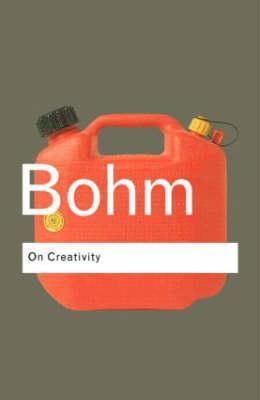
On Creativity
Book Description
Unlock the hidden depths of your mind with "On Creativity." David Bohm invites you on a mesmerizing journey through the nature of thought, exploring how innovative ideas are born from the interplay between individuality and collective consciousness. As he delves into the mysterious dance of perception and imagination, you’ll discover how barriers to creativity can shatter and transform everyday life. This thought-provoking exploration challenges conventional wisdom and sparks new perspectives that can revolutionize art, science, and personal growth. Are you ready to awaken the creative force within you and change the world?
Quick Book Summary
"On Creativity" by David Bohm offers a profound exploration of the origins and processes of creativity in human thought and society. Bohm, a physicist and philosopher, examines how new ideas emerge from the dynamic interplay between the individual mind and collective culture. He highlights the importance of openness, dialogue, and freedom from rigid assumptions to facilitate creative breakthroughs in art, science, and daily life. Bohm argues that creativity is not limited to exceptional individuals but is accessible to everyone willing to embrace uncertainty and suspend judgment. He addresses obstacles to creativity, such as conditioned thinking and societal pressures, and presents practices for dissolving these barriers. The book ultimately serves as both an intellectual inquiry and a practical guide for nurturing creativity in yourself and your community.




Summary of Key Ideas
Table of Contents
The Source and Nature of Creativity
Bohm begins by analyzing the foundations of creativity, suggesting that true creative acts arise from the dynamic relationship between individual minds and broader cultural contexts. He draws a distinction between mere cleverness—rearranging existing ideas—and authentic creativity, which involves the emergence of genuinely new insights. For Bohm, creativity is an essential feature not only of scientific and artistic pursuits but also of everyday living and problem-solving. He emphasizes that the creative process is both universal and mysterious, shaped by attention, perception, and the willingness to engage with the unknown.
Dialogue and Collective Thinking
Central to Bohm's approach is the significance of open dialogue and collective thinking. He argues that creative potential flourishes when individuals communicate openly, suspending judgment and sharing insights without attachment to personal assumptions. Through deep listening and dialogue, groups can access higher levels of intelligence and creativity than individuals working alone. Bohm believes that this mode of collective inquiry—rooted in mutual respect and curiosity—can help dissolve fragmentation in thought, leading to more holistic understanding and novel solutions to complex problems.
Barriers to Creative Insight
Bohm examines psychological and social barriers that impede the flow of creativity. He notes that ingrained assumptions, fear of failure, social conformity, and rigid patterns of thinking can stifle creative possibility. These limitations are often internalized unconsciously, preventing individuals and groups from engaging deeply with new or unconventional ideas. Bohm suggests that awareness, self-reflection, and a willingness to question habitual mental habits are crucial for dissolving these obstacles and fostering a freer, more inventive mind.
Holistic Perception and Imagination
In exploring the mechanics of creative perception and imagination, Bohm draws upon his background in quantum physics to illustrate the interconnectedness of observation, thought, and reality. He proposes that creativity emerges when the mind perceives wholes rather than fragmented parts, enabling integrative and transformative thinking. Imagination, in Bohm’s view, acts as a bridge between abstract concepts and tangible reality, allowing for the synthesis of disparate ideas into coherent, novel forms. This shift toward holistic perception is vital for true innovation.
Applying Creativity to Daily Life
The book concludes with practical implications for cultivating creativity in daily life. Bohm encourages readers to embrace uncertainty, remain open to others’ perspectives, and approach problems with curiosity rather than judgment. He underscores the transformative potential of creative consciousness, not only for personal fulfillment but for addressing the challenges facing modern society. By consciously nurturing creativity—individually and collectively—Bohm suggests we can revolutionize art, science, and our shared human experience.
Download This Summary
Get a free PDF of this summary instantly — no email required.