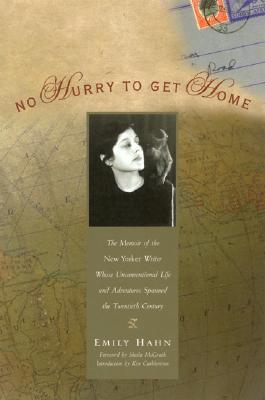
No Hurry to Get Home: The Memoir of the New Yorker Writer Whose Unconventional Life and Adventures Spanned the 20th Century
Book Description
A daring soul in a world of conventions, Emily Hahn danced through the tumultuous landscapes of the 20th century, weaving her stories into the fabric of The New Yorker. With a pen as her sword, she broke boundaries across continents, survived extraordinary escapades, and mingled with the most fascinating figures of her time. From the opium dens of China to the smoky jazz clubs of Harlem, her life was a vivid tapestry of defiance and adventure. What secrets lay hidden in her words, and what thrills did her unconventional spirit bring to the page?
Quick Book Summary
"No Hurry to Get Home" chronicles the extraordinary and unconventional life of Emily Hahn, a pioneering traveler, journalist, and writer whose adventures spanned the globe and the 20th century. Through a series of witty and insightful essays, Hahn details her experiences in places as diverse as the American Midwest, the streets of Harlem, colonial Africa, and pre-war China. Her fearless pursuit of new experiences led her into circles with influential literary and political figures, while her penchant for breaking social conventions made her both admired and controversial. Hahn writes candidly about love affairs, addictions, and the challenges of being a female adventurer in a world dominated by men. Both a personal memoir and a window into a rapidly changing century, the book captures the indomitable spirit and curiosity that defined her singular life.



Summary of Key Ideas
Table of Contents
Defying Social Conventions and Gender Roles
Emily Hahn's memoir offers a vivid journey into a life lived at the edges of social norms and geographical boundaries. From an early age, Hahn showed little interest in the expected roles for women, pursuing higher education in engineering at a time when this was uncommon. Her refusal to be confined by tradition set the tone for a life marked by both physical journeys and moral courage. Hahn's narrative style is candid and often humorous, revealing how she both challenged and redefined what was possible for women in the early 20th century.
The Transformative Power of Travel and Adventure
Hahn’s travels form the backbone of her memoir. She recounts her time living in a variety of settings, from the African Congo to bohemian circles in New York and the vibrant yet politically turbulent Shanghai of the 1930s. Through these vignettes, she highlights not only exotic locations, but also the impact of travel on personal growth, self-reliance, and the continuous expansion of one’s perspective. Her adventures were not without risk, and she navigated both physical dangers and the emotional trials of living as an outsider.
Encounters with Historical Figures and Cultures
Integral to her journey are the prominent figures and cultures she encountered. Hahn became part of the intellectual and artistic circles of her time, forging relationships with writers, artists, and diplomats. In China, she interacted with Nationalist leaders and opium traders, blending seamlessly into worlds that were often closed to Western women. These encounters informed her writing and provided her with rich material for the evocative, nuanced portraits that characterize her essays and articles for The New Yorker.
Personal Struggles and Resilience
Personal struggles are dealt with unflinchingly in Hahn's memoir. She addresses her dependency on opium during her years in Shanghai, her complex romantic entanglements, and the internal battles that accompanied her outward bravado. Hahn does not shy away from the darker facets of her character and experiences, instead approaching them with honesty and self-awareness. Her resilience, humor, and refusal to see herself as a victim become central themes, demonstrating that courage and vulnerability often coexist.
The Art of Storytelling and Memoir
Throughout, Hahn’s mastery as a storyteller shines. Her memoir is not merely a chronological recounting of events; it is an artful weaving of memories, observations, and reflections. With wit and an unflinching gaze, she offers insight into the nature of memory, the shifting sands of history, and the enduring quest for both adventure and understanding. Her life and work underscore the power of narrative to challenge conventions and inspire future generations.
Download This Summary
Get a free PDF of this summary instantly — no email required.