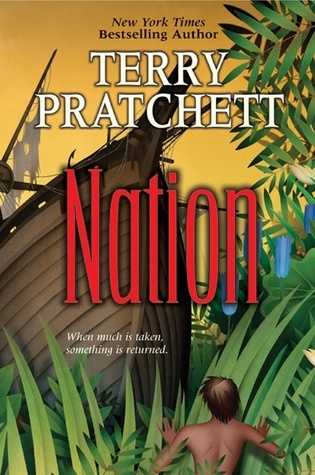
Nation
Book Description
Amidst the wreckage of a deadly tsunami, a boy from a forgotten island and a girl raised in the heart of empire find themselves on a collision course. As their worlds collide, ancient traditions clash with new realities, forcing them to confront what it truly means to belong. With danger lurking at every turn and an unyielding quest for identity, they must navigate treachery and sacrifice while unearthing the power of friendship in a fractured world. Will they unite to forge a future from the ruins, or will the tides of fate tear them apart forever?
Quick Book Summary
"Nation" by Terry Pratchett tells the story of Mau, a boy whose island world is shattered by a catastrophic tsunami, and Daphne, a Victorian girl stranded far from home. Lost amid devastation, the pair must rebuild from the remnants of Mau’s culture and Daphne’s scientific upbringing. As outsiders in a broken landscape, they question traditions, faith, and identity, gradually forging community with other survivors. Their collision of customs and worldviews spurs deep reflection on belonging, leadership, and the meaning of civilization. Infused with humor, adventure, and Pratchett’s signature wit, "Nation" is a moving exploration of friendship and resilience in the face of disaster, asking what truly makes a nation.



Summary of Key Ideas
Table of Contents
Clash and Fusion of Cultures
The narrative opens with Mau, a boy returning from his rite of passage to his home island. Before he arrives, a massive tsunami obliterates his entire community, leaving Mau the lone survivor. Alone in devastated surroundings and stripped of his old identity, Mau is thrust into a world of existential uncertainty, furious with the gods who failed his people. Meanwhile, a shipwreck strands Daphne, an upper-class British girl, on the same island. As the only survivors—one native and one foreign—they are forced to confront their own helplessness, confusion, and grief.
Questioning Tradition and Belief
Mau and Daphne's first interactions are awkward and filled with misunderstanding, reflecting the vast chasm between their upbringings and worldviews. Mau’s spiritual connection to his ancestors and his cultural knowledge clash with Daphne’s rationalist, scientific perspective. However, necessity pushes them to cooperate for survival—finding food, shelter, and dealing with the physical and emotional aftermath of tragedy. This mutual reliance gradually builds trust and empathy, enabling both characters to see beyond superficial differences and tap into shared humanity.
The Journey of Identity and Belonging
As more survivors gather on the island—adults and children from nearby islands and even others shipwrecked—the challenge emerges to form a new society from the ashes. Mau’s leadership is tested as he becomes a reluctant chief, grappling with questions of faith, responsibility, and innovation. Daphne introduces Western science and medicine, questioning established island beliefs, while learning to respect their wisdom and traditions. Together, the group must balance mourning the past with inventing a future, facing moral dilemmas and the threat of external invaders interested in the island’s secrets.
Leadership and the Rebuilding of Society
Throughout, both Mau and Daphne undergo profound transformations. Mau confronts the silence of the gods and reimagines what it means to belong—a journey from loss and rage to hope and acceptance. Daphne, once sheltered and passive, discovers inner strength, resourcefulness, and a sense of purpose beyond her old life. Their bond deepens, not as a conventional romance, but as deep friendship and mutual respect, shaped by shared hardship and the forging of a new community.
Friendship and Human Connection
By the conclusion, Pratchett prompts the reader to rethink civilization, progress, and nationhood. The protagonists unite to shape a “Nation” not defined by territory, ethnicity, or tradition, but by the collective acts of caring, understanding, and imagination. With warmth, humor, and sharp insight, "Nation" affirms the resilience of people brought together by circumstance, suggesting that true nations are built on empathy and shared aspiration, not just custom or bloodline.
Download This Summary
Get a free PDF of this summary instantly — no email required.