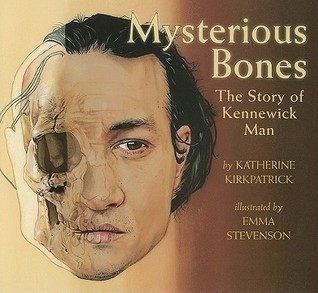
Mysterious Bones: The Story of Kennewick Man
Book Description
Unearthed on the banks of the Columbia River, a 9,000-year-old skeleton sparks a fierce battle between science and mythology. As researchers dig into the life and times of Kennewick Man, they uncover not just ancient secrets but a modern struggle over identity, heritage, and belonging. With each discovery, tensions rise between Native American tribes and scientists determined to claim the past for their own. This gripping narrative explores the power of history and the clash of cultures, leaving readers questioning: what does the truth of our origins reveal about who we are today?
Quick Book Summary
"Mysterious Bones: The Story of Kennewick Man" by Katherine Kirkpatrick chronicles the discovery of a 9,000-year-old skeleton, known as Kennewick Man, in Washington State. The find ignites a significant controversy, as scientists seek to study the remains while Native American tribes call for their reburial, citing spiritual and ancestral connections. Kirkpatrick explains the archaeological and forensic techniques used to analyze Kennewick Man, revealing insights into ancient migration, diet, and culture. The book highlights the ensuing legal battles, ethical dilemmas, and the broader discussion on who has the right to interpret the past. Aimed at young readers, the story not only explains scientific processes but also delves deep into questions about identity, history, and cultural respect.




Summary of Key Ideas
Table of Contents
Discovery and Initial Analysis
On a summer day in 1996, two college students stumbled upon a skull along the banks of the Columbia River in Kennewick, Washington. What appeared at first to be a recent bone soon proved far older: archaeologists determined the skeleton, dubbed Kennewick Man, was nearly 9,000 years old. The initial excitement among scientists stemmed from its remarkable preservation and the clues it held about the earliest people in North America. Forensic analysis and archaeological methods revealed Kennewick Man’s age, injuries, diet, and burial practices, painting a portrait of a man who lived a rugged, physically demanding life at a time when the continent was still being settled.
Scientific Investigation and Insights
The discovery’s scientific significance was matched only by the controversy it sparked. Scholars were eager to study the bones, hoping to answer enduring questions about ancient migrations and the origins of America’s first inhabitants. Their findings challenged established assumptions, suggesting new theories about how and when humans arrived in the Americas. Modern forensic reconstructions even hinted at unexpected physical features, opening debates about ancestry and the diversity of early populations.
Legal and Ethical Controversies
However, scientific curiosity soon clashed with cultural and spiritual concerns. Local Native American tribes, asserting ancestral and spiritual ties to Kennewick Man, invoked the Native American Graves Protection and Repatriation Act (NAGPRA) to claim the remains and call for immediate reburial. Their perspective highlighted a fundamental ethical dilemma: should ancient bones be studied for the advancement of knowledge, or returned and respected as ancestors?
Cultural Identity and Heritage
This disagreement escalated into a complex legal battle, pitting scientists’ quest for understanding against indigenous rights to cultural heritage. Court decisions weighed historical evidence and cultural claims, resulting in years of debate and delay. The struggle forced both sides to debate who ultimately owns the past and how to balance respect for tradition with the pursuit of knowledge.
Resolving History’s Mysteries
In the end, Kirkpatrick’s account doesn’t just tell the story of Kennewick Man. She uses the narrative to explore broader questions about identity, the power of scientific discovery, and the importance of respecting different perspectives. The book encourages readers to examine how history is interpreted, whose voices are heard, and what we can learn from both science and tradition in our quest to understand humanity’s beginnings.
Download This Summary
Get a free PDF of this summary instantly — no email required.