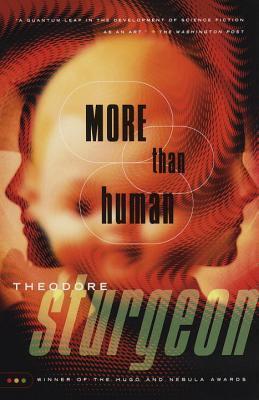
More Than Human
Book Description
In a world where the boundaries of humanity blur, five misfits unite to forge an extraordinary bond that challenges the essence of what it means to be human. Each possesses unique abilities and deep-seated scars, driven by a desperate need for connection and purpose. As they navigate a society that fears and misunderstands them, their clash with external threats intensifies, forcing them to confront their own identities and the power of unity. Love, betrayal, and sacrifice intertwine in a gripping tale that raises a haunting question: Can these outcasts redefine humanity, or will they be consumed by the darkness that surrounds them?
Quick Book Summary
"More Than Human" by Theodore Sturgeon is a landmark work of speculative fiction that explores the next stage of human evolution through the coming together of five societal outcasts. Each character possesses extraordinary abilities—telepathy, telekinesis, mind control, and super-intelligence—yet is deeply troubled and isolated. By uniting, they form a gestalt, a superorganism able to do what none can accomplish alone. The narrative follows their struggle to find purpose and acceptance in a world that views them with suspicion and fear. As the children confront both internal doubts and external threats, they must decide whether to embrace their humanity or transcend it. Sturgeon’s classic poses philosophical questions about individuality, the nature of consciousness, and the meaning of human connection, wrapped in a poignant tale of love, loss, and the quest for belonging.





Summary of Key Ideas
Table of Contents
Gestalt and Collective Consciousness
The narrative centers on a group of five uniquely gifted individuals: Lone, the Idiot who can read minds; Janie, a telekinetic girl; twin girls known as Bonnie and Beanie who can teleport; and Baby, a nonverbal child with superhuman intelligence. Each is marginalized by society, shunned due to their differences, and struggling to survive. Their paths cross by chance, eventually binding them together out of mutual necessity. Individually incomplete and socially isolated, they begin to discover a new way of being by connecting their minds and abilities—ultimately forming a gestalt, or collective consciousness.
Isolation versus Connection
As the gestalt coalesces, the group transforms from disparate outcasts into a single organism capable of remarkable feats. Their abilities become synergistic, allowing them to flourish where once they were hopeless. This union, however, introduces complexity: while their strengths multiply, tensions arise from their conflicting personalities and traumas. The group must navigate jealousy, fear, and misunderstanding, both within and from the outside world. Their newfound power attracts attention, both benign and threatening, forcing them to examine if they are fundamentally human or something entirely new.
The Search for Identity and Purpose
A central theme is the tension between isolation—a defining hardship of each character’s early life—and the profound connection they now share. Sturgeon delves into the emotional and psychological transformations that occur as the misfits learn to trust and depend on one another. Their journey is marked by moments of deep empathy, abrupt betrayal, and hard-won reconciliation. As their bond deepens, they begin to understand that connection, rather than separation, is essential to their survival and growth, challenging both their own and society’s concepts of identity and belonging.
Fear of the Unknown and Outsider Status
The gestalt’s existence provokes fear and suspicion in the world around them, reflecting societal anxiety toward the unfamiliar or unknown. As the group is hunted and tested by those who seek either to destroy or experiment on them, they’re forced to confront questions about morality and responsibility. Are they obligated to protect humanity, even if it rejects them? Or should they use their abilities for self-preservation alone? These dilemmas underscore the book’s exploration of what it truly means to be human and the potential risks and rewards of evolving beyond traditional limitations.
Moral Responsibility of the Superhuman
In the end, "More Than Human" leaves readers contemplating the nature of progress, empathy, and interconnectedness. The group must make sacrifices and difficult choices, wrestling with the darkness within themselves and the fear that permeates the world around them. Their ultimate acceptance of unity—as a conscious, chosen way of being—suggests that humanity’s future may hinge not on individual greatness, but on the ability to come together and transcend personal limitations. Sturgeon’s classic thus endures as both a meditation on the next step in evolution and a powerful reminder of the importance of compassion and mutual understanding.
Download This Summary
Get a free PDF of this summary instantly — no email required.