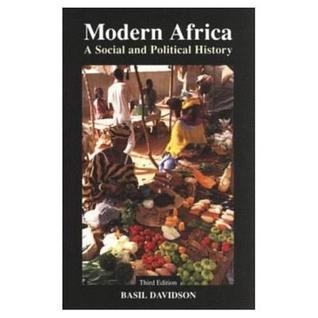
Modern Africa: A Social and Political History
Book Description
Africa's story is a symphony of struggle, resilience, and transformation. "Modern Africa: A Social and Political History" navigates the seismic shifts that have shaped the continent, from colonial turmoil to the fight for independence and the quest for identity. Through vivid narratives, Davidson unveils the complex tapestry of diverse cultures, politics, and ideologies that collide and converge. Each chapter pulses with the tension of revolution, the weight of history, and the dreams of a new dawn. As the winds of change sweep across the land, what will it take to forge a united and vibrant future for Africa?
Quick Book Summary
“Modern Africa: A Social and Political History” by Basil Davidson offers a sweeping account of Africa’s transformation from the late 19th century through the early 21st. Davidson traces the continent’s trials under European colonial rule, illuminating the economic exploitation, cultural upheaval, and political subjugation that reshaped African societies. He details the passionate struggles for independence, charting the rise of nationalist movements and the emergence of new political leaders. Moving beyond the liberation era, Davidson analyzes the complexities of postcolonial state-building, chronicling Africa’s struggles with unity, governance, and development. The book weaves together social, cultural, and political dimensions to create a rich portrait of Africa’s resilient spirit, its quest for identity, and its ongoing journey toward self-realization and progress.



Summary of Key Ideas
Table of Contents
Impact of Colonialism on African Societies
Basil Davidson’s work begins by dissecting the impact of European colonialism on African societies. He argues that colonial rule was fundamentally disruptive, undermining traditional structures and economies. The colonial period saw the imposition of new borders, extraction economies, and exploitative labor systems, which fractured social cohesion. Davidson also stresses the erosion of indigenous political systems and cultural practices, highlighting how colonial powers imposed their own hierarchies and values, leaving lasting scars on African self-perception and community life.
Struggles for Independence and National Identity
The book then moves to examine the fervent waves of resistance and the rise of nationalist movements across Africa in the 20th century. Davidson narrates how Africans from diverse backgrounds united to resist colonial domination, using political organization, cultural revival, and, at times, armed struggle. He details seminal moments such as the formation of the ANC in South Africa, the Pan-African movement, and decolonization struggles in Ghana, Kenya, and Algeria. The quest for independence was also a quest for dignity, identity, and self-determination.
Challenges of Postcolonial State-Building
Davidson delves deeply into the transitions that followed independence, highlighting challenges such as state-building, establishing legitimate governance, and balancing diverse ethnic groups within artificial colonial borders. The promise of freedom was often met with obstacles: authoritarianism, civil conflict, economic dependency, and interference by external powers. Nevertheless, Davidson documents efforts to create viable institutions, develop pluralistic societies, and chart African visions for modernity that were distinct from European models.
Diversity and Resilience in African Cultures
Culture emerges as a critical theme throughout the narrative. Davidson celebrates Africa’s astonishing diversity of languages, traditions, and arts, arguing that cultural resilience has been vital to the continent’s endurance and creativity. He explores how literature, music, and oral traditions became vehicles for both resistance and renewal, and how the retrieval and reimagining of African histories played a key role in forging new national identities.
Continuing Search for Unity and Development
In his closing analysis, Davidson addresses the ongoing quest for unity and development in Africa. He acknowledges the persistent challenges—poverty, corruption, global economic inequalities—but remains optimistic about Africa's future. Emphasizing both the internal dynamism and potential for cooperation, Davidson calls for African-led solutions, greater regional integration, and the recovery of indigenous knowledge. Ultimately, his account is a tribute to African agency and adaptability in the face of adversity.
Download This Summary
Get a free PDF of this summary instantly — no email required.