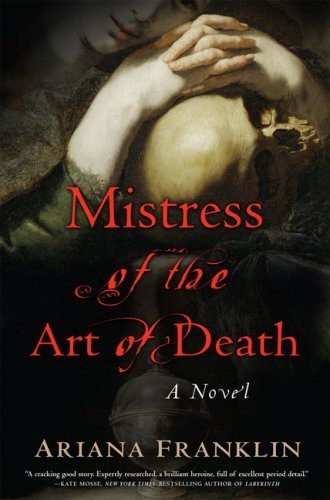
Mistress of the Art of Death
Book Description
Amidst the chilling backdrop of 12th-century England, a woman defies expectations as a pioneering forensic investigator. Adelia, a brilliant surgeon, is summoned to unravel a string of gruesome murders plaguing a town gripped by superstition and fear. As she navigates the treacherous politics of a male-dominated society, she uncovers dark secrets that entwine deadly ambition with ancient curses. With the clock ticking and innocent lives on the line, alliances will be tested and loyalties shattered. Can she solve the mystery before the noose tightens? In a world filled with danger, who can truly be trusted?
Quick Book Summary
"Mistress of the Art of Death" by Ariana Franklin is a gripping historical mystery set in 12th-century England. The story follows Adelia Aguilar, an Italian woman trained as a forensic doctor in Salerno. Called to Cambridge by King Henry II, she is asked to investigate the brutal murders of several children, which have been incorrectly blamed on the local Jewish community. Adelia must conceal her expertise in a society that views female doctors with suspicion, while using her scientific acumen to expose the real killer. Amid the backdrop of religious tension, superstition, and political intrigue, Adelia navigates dangerous alliances and sinister secrets. The novel explores justice, gender, and the birth of modern investigative methods as Adelia challenges medieval prejudices to uncover the truth.


Summary of Key Ideas
Table of Contents
Pioneering Forensic Investigation in the Medieval Era
Adelia Aguilar, a highly skilled female doctor in 12th-century Salerno, is summoned by King Henry II to England after a string of horrific child murders in Cambridge. The killings have incited mob violence against the town's Jews, who have sought sanctuary in the king’s castle as the townsfolk hunger for retribution. With Christian-Jewish tensions running high, Adelia arrives alongside Simon, an investigator, and Mansur, an Arab eunuch, tasked with revealing the truth and exonerating the innocent before further bloodshed ensues.
Gender and Defiance in a Patriarchal Society
Navigating medieval England is fraught with peril for Adelia, not only due to the gruesome crimes but also because of her gender and foreign origins. Women are forbidden to practice medicine, so Adelia must pose as Mansur’s assistant. Her acute analytical mind and pioneering forensic techniques clash with prevailing medical ignorance and superstition. As she secretly dissects bodies and investigates clues, she draws suspicion and ire from church and townsfolk, journeying a perilous path between justice and her own survival.
Religious Intolerance and Societal Prejudice
Throughout her investigation, Adelia confronts society’s deep-rooted prejudices. The ready scapegoating of Jews reflects both the religious intolerance of the time and the manipulation of public opinion by those with personal agendas. As accusations fly and paranoia mounts, Adelia’s reliance on evidence and logical reasoning starkly contrasts with the fear and misinformation driving the investigation, highlighting the dangerous consequences of superstition and the vulnerability of marginalized communities.
Political Intrigue and the Quest for Justice
Intertwined with the mystery, the novel explores the feudal power struggles and hidden ambitions threatening the crown. Political forces both aid and obstruct Adelia’s efforts, as alliances prove fragile and betrayal lurks at every turn. Against this backdrop, Adelia’s tenacity exposes secrets that implicate the powerful, demonstrating how justice can be undermined by ambition and self-interest, yet ultimately requires courageous truth-seekers willing to challenge established order.
The Interplay of Science and Superstition
As Adelia edges closer to identifying the killer, her scientific insight brings new clarity to a world governed by ritual and fear. She forges unexpected partnerships and risks all to save innocents, fighting for not only justice but also the right to practice her calling. "Mistress of the Art of Death" is a testament to the power of intellect and resilience, blending a compelling mystery with rich historical detail and a profound exploration of the intersection between reason and superstition.
Download This Summary
Get a free PDF of this summary instantly — no email required.