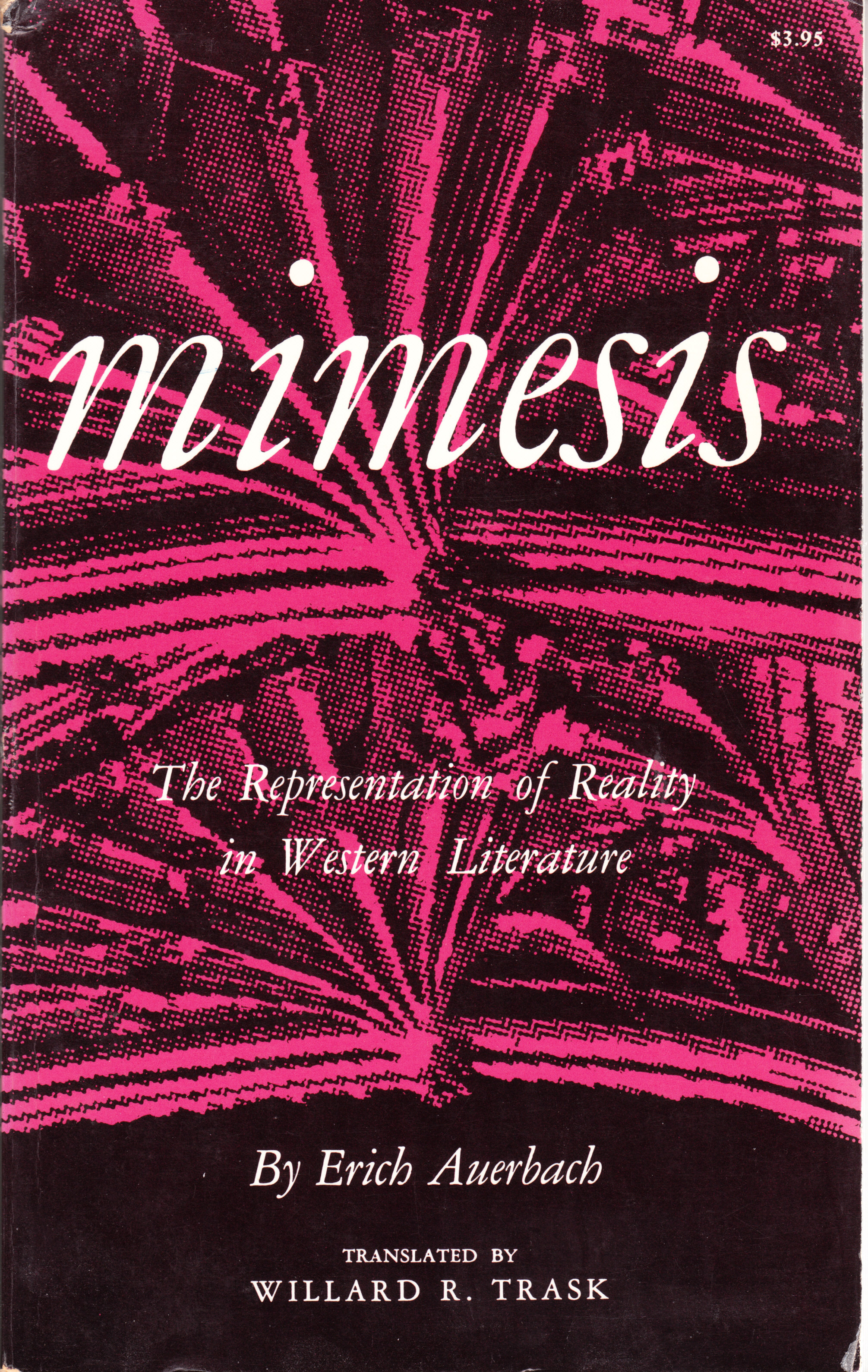
Mimesis: The Representation of Reality in Western Literature
Book Description
Reality is a tapestry woven from countless threads of human experience, and in "Mimesis," Erich Auerbach unravels that intricate design. Through a vivid exploration of Western literature, he reveals how writers have captured the essence of life, love, and tragedy, crafting mirrors that reflect our deepest truths. From the humblest moments to the grandest narratives, Auerbach’s insights illuminate the struggle between illusion and reality, where every word holds the potential to transform perception. What does it mean to truly represent life on the page, and can literature ever grasp the full spectrum of human existence?
Quick Book Summary
Erich Auerbach’s "Mimesis" is a groundbreaking study of how Western literature has represented reality from the ancient world to the modern era. Written in exile during World War II, the book explores the evolution of literary style and the ways different eras and authors have depicted everyday life and human consciousness. Through close readings of canonical texts—from Homer to Virginia Woolf—Auerbach contrasts the epic, elevated style of classical literature with the more realistic, nuanced approach seen in later works. He demonstrates how literature’s portrayal of reality is deeply influenced by historical, social, and linguistic contexts. Ultimately, "Mimesis" is both a masterpiece of literary criticism and a profound meditation on the power of art to mirror and shape our understanding of existence.


Summary of Key Ideas
Table of Contents
The Evolution of Realism in Western Literature
Auerbach opens his study by considering the ways Western literature has attempted to represent reality, focusing on two foundational texts: Homer’s "Odyssey" and the Old Testament. He highlights how Homer presents events with clarity, order, and external detail, whereas the Bible encapsulates complex psychological states, background ambiguity, and layered narratives. This sets the stage for his exploration of mimesis—the imitation of reality—and establishes a key contrast between classical and biblical methods of storytelling.
The Contrast Between Classical and Biblical Representation
The transition from ancient to medieval and subsequently to modern texts reveals a profound shift in how writers approach the representation of everyday life. Medieval literature, particularly with the rise of Christian thought, integrates spiritual concerns and inner experience, moving away from the heroic and the exceptional towards the inner workings and fates of ordinary people. This shift is tracked through close readings of works such as Dante’s "Divine Comedy," where the blending of the sacred and the secular reflects a new realism.
Historical and Social Contexts of Literary Style
Auerbach meticulously demonstrates that literary style cannot be separated from its historical and social context. The way reality is depicted in a given era is shaped by the prevailing conditions, such as the hierarchical society of the Middle Ages or the democratization of the modern age. In Renaissance and Enlightenment literature, he observes a growing interest in the complexities of individual experience and social roles, an approach carried forward into the novels of the nineteenth and twentieth centuries. Writers begin to focus on the psychological depth and the intricate realities of daily life.
The Emergence of Everyday Life in Narrative
Language plays a central role in Auerbach’s analysis. He examines how changes in linguistic style reflect broader cultural transformations, noting how literary language gradually moves away from rhetorical flourish toward greater simplicity and directness. This linguistic evolution allows for the depiction of more nuanced and authentic experiences, as seen in the works of Flaubert, Woolf, and Proust. The use of free indirect speech, interior monologue, and vernacular speech all serve to bring readers closer to the realities experienced by characters.
Language as a Tool for Depicting Reality
The book ultimately argues that the history of Western literature is marked by an ever-deepening engagement with the ordinary and the particular, striving for authenticity and complexity in the portrayal of life. This drive towards realism is not linear or uniform, but the overall trend is clear: literature increasingly seeks to illuminate the ordinary experience, questioning and expanding our understanding of what it means to represent reality. "Mimesis" remains a powerful study of how storytelling shapes—and is shaped by—our perceptions of truth and existence.
Download This Summary
Get a free PDF of this summary instantly — no email required.