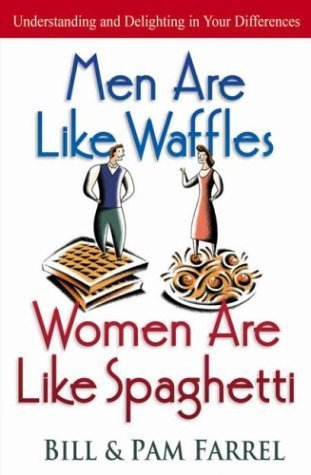
Men Are Like Waffles--Women Are Like Spaghetti
Book Description
What if understanding the opposite sex was as simple as food? Dive into the delectable differences that shape relationships in 'Men Are Like Waffles--Women Are Like Spaghetti.' Bill Farrel serves up a savory exploration of how men’s compartmentalized thinking mirrors the crisp layers of a waffle, while women’s intricate, intertwined thoughts flow like a plate of spaghetti. Through humor and insight, this dynamic guide reveals the secrets to nurturing deeper connections and navigating the complexities of love. Can embracing these contrasts transform the way partners relate to one another forever?
Quick Book Summary
"Men Are Like Waffles—Women Are Like Spaghetti" by Bill Farrel uses a creative food analogy to explain fundamental differences between men and women, particularly in how they process thoughts and emotions. The authors argue that most men think in a compartmentalized way—addressing one "box" at a time like squares in a waffle—while women tend to process life as a web of interconnected experiences, similar to strands of spaghetti. Through a mix of practical advice, humor, and Christian perspectives, the book offers couples tools to better understand each other, communicate more effectively, and build stronger marriages. Its core message is that appreciating and working with these differences can lead to deeper intimacy, cooperation, and harmony in relationships.





Summary of Key Ideas
Table of Contents
Understanding Different Thinking Patterns
The central premise of the book is that men and women have fundamentally different ways of processing information and emotions. Using the waffle-spaghetti metaphor, the Farrels describe how men are able to focus on one task or thought at a time, effectively shutting out unrelated issues. In contrast, women process life's events and emotions all at once, making connections between seemingly unrelated matters. Understanding these natural tendencies is critical to establishing patience and empathy within relationships.
Improving Communication in Relationships
Effective communication is a major focus. The authors explain how miscommunication stems from failing to recognize and adapt to each other's thinking styles. Men may become frustrated by talk that jumps from topic to topic, while women might feel ignored when a man seems to "check out." The book emphasizes listening, patience, and asking clarifying questions, offering key phrases and conversation starters to help couples articulate needs and concerns without conflict.
Embracing Emotional and Relational Needs
The Farrels stress the importance of recognizing emotional and relational needs. Men often prioritize problem-solving and compartmentalized time, while women lean toward emotional connection and multitasking conversations. The book encourages couples to affirm each other's styles and intentionally create space for both task-focused and relational interactions. Appreciation of each partner's strengths leads to a more balanced and understanding relationship.
Using Faith and Humor to Navigate Differences
Humor and Christian faith play integral roles in the authors’ approach. Lighthearted anecdotes, biblical references, and prayers are woven throughout, inviting couples to approach relationship differences with grace, humility, and a willingness to laugh at misunderstandings. The Farrels share how their own marriage benefitted from applying scriptural principles and maintaining a positive, forgiving attitude.
Practical Strategies for Connection
Finally, the book provides practical solutions for bridging the gap between waffle and spaghetti thinking. Couples are encouraged to establish routines for shared activities, set boundaries for "box time" versus "together time," and regularly check in about emotional needs. The authors outline exercises for building intimacy, resolving conflicts, and strengthening partnership. By embracing these differences instead of fighting them, partners can achieve deeper connection, respect, and enduring love.
Download This Summary
Get a free PDF of this summary instantly — no email required.