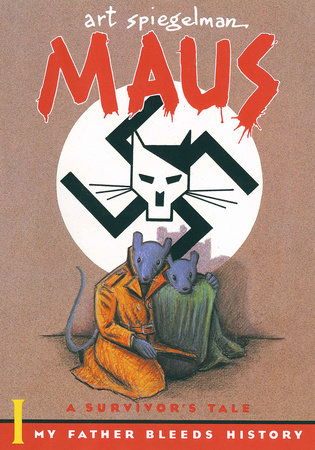
Maus I: A Survivor's Tale: My Father Bleeds History
Book Description
A haunting legacy of survival unfolds as a son grapples with his father’s harrowing past. Through the lens of unforgettable anthropomorphic characters, Art Spiegelman’s 'Maus I: A Survivor's Tale: My Father Bleeds History' immerses readers in the chilling realities of the Holocaust. The jagged edges of trauma clash with the search for truth, painting a poignant portrait of memory and resilience. As generations collide, long-buried secrets threaten to emerge, forcing an exploration of love, loss, and the shadows of history. How do we bear the weight of the past and forge our own identity amid its echoes?
Quick Book Summary
Maus I: A Survivor's Tale: My Father Bleeds History, by Art Spiegelman, is a groundbreaking graphic memoir that intertwines the story of the Holocaust with the complex relationship between a father and son. In vivid black-and-white comics, Spiegelman depicts his interviews with his father, Vladek, a Polish Jew and Holocaust survivor. The narrative shifts between Vladek’s harrowing journey through Nazi-occupied Poland and the present-day efforts of Art to understand his father's past and their fraught relationship. Characters are represented as animals—Jews as mice, Germans as cats—imbuing familiar history with nuance and animation. Through the interplay of past and present, Maus explores themes of trauma, memory, survival, and the inherited legacy of pain, ultimately portraying the enduring struggle to reconcile with history.


Summary of Key Ideas
Table of Contents
The Intergenerational Impact of Trauma
Maus I unfolds through dual narrative threads: the retelling of Vladek Spiegelman's survival during the Holocaust, and Art Spiegelman's attempts in the 1970s to reconstruct his father's story for his graphic novel. Art visits Vladek in Rego Park, New York, coaxing painful memories as Vladek reluctantly recounts his early life in prewar Poland, his marriage to Anja, and the escalating threat posed by the Nazis. The graphic format, with its anthropomorphic depiction of ethnicities, both simplifies and deepens the historical reality.
Memory and Storytelling
Memory functions as both lifeline and burden throughout the book. Vladek's detailed recollections, shaped by trauma, illuminate the daily terrors faced by Jews: ghettos, hiding, betrayals, and ever-present danger. Yet, his storytelling is nonlinear and scattered, revealing how trauma distorts memory. Art struggles with the authenticity of his father's memories, grappling with the ethical weight of narrating someone else's suffering. This tension between lived experience and its retelling forms the emotional core of the memoir.
Survival and Moral Complexity
The act of survival is fraught with complications. Vladek's ingenuity, resourcefulness, and cautiousness enable him to evade Nazi capture repeatedly, but survival often demands difficult choices—trusting the untrustworthy, bargaining for life, and sometimes abandoning others. These moral ambiguities reverberate in Vladek's postwar behavior; his frugality, suspicion, and painful caution frustrate Art but are inextricable from his traumatic experience.
Identity and Representation
Art Spiegelman's depiction of his family is honest and unvarnished. The strained relationship between father and son is central: Art is bewildered and sometimes exasperated by Vladek's quirks, racism, and demanding personality. The memoir refuses to idealize its subjects. Instead, it captures their flaws and emotional wounds, showing how trauma endures across generations—impacting not only those who survived but the children who inherit their legacies.
Family and Reconciliation
By drawing Jews as mice and Germans as cats, Spiegelman comments on identity, victimization, and the absurdity of racial categorization. This visual metaphor, combined with deeply personal storytelling, bridges individual and collective memory. 'Maus I' concludes with a sense of unresolved pain but also with a testament to resilience, truth-telling, and the complicated act of remembering, both for the survivor and those determined to bear witness.
Download This Summary
Get a free PDF of this summary instantly — no email required.