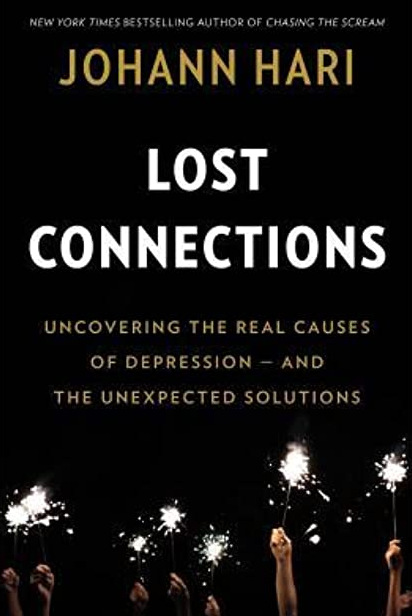
Lost Connections: Uncovering the Real Causes of Depression - and the Unexpected Solutions
Book Description
Imagine a world where the roots of depression run deeper than mere chemical imbalances. In "Lost Connections," Johann Hari embarks on a gripping journey to unveil the unseen forces that bind us in despair. Through intimate interviews and eye-opening research, he uncovers the societal fractures that contribute to this pervasive struggle, revealing unexpected pathways to healing. It's a startling exploration of connection, meaning, and the human experience that challenges everything you thought you knew about mental health. What if the key to overcoming despair lies not in pills, but in restoring our lost connections?
Quick Book Summary
In "Lost Connections," Johann Hari challenges the widespread belief that depression and anxiety are caused solely by a chemical imbalance in the brain. Through extensive research and personal stories, Hari argues that societal and environmental factors—such as disconnection from meaningful work, people, values, nature, and a sense of future—are significant root causes of these conditions. He illustrates how modern life often deprives individuals of purpose and genuine connection, exacerbating mental suffering. The book advocates for solutions that go beyond medication, emphasizing the restoration of meaningful human relationships, community, and personal fulfillment. Hari’s work is both a critique of current mental health paradigms and a hopeful guide toward deeper, more lasting treatment rooted in reconnecting with what truly matters.





Summary of Key Ideas
Table of Contents
The Myth of Chemical Imbalance
Johann Hari begins by deconstructing the dominant narrative that depression and anxiety stem solely from a chemical imbalance in the brain, a belief heavily promoted by pharmaceutical companies. He explores his own struggles with depression, sharing how traditional medication failed to provide lasting relief. Through interviews with scientists, mental health professionals, and individuals affected by depression, Hari uncovers little evidence to support the chemical imbalance theory as the primary cause of mental suffering.
Disconnection from Meaningful Work and Relationships
Instead, Hari identifies a range of lost connections as the root causes of depression and anxiety. He explores how disconnection from meaningful work, exclusion from supportive communities, the absence of values aligned with personal fulfillment, alienation from nature, and feelings of powerlessness all play significant roles. Hari illustrates how modern society, with its focus on material success, individualism, and relentless pace, fosters environments that breed mental health struggles for many people.
The Role of Environment and Society in Mental Health
Much of the book is devoted to examining the impact of societal structures and environmental factors on mental health. Hari highlights how precarious work conditions, financial insecurity, fragmentation of social networks, and the breakdown of traditional communities contribute to rising rates of psychological distress. He provides case studies demonstrating how these external pressures can generate profound feelings of isolation and despair, challenging the notion that mental health is purely a matter of genetics or brain chemistry.
Reconnecting to Purpose and Community
Hari proposes that true healing requires reconnecting with vital sources of meaning. He suggests practical steps such as community engagement, activism, participation in groups with shared goals, and reconnection with nature. He also emphasizes the importance of aligning daily activities with intrinsic values, fostering compassionate relationships, and reimagining economic structures that prioritize human well-being over profit.
Alternative Paths to Healing
In conclusion, "Lost Connections" calls for a societal shift in our approach to mental health—away from reductionist, medication-focused models and toward addressing the root causes of emotional suffering. Hari contends that depression and anxiety are largely social and environmental phenomena, and effective solutions lie in restoring personal agency, purpose, and genuine human connection. The book serves as both a critique of the status quo and a hopeful roadmap for societal and personal transformation.
Download This Summary
Get a free PDF of this summary instantly — no email required.