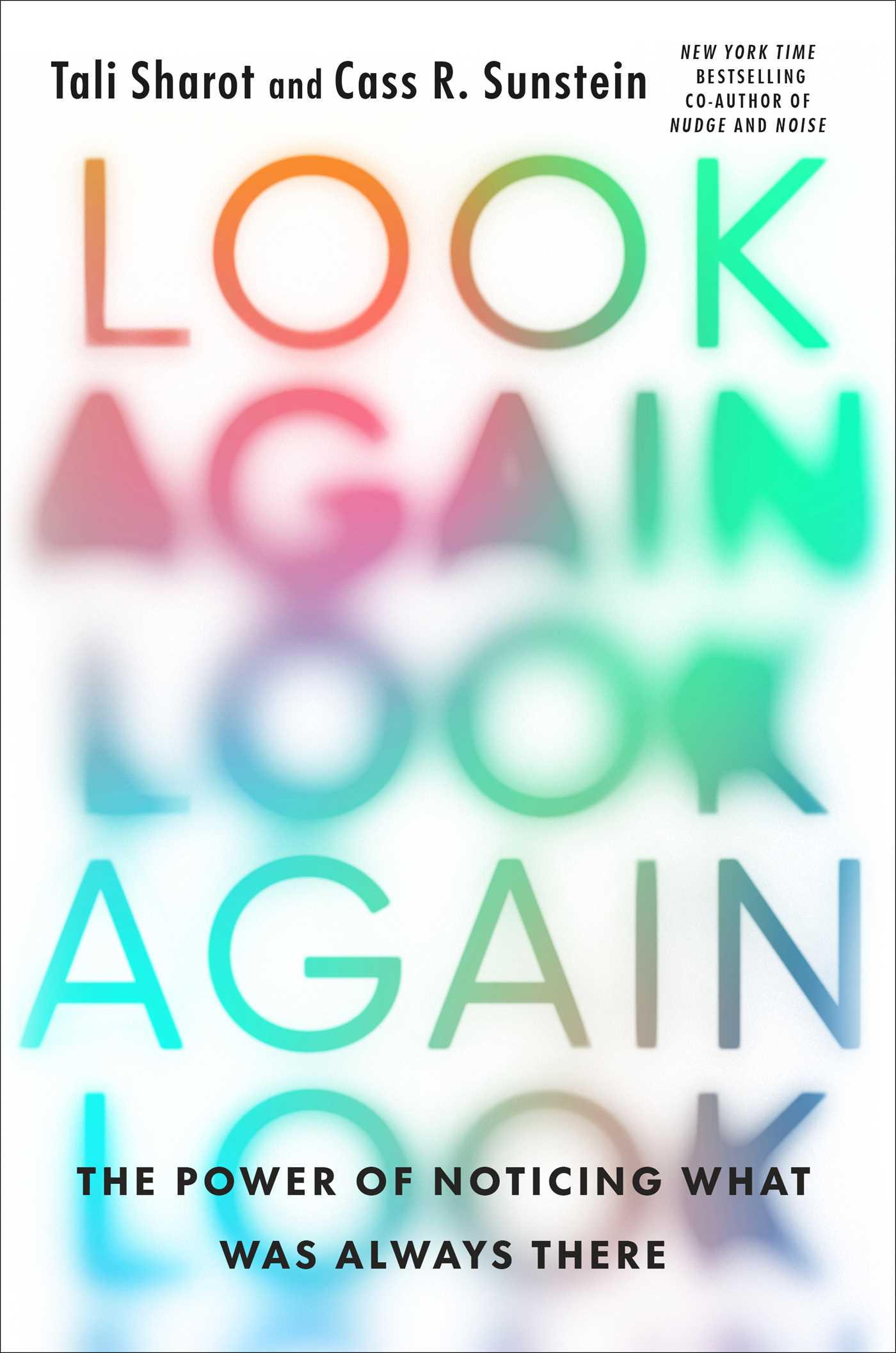
Look Again: The Power of Noticing What Was Always There
Book Description
What if the truth has always been right in front of you? In "Look Again: The Power of Noticing What Was Always There," Tali Sharot takes readers on a thrilling journey through the hidden layers of perception. With vivid examples and groundbreaking insights, she unveils how our brains can miss the obvious—shaping our beliefs, decisions, and relationships. Each page challenges the status quo, offering a fresh lens to view the world. Sharot's compelling narrative will make you question everything you thought you knew. Are you ready to see what you’ve been missing all along?
Quick Book Summary
"Look Again: The Power of Noticing What Was Always There" by Tali Sharot explores how our brains often overlook the obvious, affecting perception, belief, and decision-making. Sharot uses real-world examples, neuroscience research, and engaging storytelling to unravel why humans tend to miss key details in daily life. She demonstrates that our cognitive shortcuts and biases are both a blessing and a curse, influencing relationships and society. The book is a guide to re-examining the familiar and learning to notice what’s often hidden in plain sight. Through practical advice and thought-provoking insights, Sharot challenges readers to move beyond habitual thinking and cultivate curiosity, ultimately helping them make better choices and connect more deeply with the world around them.




Summary of Key Ideas
Table of Contents
How Perception Shapes Reality
Sharot begins by illustrating how perception is not a passive process but an active construction by our minds. Drawing from neuroscience, she explains that our brains filter vast amounts of incoming information, prioritizing what we already find relevant or expect to see. This tendency helps us navigate complexity but can also blind us to new or contradictory information. She uses experiments and anecdotes to show how even the most obvious facts can be overlooked when they don’t fit our mental models.
The Hidden Costs of Cognitive Shortcuts
The book dives into the cognitive shortcuts—heuristics and biases—that streamline everyday decision-making. While these mental mechanisms speed up processing and lower our mental load, they also narrow our focus. Sharot recounts studies where people failed to notice surprising details right in front of them. Such blind spots have implications for creativity, innovation, and accurate understanding, often leading us to reinforce existing beliefs rather than question them.
Challenging Assumptions to Broaden Awareness
Challenging assumptions is presented as a crucial skill. Sharot emphasizes that questioning what we take for granted can reveal overlooked solutions, spark creative problem-solving, and prevent costly mistakes. She provides practical tools to help readers cultivate a habit of revisiting their assumptions, from slowing down decision-making to actively seeking alternative perspectives. These methods are woven with relatable stories and science-backed advice.
The Social and Emotional Impact of Not Noticing
Sharot also explores the broader impacts of this perceptual blindness in social and emotional contexts. Interpersonal misunderstandings, entrenched stereotypes, and missed opportunities often result from not truly noticing what’s right in front of us. She relates how greater awareness and mindful attention can deepen relationships, enhance empathy, and reduce conflict by encouraging us to see others more clearly and holistically.
Strategies for Cultivating Observant Thinking
Finally, the book offers strategies for training ourselves to look again. Sharot proposes exercises and mindsets that foster curiosity and critical thought. She champions an openness to uncertainty, encouraging readers to embrace the unfamiliar and consciously shift their focus. By learning to notice the unnoticed, we can improve decision-making, stimulate personal growth, and enrich our understanding of both the world and the people in it.
Download This Summary
Get a free PDF of this summary instantly — no email required.