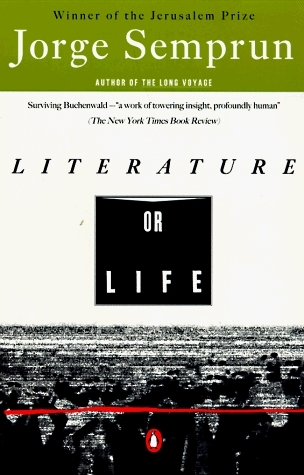
Literature or Life
Book Description
When the echoes of war collide with the whispers of literature, what emerges is a soul laid bare. "Literature or Life" plunges into the heart of human existence, exploring the harrowing landscapes of memory, trauma, and the art of storytelling. In a gripping narrative where every word hangs like a lifeline, the distinction between survival and artistic expression blurs, leading to profound revelations about humanity. As characters grapple with their identities and the weight of the past, the stakes rise, igniting an unquenchable thirst for meaning. Can the power of words ultimately save a life, or will they unravel it completely?
Quick Book Summary
In "Literature or Life," Jorge Semprún fuses memoir and meditation in a searching exploration of his experiences as a Spanish expatriate, a member of the French Resistance, and a survivor of the Buchenwald concentration camp. Through fragmented memories and literary reflections, Semprún confronts the enduring wounds of the Holocaust and the existential crisis of bearing witness. The narrative examines how trauma can fracture time, selfhood, and narrative coherence, but also considers the vital role of art and language in grappling with loss and reconstructing meaning. Ultimately, "Literature or Life" asks if one can truly live again—mentally and spiritually—after enduring the worst, and whether the act of writing offers redemption, or merely a painful reminder.


Summary of Key Ideas
Table of Contents
The Challenge of Bearing Witness to Trauma
Jorge Semprún’s account is both personal testimony and philosophical inquiry, intertwining his survival of Buchenwald with the struggle to convey ineffable suffering. The book’s fractured chronology mirrors the nature of traumatic memory, as Semprún revisits pivotal moments: his arrest, transport, daily life in the camp, and the aftermath. He emphasizes how recollection is not straightforward; memories surface with acute sensory details or are submerged beneath silence. This fragmentation is at the heart of the survivor’s dilemma—how to ethically and authentically bear witness without re-traumatizing oneself or misrepresenting the past.
Intertwining Memory and Storytelling
Memory, for Semprún, is inextricably linked to storytelling. He probes how literature offers structure for chaos, allowing survivors to shape and share their experience, but he is acutely aware of the risks. Writing can bring clarity, yet it can also aestheticize or distance the raw reality of horror. Semprún oscillates between reliving pain and finding solace in narrative; he questions whether recounting the past is a form of survival or another ordeal.
The Limits and Necessity of Language
Language is both Semprún’s salvation and his curse. He reflects on the inadequacy of words to capture the inhumanity he witnessed, citing moments when speech breaks down in confronting extreme suffering. Yet he returns, driven by the compulsion to testify for those who cannot. Literature, therefore, is not an escape but a vital bridge between his ordeal and the outside world, an essential act of communication that helps preserve collective and individual memory.
Survival, Identity, and Transformation
The memoir is also a meditation on survival and the transformation of identity. Surviving the camp means enduring not only physically, but spiritually and psychologically. Semprún traces his postwar life—how the trauma of Buchenwald infiltrates his identity, relationships, and worldview. He argues that survival is not a return to a prior state but an irrevocable change; trauma permeates the survivor’s sense of self, influencing everything from political engagement to existential outlook.
Art, Testimony, and Ethical Responsibility
Finally, Semprún explores the responsibilities attached to art and testimony. He grapples with the ethics of representation, the danger of commodifying atrocity, and the imperative not to let silence prevail. The memoir becomes an act of resistance against oblivion—a testament to the value of memory and the hard-won possibility of meaning. Through literature, Semprún asserts, survivors contribute to the world’s understanding, honor the dead, and attempt to reclaim life from the abyss.
Download This Summary
Get a free PDF of this summary instantly — no email required.