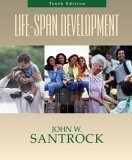
Life-Span Development
Book Description
What if every moment in life shapes who you become? Journey through the intricate tapestry of human development, where each stage brings triumphs, challenges, and transformative experiences. From the innocence of childhood to the wisdom of old age, explore the powerful forces of culture, biology, and personal choice that sculpt identities and relationships. Uncover the secrets of resilience, the impact of adversity, and the endless potential for growth. With each chapter, a new revelation unfolds, urging you to reflect on your own path. Are you ready to embrace the remarkable journey of your life’s evolution?
Quick Book Summary
"Life-Span Development" by John W. Santrock is a comprehensive exploration of human growth from conception through old age, delving into the interplay of biological, psychological, and socio-cultural forces. Santrock combines research findings, real-life examples, and accessible language to map key milestones, challenges, and transitions at every stage of life. The book reveals how genetics, environment, and choices jointly shape our paths. Core themes include the influences of family, education, peers, and society, as well as the role of resiliency and adaptability amid adversity. Readers gain an understanding of cognitive, emotional, and physical changes over a lifetime, appreciating both universal patterns and individual differences. Ultimately, the work emphasizes the ongoing potential for growth and transformation at every age.

Summary of Key Ideas
Table of Contents
Interplay of Nature and Nurture in Human Development
Santrock begins by unpacking the timeless debate between nature and nurture, demonstrating that human development is the product of continuous interaction between our inherited genetic makeup and the environments we inhabit. He details how these forces shape everything from temperament in infancy to risk-taking in adolescence, stressing that biological predispositions can be either amplified or moderated by life experiences, education, and social context. This dynamic interplay forms the framework for understanding how individuals grow and change across the lifespan.
Developmental Stages and Milestones Across the Lifespan
The book then moves through the distinctive stages of development: prenatal, infancy, childhood, adolescence, adulthood, and old age. Santrock highlights physical, cognitive, and socioemotional milestones unique to each period, supported by current research and case studies. He describes how brains and bodies mature, how language, memory, and reasoning capacities evolve, and how each stage introduces new capabilities alongside challenges such as peer pressure, identity formation, and adapting to aging.
Influence of Family, Culture, and Society
Family, culture, and broader societal influences are emphasized as powerful forces in shaping who we become. Santrock explores the roles of parenting styles, schools, peers, and social expectations in guiding behavior, values, and identity. He addresses the impact of culture on gender roles, moral development, and perceptions of aging, while delving into how technological change and globalization introduce both opportunities and new developmental challenges.
Coping, Resilience, and Adaptation Through Challenges
Another central theme is human resilience—the capacity to overcome adversity and adapt to life’s inevitable obstacles. Santrock synthesizes research on coping strategies, the influence of supportive relationships, and the critical role of self-efficacy and optimism. He highlights how individuals can thrive despite trauma, loss, or hardship, drawing from examples and studies that illuminate pathways to positive adaptation and emotional well-being.
Lifelong Growth and Personal Change
The concluding sections stress that development does not cease in adulthood; rather, people mold and redefine themselves throughout life. Santrock discusses how adults experience continued growth through career changes, relationships, and personal reflection. He presents aging not just as decline, but as a time rich in wisdom, meaning, and new possibilities, encouraging readers to appreciate life as an ongoing process of learning, adaptation, and renewal.
Download This Summary
Get a free PDF of this summary instantly — no email required.