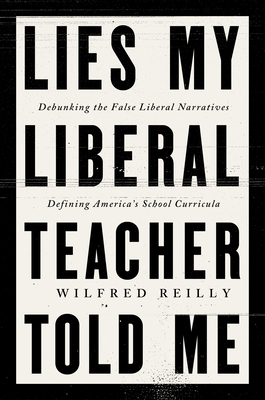
Lies My Liberal Teacher Told Me: Debunking the False Narratives Defining America's School Curricula
Book Description
Lies echo through the hallowed halls of America's classrooms, shaping young minds with powerful narratives that distort facts and history. Wilfred Reilly dismantles these entrenched beliefs, exposing the myths that have taken root in school curricula across the nation. With razor-sharp analysis and compelling insights, he reveals the truth lurking behind the propaganda, sparking a revolution in how history, culture, and identity are taught. As the fabric of education unravels, one question looms: What happens when the stories we believe are flipped upside down, and the quest for truth begins?
Quick Book Summary
"Lies My Liberal Teacher Told Me" by Wilfred Reilly critically examines the prevailing narratives embedded within American educational curricula. Reilly argues that many widely taught lessons in history, politics, and economics are shaped by ideological biases that distort factual truth and mislead students. Through rigorous analysis, he identifies common myths perpetuated in classrooms, challenges their validity with empirical evidence, and presents alternative perspectives often omitted from mainstream education. By highlighting the consequences of such educational biases, Reilly advocates for a more fact-driven, balanced approach to teaching about America's past and present. The book serves as both a corrective to misunderstood history and a call to reinvigorate how educators approach guiding young minds toward critical, independent thought.



Summary of Key Ideas
Table of Contents
Debunking Historical Myths and Misrepresentations
Reilly begins by scrutinizing some of the most persistent historical myths found in American classrooms. He points to selective storytelling about events such as colonization, slavery, and civil rights, noting how many narratives are adjusted to fit contemporary political sensibilities rather than reflect historical nuance. By comparing textbook versions to primary sources and other academic research, he highlights significant discrepancies, urging readers to question the accuracy and intent behind classroom content.
The Influence of Ideological Biases in Education
The author explores the deep-rooted influence of ideological biases that shape what is taught in schools. Reilly argues that curricula are often developed or revised to promote particular political or cultural viewpoints—typically progressive or left-leaning—resulting in a lopsided understanding of history and society. He illustrates how key figures and events are either vilified or lionized based on current social agendas, leading to a skewed perception that undermines complex truths.
The Impact of Distorted Narratives on National Identity
Addressing the impact of these distorted narratives, Reilly discusses how young Americans develop a sense of national identity and civic responsibility based on incomplete or inaccurate information. He cites examples where students' understanding of their country is unduly negative or simplistic, eroding a balanced appreciation for American achievements and challenges. This, he contends, may foster cynicism and division rather than informed citizenship and critical engagement.
Economic Realities Versus Classroom Narratives
The analysis extends into economic education, where Reilly contends that key principles such as capitalism, market innovation, and individual entrepreneurship are downplayed or misrepresented. Using data and case studies, he demonstrates how economic realities are often portrayed through a critical or ideological lens, depriving students of understanding the mechanisms and successes that have contributed to American prosperity. Reilly calls for a more nuanced, factual exploration of economic history and theory.
Fostering Critical Thinking and Intellectual Diversity
Finally, the book advocates for restoring intellectual diversity and fostering critical thinking in the classroom. Reilly emphasizes the need for educators to present multiple perspectives and teach students to rigorously question and analyze material, rather than passively accept received wisdom. He concludes that only by confronting and correcting these entrenched myths can educational institutions cultivate truly informed and independent thinkers prepared to navigate a complex world.
Download This Summary
Get a free PDF of this summary instantly — no email required.