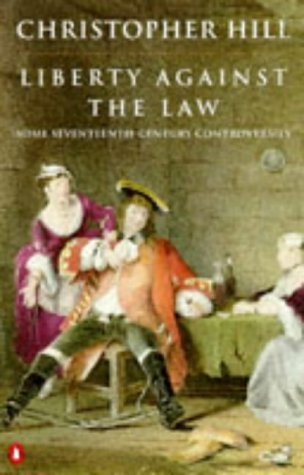
Liberty Against the Law: Some Seventeenth-Century Controversies
Book Description
Liberty hangs by a thread in a world where the law is both a shield and a weapon. Christopher Hill delves into the fiery debates of the seventeenth century, exposing the clash between freedom and authority as revolutionary ideas spark fierce controversies. Power struggles ignite, with champions of liberty pitted against staunch defenders of order, each battle shaping a nation's identity. Echoes of rebellion reverberate through the pages, highlighting the pursuit of rights and the consequences of dissent. As ideals collide and tension mounts, who will prevail in the fight for liberty? What price are they willing to pay for their beliefs?
Quick Book Summary
"Liberty Against the Law" by Christopher Hill explores the turbulent political, legal, and social landscape of seventeenth-century England. Hill investigates how laws designed to maintain social order and privilege often clashed with emerging notions of individual liberty and justice. He highlights key episodes—such as popular resistance to legal enclosures, illicit trade, highway robbery, and dissent against religious and political conformity—to show how common people frequently found themselves at odds with statutes crafted to benefit elites. Far from being passive subjects, many exploited, resisted, or outright defied these laws, contributing to an evolving vision of liberty. The book underscores the paradox that many early advocates of freedom did so against the formal law of their time, forging the foundations for future debates over rights, justice, and the role of authority.



Summary of Key Ideas
Table of Contents
Law as a Tool of Power and Privilege
Hill opens by situating seventeenth-century England at the crucible of transformation, where the old feudal order collided with forces of social mobility and nascent capitalism. Law, he argues, became a critical battleground, embodying the interests of landowners and elites. The enclosures of common land, for instance, were not merely economic measures, but legal instruments to dispossess the poor. This context set the stage for widespread discontent and an erosion of legal legitimacy among the lower classes.
Popular Resistance and Acts of Defiance
Popular resistance took many forms, ranging from open riots and clandestine poaching to smuggling and piracy. Hill details how these acts, while technically criminal, were often motivated by a sense of customary right against emerging property laws. Such behavior blurred the line between crime and protest. The countryside and cities became arenas where the law was openly defied, and in so doing, notions of collective and individual liberty found expression outside the official legal system.
The Criminalization of Dissent
The state responded by criminalizing an expanding range of activities, particularly those that threatened social hierarchy or order. Religious nonconformists, political radicals, and economic rebels all fell afoul of new statutes. Hill explores cases like the Levellers, Diggers, and early Quakers, highlighting how repression through the legal code paradoxically fortified their visions of freedom and inspired new debates on rights and representation. Law thus functioned as both a mechanism of control and a catalyst for dissent.
Revolutionary Ideas and Radical Movements
Amid turmoil, radical thinkers and movements articulated competing definitions of liberty and legitimacy. Hill shows how pamphleteers, preachers, and rebels reframed English traditions to justify resistance—drawing on Magna Carta, ancient customs, and divine rights. With the Civil War, Interregnum, and Restoration, ideas about the social contract and sovereignty were hotly contested. These debates fostered a more dynamic understanding of liberty, unmoored from the privileges of birth and sanctioned authority.
The Evolution of Liberty and Authority
By the book's conclusion, Hill contends that the legacy of seventeenth-century struggle shaped modern notions of liberty and law. The tension between authority and dissent, law and justice, persisted into later centuries. Hill suggests that while order was often restored, the balance had forever shifted—revolutionary moments and popular resistance had irreversibly expanded the moral and political vocabulary of what it meant to be free, challenging the permanent alignment of law with justice.
Download This Summary
Get a free PDF of this summary instantly — no email required.