
Leviathan
Book Description
What happens when humanity's darkest instincts clash in the absence of order? In "Leviathan," Thomas Hobbes dismantles the chaotic dance of power and fear that defines human existence. A portrait of a world teetering on the brink, it explores the brutal necessity of a strong, centralized authority to forge peace amidst the primal struggle for survival. With gripping insights into the social contract and the nature of authority, this groundbreaking work challenges the very foundations of government and society. Can true stability ever be achieved, or are we forever prisoners of our own instincts?
Quick Book Summary
"Leviathan" by Thomas Hobbes is a foundational work in political philosophy, exploring the nature of human beings and the necessity of government. Hobbes argues that in their natural state, humans exist in a constant state of conflict, driven by self-preservation and fear. Without a strong, centralized authority—a "Leviathan"—life would be "solitary, poor, nasty, brutish, and short." He proposes the social contract as a solution: individuals willingly relinquish certain freedoms to an absolute sovereign in exchange for security and order. Hobbes' vision challenges ideas about consent and the legitimacy of authority, raising enduring questions about the balance between personal liberty and societal stability. The work remains influential, shaping debates on governance, rights, and the human condition.


Summary of Key Ideas
Table of Contents
The State of Nature and Human Nature
Hobbes begins by presenting a materialist view of human nature, suggesting that individuals are fundamentally driven by desires and fears, especially the impulse for self-preservation. In the absence of authority—what he calls the "state of nature"—people are in constant competition for resources and security. This state breeds mistrust and conflict, leading to a perpetual struggle where every person is a potential threat to others. Life in this condition is marked by insecurity, isolation, and violence.
The Social Contract
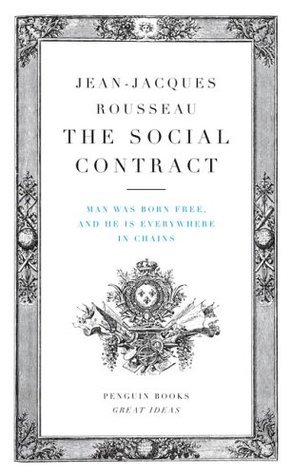
To escape the chaos of the state of nature, Hobbes introduces the idea of the social contract. Individuals, recognizing the dangers of unrestricted freedom, collectively agree to surrender certain liberties. This agreement is not between the people and an authority, but among the people themselves—to mutually accept the rule of a sovereign who can ensure peace and security. The social contract, for Hobbes, is the necessary and rational foundation of organized society.
The Necessity of Absolute Sovereignty
Central to Hobbes’s argument is the necessity for absolute sovereignty. The sovereign, whether a monarch or an assembly, must wield undivided and unchecked power to create laws, enforce order, and control the means of coercion. Hobbes contends that only a powerful authority can prevent society from collapsing back into the state of nature. He prioritizes stability and security over individual freedoms, justifying near-absolute control if it maintains peace.
Law, Order, and Civil Peace
Hobbes also addresses the role of law and civil institutions. The sovereign is the source of all law, and obedience to civil authority is paramount. By creating predictable and uniform laws, the leviathan protects citizens from both internal and external threats. Hobbes warns that challenges to the sovereign’s authority—disobedience or civil war—can only lead to the dissolution of order and a return to chaos.
Religion and Political Authority
Finally, Hobbes discusses the relationship between religion and political authority. He argues that the sovereign must have control over religious practices to avoid sectarian conflict and disunity. By subordinating religious authority to civil power, Hobbes seeks to prevent religion from undermining peace. This controversial stance underscores his conviction that the stability of the commonwealth is the highest good, even above religious freedom.
Download This Summary
Get a free PDF of this summary instantly — no email required.