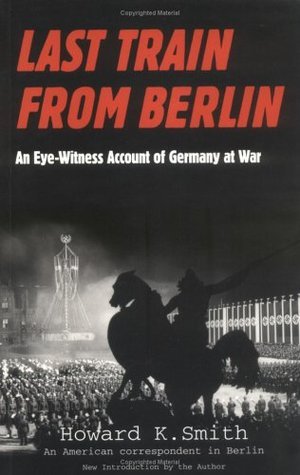
Last Train From Berlin: An Eye-Witness Account of Germany at War
Book Description
A city on the brink of collapse, Berlin pulsates with stories of courage, desperation, and betrayal as war rages around it. Howard K. Smith’s 'Last Train From Berlin' captures the raw, unfiltered snapshots of life in a city under siege, where fleeting moments of hope clash with the grim reality of conflict. Witness first-hand the chaos, the haunting emotions, and the indomitable spirit of those caught in the maelstrom. Every account pulls you deeper into a world fraught with tension and heart, leaving you wondering: what sacrifices must be made for a glimpse of freedom amidst the ruins?
Quick Book Summary
"Last Train From Berlin" by Howard K. Smith is an evocative first-person account detailing life in Berlin during World War II, as seen through the eyes of an American journalist. Smith chronicles the volatile atmosphere in the German capital as defeat looms, revealing the courage, fear, and disillusionment of ordinary citizens and Nazi officials alike. The narrative weaves together personal observations, interactions with locals, and reflections on the immense psychological toll of war. Through Smith’s vivid prose, readers experience the deprivations, shifting allegiances, and ever-present threat of violence that defined daily life. More than a reporter’s chronicle, the book offers a profound meditation on the resilience and moral struggles of individuals caught in history’s darkest moments.






Summary of Key Ideas
Table of Contents
The Collapse of Everyday Life Under Siege
As the Allied forces tightened their grip around Berlin, the fabric of city life began to unravel. Essential supplies ran perilously low, forcing citizens into unfamiliar routines defined by scarcity and ingenuity. Formerly vibrant neighborhoods became ghostly remnants, marked by bombings and evacuation. Public services faltered, and the once-constant hum of the metropolis gave way to a tense, uncertain quiet. Howard K. Smith catalogues these disruptions, highlighting how the pressures of war invaded even the most mundane domestic spheres, as families coped with hunger, separation, and the constant threat of violence.
Fear, Propaganda, and Information Control
Amid this chaos, the Nazi regime redoubled its efforts to shape the perceptions of its citizens. Smith documents the pervasive presence of propaganda—from posters to radio broadcasts—as fear and suspicion became central tools for maintaining control. Informants lurked everywhere, ensuring that dissent was swiftly crushed. Trust eroded within communities, leaving people fearful of speaking openly. Smith’s outsider status as a journalist allowed him to observe both overt and subtle forms of censorship, as well as the psychological toll that constant surveillance imposed on the population.
Resistance, Compliance, and Survival
Survival in wartime Berlin demanded complex moral choices. Some embraced the regime out of conviction or opportunism, but many simply clung to routine for safety. Quiet forms of resistance, such as sharing information or offering shelter, were risky but present. Smith relays stories of those who risked everything to act on conscience, as well as those who capitulated to fear or necessity. His interviews and observations reveal a city split between hope and resignation, where heroes and collaborators often emerged from unexpected places.
Personal Encounters and Humanizing the Enemy
Through his personal encounters, Smith paints nuanced portraits of Berliners, moving beyond faceless masses to illuminate individual struggles. Ordinary citizens, Nazi officials, and foreign nationals each demonstrate moments of compassion, remorse, or complicity. Smith’s empathy for both victims and perpetrators highlights the shared humanity underlying their divergent choices. His reports challenge dehumanizing wartime stereotypes, instead prompting reflection on the factors that bind people together or drive them apart.
The Journey to Escape and Reflections on Freedom
Smith’s eventual flight from Berlin on the last available train is both a literal escape and a thematic climax. The journey out serves as a powerful meditation on freedom and survival. Witnessing the crumbling regime and the desperation of those left behind, Smith confronts both relief and guilt. His reflections urge readers to consider the price of liberty and the enduring scars left by war. The closing passages reinforce the book’s central message: in the midst of darkness, the resilience, morality, and complexity of individuals can shine through, even as history’s forces grind onward.
Download This Summary
Get a free PDF of this summary instantly — no email required.