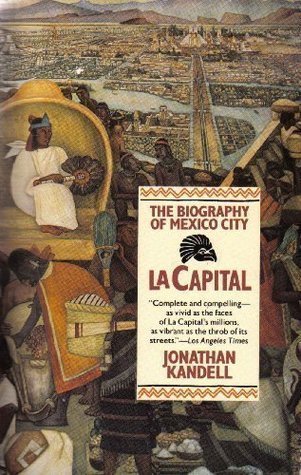
La Capital: The Biography of Mexico City
Book Description
A sprawling metropolis teeming with vibrant history and stark contrasts, Mexico City rises from the ashes of conquest and revolution, where every street harbors tales of resilience and ambition. Jonathan Kandell expertly weaves together the city’s tumultuous past, from ancient Aztec heritage to modern-day challenges, highlighting the indomitable spirit of its people. Amidst political upheavals and cultural revolutions, Mexico City emerges as a character of its own—one that embodies both chaos and beauty. Just how does this city continue to thrive against the odds, captivating hearts and minds?
Quick Book Summary
Jonathan Kandell’s "La Capital: The Biography of Mexico City" delivers a sweeping narrative of one of the world’s most fascinating cities. Through deft storytelling and thorough research, Kandell presents Mexico City as a living organism—shaped by centuries of conquest, innovation, adversity, and creativity. He traces its evolution from the awe-inspiring Aztec capital of Tenochtitlán through the traumas of Spanish colonization, its emergence as the beating heart of New Spain, and its subsequent passages through reform, revolution, and urban explosion. The city’s story is illuminated by political upheavals, cultural milestones, and the resilience of its citizens who continually adapt to corruption, disaster, and vibrant change. Kandell’s work blends history and biography, presenting the city as a protagonist—unruly, beautiful, and perpetually in motion.



Summary of Key Ideas
Table of Contents
Aztec Foundations and the City’s Origins
The story begins with the city’s founding on the site of Tenochtitlán, the capital of the Aztec Empire. Kandell draws on archaeological records and indigenous accounts to depict a sophisticated society, with its chinampas, monumental temples, and centralized authority. This heritage established a template of urban organization, religious symbolism, and social stratification that would reverberate through every stage of the city’s development. The city grew from swampy islands into a metropolis by harnessing nature—and repeatedly battling it. These early chapters also highlight the brutality and brilliance of the pre-Columbian era, setting the stage for the seismic impact of Spanish conquest.
Legacies of Conquest and Colonial Transformation
Spanish conquest delivered devastation, but also began a remarkable process of cultural fusion. The city’s destruction led to its rebirth as Mexico City, the capital of New Spain. Kandell explains how indigenous, European, and African influences melded in its churches, palaces, cuisine, and language. Despite rigid colonial hierarchies and frequent unrest—such as deadly floods, epidemics, and revolts—Mexico City thrived as a commercial, administrative, and artistic center. Its streets became the stage for both oppression and vibrant resistance, as diverse communities negotiated the boundaries of faith, class, and power under Spanish rule.
Political Turbulence and Civic Resilience
With independence and the 19th century came political upheaval and new challenges. The city endured foreign invasions, internal power struggles, and dramatic reforms. The Mexican Revolution and its legacy reshaped not only political structures but also public spaces and the rhythms of city life. Kandell explores episodes of turmoil and rebuilding, including the mismanagement and corruption that repeatedly threatened the city’s stability. Through these eras, the resilience and ingenuity of Mexico City’s inhabitants shine, as they find ways to maintain order, make a living, and express dissent.
Cultural Dynamism and Creative Flourishing
Mexico City has always been a cauldron of cultural innovation. Kandell showcases how music, muralism, cuisine, and literature thrived alongside (and often in defiance of) chaos and repression. Artists like Diego Rivera and Frida Kahlo placed the city on the world stage, while ordinary citizens turned neighborhoods into vital cogs of tradition and change. The book highlights how Mexico City’s layered history is visible in its architecture, festivals, and continued blending of old and new. The city’s creative energy, Kandell argues, is one of its greatest sources of endurance and allure.
Enduring Challenges and Ongoing Adaptation
Despite relentless growth and natural disasters—earthquakes, floods, pollution—Mexico City continually reinvents itself. Kandell examines the city’s struggles with overpopulation, inequality, and political corruption, as well as the grassroots efforts and innovations keeping the city alive. He ends on an optimistic note: even as it sprawls and seethes, Mexico City’s capacity for adaptation and its vibrant spirit ensure its continued survival and magnetic power. The city emerges not as a backdrop, but as a full character—restless, flawed, immeasurably complex, and ultimately incomparable.
Download This Summary
Get a free PDF of this summary instantly — no email required.