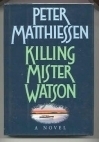
Killing Mister Watson
Book Description
A mysterious murder echoes through the Florida Everglades, entwining the lives of those who loved—and feared—Mister Watson, a man whose presence loomed large. As whispers spread and tensions rise in a secluded community, the lines between loyalty and betrayal blur, igniting a haunting quest for truth. Secrets surface like hidden gators beneath the murky waters, leading to a gripping reckoning where every character harbors their own demons. What happens when the past catches up with the living, and the quest for justice ignites passions that threaten to consume all? In a world where nothing is as it seems, who will pay the ultimate price?
Quick Book Summary
Killing Mister Watson by Peter Matthiessen is a haunting exploration of a mysterious murder in the lawless Florida Everglades at the turn of the 20th century. The novel traces the complex life and sudden death of Edgar J. Watson, a charismatic yet feared plantation owner, through the voices of townspeople, family, and outcasts connected to him. As the community grapples with suspicion and fear, each character reveals hidden motives, secrets, and guilt, constructing a multi-faceted portrait of Watson and the brutal world they inhabit. Matthiessen masterfully deploys multiple perspectives, blurring the lines between villain and victim, loyalty and betrayal. Ultimately, the novel is a meditation on justice, myth-making, and the dark heart of human nature in a landscape where past and present are inseparable.




Summary of Key Ideas
Table of Contents
The Line Between Legend and Truth
Killing Mister Watson immerses readers in the isolated and untamed frontier of the Florida Everglades during the late 1800s and early 1900s. The central figure, Edgar J. Watson, is both revered and feared by his neighbors—an enigmatic man with a dark reputation as much a part of local folklore as fact. Matthiessen employs a chorus of voices, each sharing their version of events leading to Watson’s violent demise at the hands of a mob. This multiplicity of perspectives exposes how community narratives are shaped and twisted, turning Watson into both a villain and a martyr.
Justice and Vigilantism
The thin divide between legend and reality emerges as townsfolk recall stories of Watson: his kindness to some juxtaposed with his ruthlessness to others. Fact and rumor intermingle, showing how collective memory is unreliable when weighed down by fear and prejudice. Matthiessen’s structure calls into question the very nature of truth, suggesting that myth-making is inseparable from the process of understanding history, especially in places marked by isolation and brutality.
Family, Loyalty, and Betrayal
As the novel unfolds, justice becomes a fraught and ambiguous pursuit. The community’s inability or unwillingness to trust the law leads to vigilantism, culminating in Watson’s murder. Some justify the killing as necessary self-defense; others see it as a tragic miscarriage rooted in rumor. Through their conflicting testimonies, Matthiessen interrogates the ethics of frontier justice, challenging the reader to question whether true justice is ever possible in such a divided society.
The Shaping Power of Landscape and Memory
Family and loyalty underscore the characters’ motives and regrets. Watson’s children and partners are complex, grappling with their love for him alongside their fear and confusion about his actions. Betrayal runs deep—among neighbors, friends, and kin—as past transgressions and secrets surface. The personal costs of loyalty unravel families and friendships alike, showing that the consequences of betrayal are as lasting as the violence that haunts their land.
Secrets, Guilt, and the Search for Redemption
The Everglades landscape itself becomes a character, shaping the destinies and identities of all who inhabit it. Its wildness mirrors the chaos and unpredictability of the human heart. As revelations mount, buried secrets and the weight of guilt drive individuals toward reckoning and, for some, attempts at redemption. By weaving together the collective voices of his cast, Matthiessen crafts a powerful meditation on how memory, landscape, and history shape individual and communal destinies, ending on a note as murky and unresolved as the waters of the Everglades.
Download This Summary
Get a free PDF of this summary instantly — no email required.