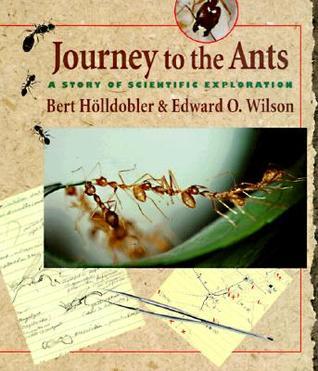
Journey to the Ants: A Story of Scientific Exploration
Book Description
Step into a world teeming with life beneath our feet, where tiny armies wage wars and build empires. "Journey to the Ants" invites you on an exhilarating exploration of one of nature's most fascinating creatures. Discover the intricate societies, astonishing behaviors, and never-before-seen dramas of the ant kingdom, as science and adventure collide. Each page unveils a new revelation, challenging everything you thought you knew about these miniature titans. What secrets lie hidden within their bustling colonies, and how might understanding them change our view of collaboration and survival? Ready to join the expedition?
Quick Book Summary
"Journey to the Ants" by Bert Hölldobler is a captivating exploration of the world of ants and the insights they offer into biology, evolution, and society. Written by two of the foremost myrmecologists, the book blends memoir, natural history, and science to present the wonders beneath our feet. From foraging trails to colonial warfare, the authors reveal how ants invent complex societies, display disparate behaviors, and solve survival challenges. With engaging anecdotes and vivid storytelling, readers not only learn about ant biology but also how these tiny insects can shed light on cooperation, adaptation, and ecological balance. This book is as much about the adventure of discovery as it is about the ants themselves, offering both scientific rigor and personal reflection.




Summary of Key Ideas
Table of Contents
Social Organization and Communication
The social complexity of ants forms the heart of the narrative, illustrating how these insects have evolved sophisticated systems of organization. Colonies are depicted as superorganisms, with each ant performing specialized roles—from workers and soldiers to queens and scouts. Through chemical signals, or pheromones, ants coordinate their actions, maintain order, and make collective decisions that enable survival and group cohesion. These intricate social structures invite comparisons to human societies and highlight the power of teamwork in nature.
Colony Survival and Division of Labor
A vivid portrayal unfolds of how ants ensure their colony’s longevity through division of labor and ingenious methods of survival. Strategies such as farming fungus, milking aphids, collecting seeds, and waging territorial wars are explored in detail. The authors delve into the reproductive strategies, lifecycle, and the incredible ability of ants to adapt their roles when needed, ensuring the resilience and efficiency of the colony in changing environments.
Ants as Ecosystem Engineers
The ecological influence of ants stretches far beyond their miniature scale. The book describes how ant colonies aerate soil, disperse seeds, regulate insect populations, and even shape entire ecosystems. By studying these processes, scientists uncover the essential functions ants perform in sustaining biodiversity and ecosystem health. The narrative underscores how understanding these roles is crucial for conservation and appreciating the interconnectedness of life.
Evolution and Adaptation
Evolution is a recurring theme, as the authors trace ants’ emergence from solitary wasp-like ancestors to their present-day diversity and dominance. Exploring fossil evidence and comparative anatomy, the book illustrates the adaptive traits that have enabled ants to colonize nearly every terrestrial habitat. Their evolutionary success hinges on their sociality, communication, and rapid ability to innovate new survival strategies, reflecting the broader evolutionary forces that shape life.
Scientific Exploration and Discovery
Finally, "Journey to the Ants" is a celebration of scientific curiosity. Anecdotes from fieldwork and laboratory research reveal the challenges and triumphs of studying ant societies. The narrative captures the thrill of discovery, the patience required for observation, and the ongoing questions that drive scientific exploration. The authors invite readers to share in their journey, suggesting that understanding ants not only enriches our knowledge of biology but also kindles a deeper connection with nature.
Download This Summary
Get a free PDF of this summary instantly — no email required.