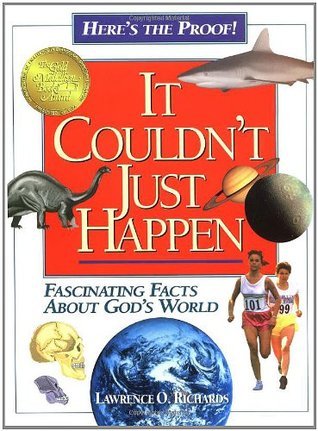
It Couldn't Just Happen: Fascinating Facts About God's World
Book Description
Prepare to have your mind blown by the extraordinary wonders of the universe! "It Couldn't Just Happen" takes you on a captivating journey through the stunning intricacies of God's creation. Explore the delicate balance of ecosystems, the marvels of the human body, and the mind-boggling complexity of the cosmos. Richards unveils powerful truths and breathtaking facts that challenge conventional beliefs and inspire awe. Each turn of the page reveals the divine intricacy woven into every element of life, urging a deeper appreciation for the world around us. What if everything you thought you knew about existence was just the tip of the iceberg?
Quick Book Summary
"It Couldn't Just Happen: Fascinating Facts About God's World" by Lawrence O. Richards presents an engaging exploration of our universe from a creationist perspective, geared especially toward young readers and families. The book showcases the extraordinary complexity and balance found in nature, from the immense scale of galaxies to the minute design of flowers and cells. Richards encourages readers to question the idea that such intricacy could arise by chance, instead pointing to God's intentional design as the source of these wonders. Blending accessible scientific facts with faith-based insights, the book invites readers to marvel at the mysteries of life, appreciate the evidence for a Creator, and develop both curiosity and gratitude for the world. It is both an educational resource and a devotional reflection, aiming to nurture faith through the marvels of creation.




Summary of Key Ideas
Table of Contents
The Fine-Tuning of the Universe
Richards begins by illustrating the remarkable fine-tuning present throughout the universe. He points out how physical laws, constants, and cosmic forces work together in precise harmony, making life not only possible but sustainable. For example, he describes how even a slight change in gravity or the Earth's distance from the sun would hinder life's existence. Such intricate balance, he argues, suggests purposeful design rather than mere chance, inviting readers to reflect on the underlying order of creation.
The Marvels of Biological Life
Next, the book turns to the astonishing intricacies of living organisms. Richards highlights facts about the human body—such as the complex functioning of the eye and the brain—as well as the detailed processes in plants and animals. Through vivid examples, he demonstrates that the blueprints for life, encoded in DNA and visible in magnificent adaptations, reflect intelligence beyond random mutation. He encourages awe at the layers of information and cooperation present within every living thing.
The Complexity of Ecosystems
Richards explores the interconnectedness of Earth's ecosystems, showing how plants, animals, and the environment rely on one another for survival. He shares fascinating examples of symbiosis, cycles such as water and nitrogen, and how even tiny changes can disrupt the balance. This section underscores the point that the natural world is not a collection of isolated parts but a web of cooperation, which, Richards claims, points back to an overarching design and care.
The Search for Meaning and Purpose in Nature
A strong theme of the book is the search for meaning and purpose within nature. Richards argues that creation reflects the character of a Creator who values order, beauty, and relationship. By observing the world, people can glimpse deeper truths about their place and purpose. He addresses common questions young readers may have about why we exist and how we fit into the larger story of creation, encouraging thoughtful engagement with both science and faith.
Thinking Critically About Origins
Throughout, Richards invites critical thinking about the origins of life and the universe. Rather than accepting either naturalistic or faith-based explanations at face value, he presents evidence and questions that encourage readers to weigh different perspectives. The book empowers young minds to consider the limitations of chance-based theories and appreciate the case for a Creator, ultimately urging them to see science and faith as complementary paths to understanding God's world.
Download This Summary
Get a free PDF of this summary instantly — no email required.