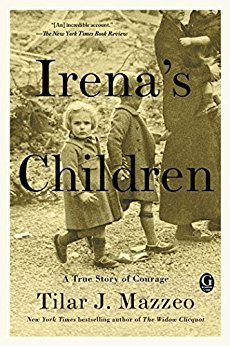
Irena's Children: The Extraordinary Story of the Woman Who Saved 2,500 Children from the Warsaw Ghetto
Book Description
Amid the harrowing shadows of World War II, one woman's courage shone brighter than the darkest despair. Irena Sendler, armed with nothing but her unwavering spirit, risked her life to save 2,500 children from the clutches of the Warsaw Ghetto. With each secretive escape, she navigated perilous streets and faced ruthless enemies, driven by a fierce determination to protect innocent lives. This gripping tale of bravery and compassion highlights the indomitable strength of hope against overwhelming odds. Can one person truly make a difference in a world engulfed by chaos?
Quick Book Summary
"Irena's Children" by Tilar J. Mazzeo is the true story of Irena Sendler, a Polish social worker who risked her life during World War II to save more than 2,500 Jewish children from the Warsaw Ghetto. Navigating a world of constant danger and treacherous Nazi rule, Irena used creative and daring methods—smuggling children in ambulances, hiding them with false papers, and organizing an extensive underground network. Despite facing torture and the threat of execution, she stayed committed to her mission and kept meticulous records so reunited families might be possible after the war. This biography not only honors Irena's extraordinary courage but also illuminates the power of compassion and the difference one determined individual can make even in humanity's darkest hours.



Summary of Key Ideas
Table of Contents
The Courage of Moral Resistance
Irena Sendler’s story unfolds amidst the brutality of Nazi-occupied Poland, where the Warsaw Ghetto became a prison for thousands of Jews. From her position as a social worker, Irena witnessed the suffering firsthand and was unable to stand by. Animated by compassion and a strong sense of justice, she organized an underground network—comprised primarily of women—tasked with engineering daring rescues, often at the risk of immediate execution if caught. This group’s ingenuity in devising escape routes and disguises reflected the extraordinary moral courage required to resist such evil.
Underground Networks and Collaboration
The operations themselves were fraught with peril and demanded constant innovation. Smuggling children out of the ghetto required methods both simple and bold: sedative-laced cloth sacks, ambulance rides, or even escape through sewer tunnels. Once outside, the children were given false identities and placed with sympathetic Polish families, orphanages, or religious institutions. Every act required coordination with underground movements and access to forged papers, all performed under the noses of the Gestapo. Irena maintained detailed lists of the true identities and new locations of each child, ensuring that hopeful reunions could be possible after the war’s end.
The Innocence of Childhood Amid Atrocity
Irena’s compassion was rooted in her unwavering respect for the innocence and dignity of the children she rescued. She understood the trauma these children endured, separated from families and forced to take on new identities. Her empathy not only guided her actions but inspired those around her to participate in the mission. For each child saved, there were moments of hope snatched from despair, providing small but vital triumphs against overwhelming cruelty. The children’s stories, threaded throughout the book, provide a human face to the statistics of the Holocaust.
Ingenuity in the Face of Oppression
Despite her caution, Irena was eventually discovered, arrested, and brutally interrogated by the Gestapo. She endured torture and a death sentence with remarkable fortitude, refusing to betray her collaborators or the identities of the rescued children. Even while imprisoned, her resilience did not falter, and her allies in the Polish underground managed to orchestrate her escape. Survival did not dampen her desire to serve—after the war, she continued to work on behalf of children and maintained her mission of remembrance.
The Legacy of Remembrance and Hope
The legacy of Irena Sendler, as recounted by Mazzeo, is a powerful reminder of the enduring capacity for good amid evil. Her careful documentation allowed many families to be reunited. The book honors not only her deeds but the principle that individual action, rooted in empathy and courage, can change the course of history. Mazzeo’s narrative challenges readers to consider the weight of moral responsibility and the profound impact one person can have when choosing to act on behalf of others, even at immense personal risk.
Download This Summary
Get a free PDF of this summary instantly — no email required.