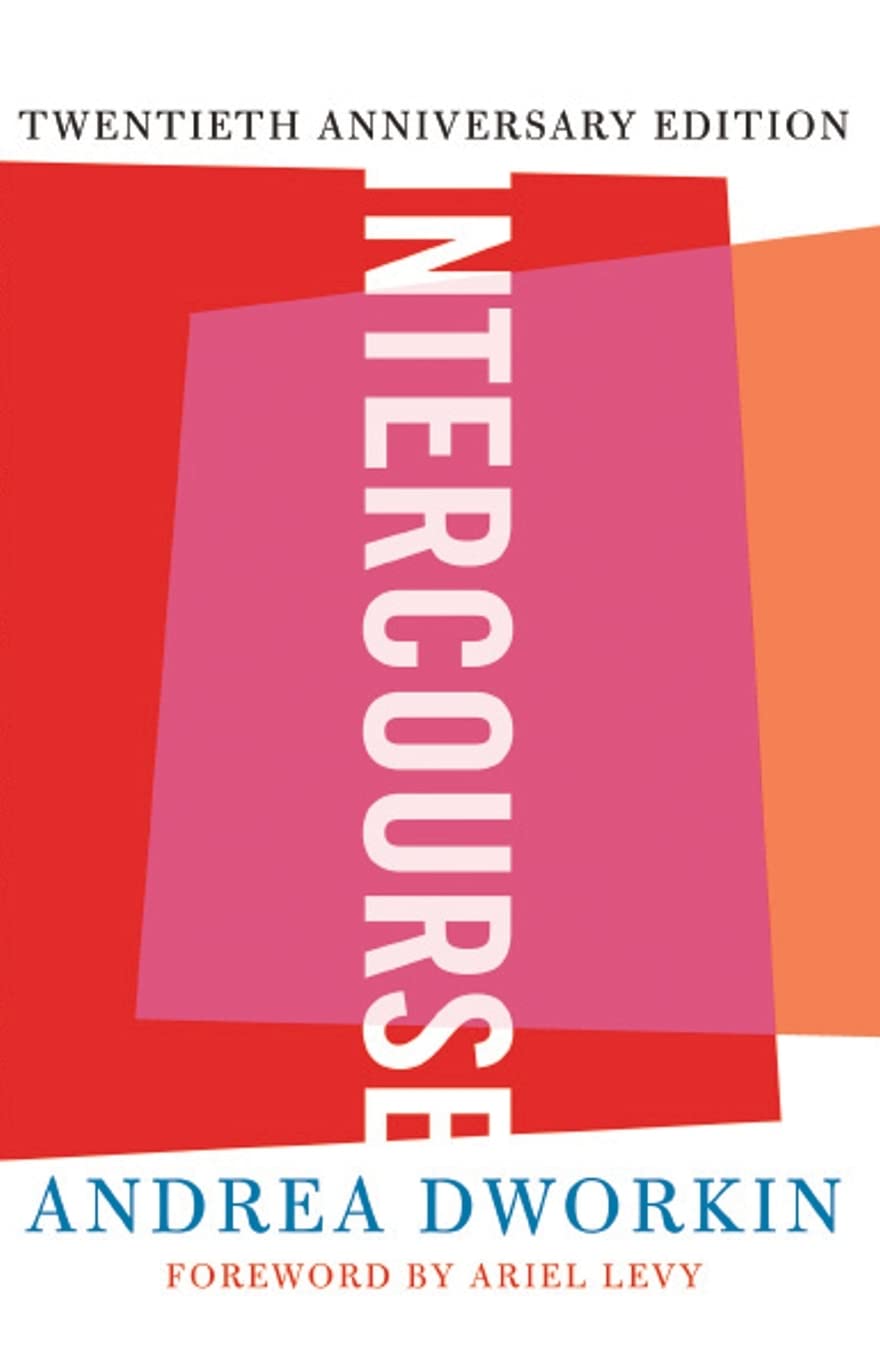
Intercourse
Book Description
Sex, power, and the raw reality of human relationships collide in Andrea Dworkin’s provocative exploration of intimacy. Through fierce, unflinching prose, Dworkin dissects the societal constructs that shape our understanding of desire and dominance. Her words pierce through comfort zones, challenging readers to confront uncomfortable truths about gender, coercion, and the complexity of love. With a rhythm that grips tightly, the narrative weaves together shocking insights and poignant observations, leaving an indelible mark on the psyche. What do we truly sacrifice in the name of passion, and who stands to benefit from our silence?
Quick Book Summary
In "Intercourse," Andrea Dworkin delivers an unflinching feminist critique of the social and political dimensions of heterosexual sex. She contends that intercourse, as shaped by patriarchal norms, has historically been intertwined with male dominance and female subordination. Drawing on examples from literature, culture, and personal testimony, Dworkin argues that traditional sexual relations reflect and perpetuate broader systems of gendered power imbalance. Rather than treating intercourse as a purely private act, she exposes its public consequences and the deep-rooted ways in which sexuality can be influenced by systemic oppression. Courageously, Dworkin challenges common assumptions about intimacy, desire, and consent, forcing readers to reconsider the costs of passion and who is empowered—or disempowered—by silence.



Summary of Key Ideas
Table of Contents
Sexuality as Political Power
"Intercourse" opens with a critical examination of how sexuality, particularly heterosexual intercourse, functions as a site of power rather than merely an act of personal pleasure or intimacy. Dworkin confronts the persistent narrative that sex exists outside of politics, illustrating instead that sex is regulated, discussed, and valued according to patriarchal priorities. She insists that the act itself often mirrors the social realities of male dominance and female submission, shaping perception and practice in both overt and subtle ways.
Gendered Dynamics of Desire
At the core of the text, Dworkin delves into how desire and eroticism are gendered, not just in action but in the cultural imagination. She explores how men’s desire is normalized as active and dominant, while women's pleasure is frequently ignored or defined in relation to male experience. Intercourse, in this context, becomes a metaphor for the societal script, one in which women are, by design, always at risk of being objectified or consumed by male will.
Intercourse and Societal Control
Dworkin challenges readers to acknowledge that sexual relations are tightly bound to larger systems of social control, where women's bodies become battlegrounds in political and personal struggles. The book unpacks the mechanisms by which intimacy becomes a form of surveillance and regulation, reinforcing broader hierarchies. Dworkin emphasizes the need to recognize how private acts like intercourse are shaped by external forces of culture, law, and tradition, rather than being solely acts of individual agency.
Silence, Consent, and Coercion
Throughout her analysis, Dworkin interrogates the concepts of silence and consent, arguing that "no" is often undermined by societal expectations and the pervasive threat of violence. She points out how the negotiation of sexual boundaries is complicated by power imbalances, making true consent elusive for many women. Dworkin's searing critique calls into question the legitimacy of supposedly free sexual choice in a context structured by the possibility of coercion and the normalization of male entitlement.
Cultural Reflections in Literature
Finally, Dworkin draws on literature and cultural artifacts—ranging from canonical novels to pornography—to illustrate how the dynamics of intercourse are inscribed in collective consciousness. By weaving references to texts like "Madame Bovary," "Wuthering Heights," and even the works of de Sade, she demonstrates that cultural narratives reinforce and reflect the realities she critiques, perpetuating myths about love, passion, and the right to possess another’s body. Through this multidisciplinary approach, "Intercourse" not only reveals the complexity of sex and power but demands a profound reconsideration of intimacy itself.
Download This Summary
Get a free PDF of this summary instantly — no email required.