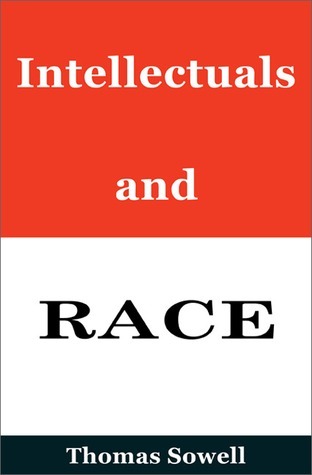
Intellectuals and Race
Book Description
What happens when ideology collides with reality? In "Intellectuals and Race," Thomas Sowell unveils the complex interplay between race and the intellectual elite, challenging long-held beliefs and sparking fierce debates. With razor-sharp analysis, he dissects how ideas shape policies and influence lives, exposing the often-overlooked consequences of well-intentioned narratives. The tension builds as Sowell interrogates the motivations behind modern racial discourse, leaving readers questioning assumptions they've taken for granted. Can the truth about race and intellect shatter prevailing myths, or will it only deepen the divide? Prepare for an enlightening journey that dares to confront uncomfortable truths.
Quick Book Summary
"Intellectuals and Race" by Thomas Sowell critically examines the role intellectuals play in shaping discussions and policies about race, exposing how motivations and assumptions among the intellectual elite often distort reality. Sowell contends that prevailing narratives about racial inequalities frequently ignore historical context, economic realities, and empirical data, in favor of ideologically driven interpretations. He scrutinizes how theories formulated in isolation from real-world complexity can have far-reaching and sometimes damaging consequences, influencing public policies that fail to achieve their intended aims. Throughout the book, Sowell challenges widely accepted views about differences in racial outcomes, arguing that culture, social capital, and historical contingencies are crucially important—often more so than discrimination or genetics. Ultimately, he urges readers to approach discussions about race with skepticism toward fashionable notions and a greater commitment to facts.


Summary of Key Ideas
Table of Contents
The Influence of Intellectuals on Racial Narratives
Sowell begins by dissecting the unique role that intellectuals play in shaping public perceptions of race. He points out that intellectuals, often isolated from everyday realities, wield disproportionate influence through the media, academia, and political institutions. Their ideas, once translated into social policies or cultural narratives, can persist and spread regardless of their effectiveness or accuracy. This influence, according to Sowell, frequently leads to the dominance of certain racial narratives that ignore data and real-world complexities.
Limitations of Theory versus Empirical Reality
Delving deeper, Sowell contrasts the allure of elegant theoretical frameworks with the messier truths revealed in empirical evidence. He stresses how intellectuals' preferences for abstract theory—such as assuming systemic discrimination as the sole cause for disparities—often lead to policies that overlook important socioeconomic and cultural factors. By favoring ideology over facts, policymakers and thinkers can inadvertently perpetuate or worsen the problems they seek to address, according to Sowell's analysis.
Historical and Cultural Factors in Racial Outcomes
A central argument throughout the book is that racial disparities in education, income, and social status are often better explained by historical and cultural contexts rather than by innate differences or exclusive reliance on discrimination narratives. Sowell brings detailed examples from different societies, emphasizing how migration patterns, geography, and community structures influence group outcomes. He highlights how, for example, intergroup disparities have existed across many countries and time periods, regardless of local racial dynamics.
Consequences of Policy Based on Ideology
Sowell then explores the real-world impact of policies implemented based on intellectual fashions—such as affirmative action or educational reforms driven by ideology rather than hard evidence. He documents unintended negative consequences, including the entrenchment of disadvantage and the creation of new forms of resentment. Rather than helping marginalized groups, some policies can backfire by reinforcing stereotypes or neglecting root causes that are not primarily racial.
Challenging Prevailing Myths about Race
In closing, Sowell calls for greater intellectual humility and a renewed focus on factual accuracy when addressing racial issues. He encourages skepticism toward sweeping explanations rooted in ideology and warns against the dangers of crafting public policy detached from empirical reality. Ultimately, Sowell advocates a more nuanced approach that appreciates the complex causes of group disparities and aims to improve real-world outcomes rather than serving ideological agendas.
Download This Summary
Get a free PDF of this summary instantly — no email required.