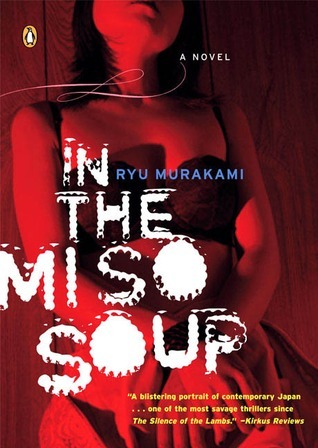
In the Miso Soup
Book Description
A bubbling pot of miso soup hides darker secrets beneath its surface. Within Tokyo's neon-lit streets, a tour guide named Kenji finds himself entangled with a mysterious and unsettling foreigner, whose appetite for violence becomes dangerously intoxicating. As the nights unfold, paranoia seeps into their fragile bond, revealing haunting truths beneath the city's alluring facade. Kenji must confront the simmering chaos threatening to consume him and decide how far he will go to protect his world. Will he serve up his own salvation, or will he be swallowed whole by the miso-scented darkness surrounding him?
Quick Book Summary
In the Miso Soup is a chilling psychological thriller set in the nightlife underbelly of Tokyo. Kenji, a young Japanese tour guide who caters to foreigners seeking the city’s seedy pleasures, is hired by Frank, a mysterious American with unsettling habits. Over three nights leading up to New Year's Eve, Kenji becomes increasingly unsettled by Frank's behavior and dark fascinations, suspecting that he might be involved in horrific crimes. Paranoia and dread mount as Kenji struggles to distinguish truth from assumption, his fear for personal safety twisting with a deeper unease about urban alienation and the state of modern Japanese society. As the narrative peels back layers of depravity and cultural dissonance, Kenji is forced to confront both external threats and his own moral boundaries, leading to a shocking climax that questions the cost of survival in a world teetering on the edge of darkness.




Summary of Key Ideas
Table of Contents
Alienation and Urban Isolation
Kenji’s profession as a nightlife guide introduces readers to Tokyo’s shadowy entertainment scene. Through his eyes, the city’s neon lights mask a labyrinth of desperation, consumerism, and moral decay. Kenji’s internal monologue provides insight into both his own disconnection and the broader societal malaise plaguing Tokyo’s youth. He reflects on his relationship with Jun, his girlfriend, and the wider implications of working in an industry that profits from loneliness and secrecy, highlighting the city’s pervasive sense of alienation.
The Search for Identity in Modern Japan
Frank, the American client, becomes a symbol of otherness and menace. His bizarre questions, unsettling demeanor, and contradictory stories make Kenji—and the reader—question Frank’s true motives. As their nightly excursions grow more tense, Kenji suspects Frank may be a serial killer responsible for recent gruesome crimes reported in the media. The psychological terror intensifies as Kenji is forced to weigh his suspicions against his economic dependence on Frank and his own ingrained reluctance to confront violence directly.
Violence and the Nature of Evil
Violence in the novel is both literal and metaphorical. Frank’s horrifying actions and twisted worldview reveal the ever-present but often ignored dangers lurking beneath society’s surface. The story interrogates what drives individuals toward brutality and the ways society enables their concealment. Kenji, normally a passive observer, is thrust into the role of potential victim, forcing him to consider his own complicity and capacity for violence when pushed to the brink.
Moral Ambiguity and Survival
The dynamic between Kenji and Frank also foregrounds themes of cultural disconnection. Frank’s outsider status and crude misunderstandings of Japanese customs contrast sharply with Kenji’s self-critical gaze on his own culture. Their fraught interactions lay bare the miscommunications and xenophobia that fester beneath polite exteriors, while also calling into question the integrity and identity of both men in a rapidly globalizing world.
Cultural Disconnection and the Outsider
By the novel’s conclusion, Kenji faces harrowing choices that blur moral boundaries. His struggle is not just for survival, but for understanding the darkness within himself and his environment. The ambiguous final moments invite readers to wrestle with questions about guilt, complicity, and the possibility (or impossibility) of redemption in a fractured world. Murakami’s narrative lingers long after the book’s end, offering no easy answers amid the miso-scented shadows.
Download This Summary
Get a free PDF of this summary instantly — no email required.