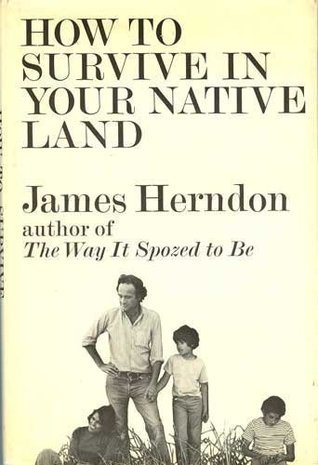
How to Survive in Your Native Land
Book Description
Caught in a world that feels both familiar and foreign, James Herndon’s 'How to Survive in Your Native Land' thrusts readers into the heart of a tumultuous struggle for identity and belonging. As tensions rise in a fractured community, the characters grapple with their pasts, forging unexpected alliances and facing the harsh realities of loyalty and betrayal. Each choice they make intensifies their fight for survival, pushing the limits of trust and solidarity. With the fabric of their lives unraveling, who will rise above the chaos, and at what cost? Can true connection triumph in a divided world?
Quick Book Summary
"How to Survive in Your Native Land" is James Herndon's candid, humorous memoir depicting his years as a junior high school teacher in 1960s California. Blending autobiography with sharp cultural critique, Herndon exposes the daily realities, absurdities, and poignancy of public education. He confronts the disconnection between educational ideals and institutional practices, laying bare both the frustrations and small victories that define the profession. The book’s narrator grapples with bureaucratic inertia, the challenges of reaching students, and his quest for genuine connection amidst alienation. Through lively anecdotes, Herndon ultimately reveals both the chaos and the fragile, persistent humanity that lie at the heart of the American educational experience.




Summary of Key Ideas
Table of Contents
Alienation within Institutional Systems
James Herndon’s memoir plunges readers into the chaos of junior high school life, where teachers and students alike feel alienated by rigid institutional structures. Drawing from his own teaching experiences, Herndon illustrates how standardized expectations and bureaucracy can inhibit real learning. He narrates moments of struggle—students disengaged by rote curricula, colleagues numbed by routine—as well as fleeting breakthroughs that spark deeper connection.
The Art and Challenge of Real Connection
Through a series of vivid anecdotes, Herndon highlights the small but significant victories that come from authentic engagement with students. He points to the disconnect between educational theory and the unpredictable realities of the classroom, emphasizing the importance of flexibility, empathy, and improvisation. These stories reveal the humanity at stake, and the precarious balance between discipline and genuine understanding.
Rebellion Against Conventional Authority
Herndon satirizes the authority figures that enforce rigid, sometimes nonsensical rules, drawing parallels between the school environment and a fractured society. His reflections expose how both students and teachers develop subtle forms of rebellion to reclaim agency. These acts, whether quiet resistance or open challenge, underscore the difficulties of maintaining individuality within restrictive systems.
The Search for Individual Identity
Central to the memoir is an exploration of identity—not just of the students, but of the teacher himself. Herndon grappled with self-doubt, purpose, and belonging, making his personal journey a mirror for broader societal questioning. The loss and rediscovery of self, framed against the backdrop of daily school life, gives the narrative emotional depth.
Absurdity and Humor as Coping Mechanisms
With sharp wit and dark humor, Herndon frames absurd situations as a means of survival, finding laughter in bureaucratic red tape and daily frustrations. His self-deprecating tone and irreverence offer solace to fellow outsiders, suggesting that humor and solidarity can be powerful tools for weathering disconnection and forging community in even the most alienating settings.
Download This Summary
Get a free PDF of this summary instantly — no email required.