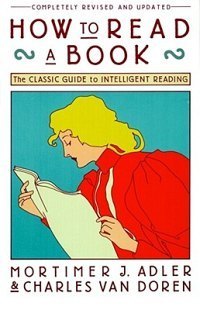
How to Read a Book: The Classic Guide to Intelligent Reading
Book Description
Unlock the hidden world within every book—where ideas collide and knowledge transforms lives. Dive deep into the art of reading with Mortimer J. Adler's transformative guide, revealing the secrets to absorbing not just words, but wisdom. Unravel intricate layers of meaning, learn to ask the right questions, and discover the powerful conversation between reader and author. This isn’t just about reading; it’s about understanding, connecting, and engaging with worlds beyond your own. What if the key to becoming a master of thoughts lies within the pages you turn?
Quick Book Summary
"How to Read a Book" by Mortimer J. Adler is a foundational guide that teaches readers how to engage with texts more deeply, unlocking the true potential of books. Rather than passively absorbing information, Adler encourages a methodical approach to reading, breaking the process into distinct levels that correspond with increasing comprehension and critical participation. The book covers analytical techniques for getting the most out of reading across genres, whether action-packed novels or dense philosophical treatises. It also emphasizes the importance of asking questions, interpreting arguments, and engaging with the author's message. Ultimately, Adler’s guide empowers readers to transform reading from a passive pastime into an active pursuit of knowledge and understanding, fostering intellectual growth and a life-long love of learning.



Summary of Key Ideas
Table of Contents
The Four Levels of Reading
Adler introduces the idea that not all reading is created equal, categorizing it into four levels: Elementary, Inspectional, Analytical, and Syntopical. Each level represents a deeper interaction with the text. The basic levels focus on understanding the language and gist of the content, while the advanced levels demand rigorous interpretation and synthesis. Understanding these levels allows readers to adapt their approach to the complexity and purpose of each book, setting the stage for more meaningful interaction with texts.
Active Reading and Questioning
Central to Adler’s approach is the concept of active reading. Rather than treating books as static repositories of information, the reader is encouraged to see the process as a dynamic conversation. This involves asking questions about the author’s intentions, the book’s main arguments, and its relevance. Through note-taking, highlighting, and summarizing, the reader becomes an engaged participant, which leads to richer comprehension and lasting retention of knowledge.
Analyzing Arguments and Structure
Adler outlines methods for analyzing the logical structure and arguments within a text. He advises readers to identify major themes, understand terms and propositions, and investigate how the author supports conclusions. Engaging critically means challenging assumptions, judging the validity of reasoning, and forming one’s own perspective. This process of analysis is crucial for moving beyond mere acquaintance with a book’s contents to informed evaluation and intellectual independence.
Approaching Different Types of Books
The book recognizes that not all materials should be read in the same way. Approaches are tailored to the genre: imaginative literature is best understood through appreciation of character, plot, and theme, while scientific, mathematical, and philosophical works require careful attention to definitions, evidence, and logical development. Understanding these differences equips readers to modulate their reading strategy and obtain appropriate insights from a wide array of books.
Syntopical Reading and Comparative Understanding
Syntopical reading, Adler’s highest level, involves comparing and contrasting multiple books on a single subject. This technique helps synthesize diverse perspectives, illuminating broader patterns and unresolved questions within a field. By actively cross-referencing sources and constructing one’s own framework of understanding, readers gain both depth and breadth of knowledge, ultimately cultivating the intellectual autonomy and nuanced thinking that lifelong learners prize.
Download This Summary
Get a free PDF of this summary instantly — no email required.