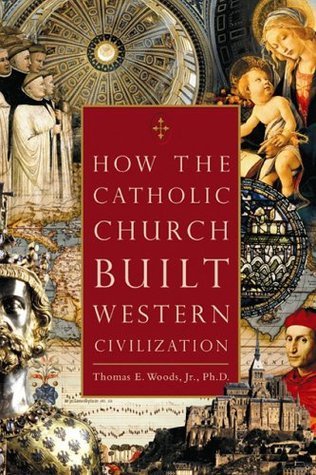
How the Catholic Church Built Western Civilization
Book Description
What if the very foundation of modern society was shaped by an institution often misunderstood? In "How the Catholic Church Built Western Civilization," Thomas E. Woods Jr. unveils a riveting narrative that reveals the Catholic Church's pivotal role in the birth of science, art, and law. As empires rose and fell, one enduring force championed education, fostered compassion, and ignited the flame of innovation. Explore the threads of history woven by faith and intellect that built cathedrals and universities, inspired masterpieces, and guided moral frameworks. What truths about our world today might emerge when we recognize the Church’s profound legacy?
Quick Book Summary
"How the Catholic Church Built Western Civilization" by Thomas E. Woods Jr. offers a compelling re-examination of Western history, highlighting the often-overlooked role of the Catholic Church. Woods argues that far from impeding progress, the Church was a vital engine driving the development of education, science, law, and art in Europe. Through a careful analysis of historical evidence, he reveals how monastic scholarship, Church-backed universities, and religious thinkers shaped the intellectual and moral foundations of Western society. Woods addresses common misconceptions about the Church’s stance on science, law, and social justice, emphasizing its contributions to human rights and the principle of charitable care. This enlightening work challenges readers to reconsider the profound and lasting influence of Catholicism on the modern world.



Summary of Key Ideas
Table of Contents
Preserving Knowledge and Advancing Education
Woods begins by exploring the Church's critical role in preserving ancient knowledge during the chaotic aftermath of the Roman Empire's collapse. Monasteries became centers of learning where monks copied manuscripts, maintained libraries, and provided education to the surrounding communities. As Europe stabilized, the Church fostered intellectual revival, founding the first universities. These institutions not only transmitted classical wisdom but also served as crucibles for debate and inquiry, laying the foundation for Western intellectual life.
The Church and the Birth of Modern Science
The book dives into the Church’s relationship with science, challenging the common narrative of conflict. Woods explains how many foundational figures in science were devout clerics or church-sponsored scholars. Through its doctrine that creation is ordered and intelligible, Catholicism encouraged a systematic study of the natural world. Medieval universities integrated natural philosophy into their curricula, supporting research that led to significant advancements in astronomy, mathematics, and other sciences.
Legal Frameworks and the Roots of Human Rights
Woods emphasizes the impact of the Catholic Church in developing legal principles that underpin modern Western law. The canon law tradition, rooted in reasoned analysis and moral philosophy, introduced concepts like due process, individual rights, and the idea of equality before the law. By embedding natural law theory, the Church helped shape the very notion of universal human rights, influencing later political structures and constitutional ideas in Europe and beyond.
Charitable Care and Social Justice
Social welfare and charity emerge as another area of Church innovation. Motivated by Christian teachings, the Church established hospitals, orphanages, and poor relief systems across medieval Europe. This institutionalization of charity was unprecedented, providing robust social safety nets long before secular governments assumed such roles. Woods also highlights how Catholic thought deeply influenced the ethical framework for economic justice and compassion for the marginalized.
Artistic and Cultural Achievements
Lastly, the book surveys the Church’s profound influence on Western art, architecture, and culture. Inspired by faith, patrons and artists produced masterpieces in painting, sculpture, music, and literature, culminating in iconic works and architectural marvels like Gothic cathedrals. The Church was not simply a passive sponsor, but often directly involved in artistic innovation, shaping the cultural identity of Western civilization. Through this multidimensional legacy, Woods argues, the Catholic Church remains foundational to the development of the Western world.
Download This Summary
Get a free PDF of this summary instantly — no email required.