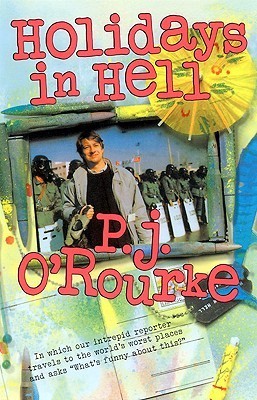
Holidays in Hell: In Which Our Intrepid Reporter Travels to the World's Worst Places and Asks, What's Funny about This?
Book Description
What’s the punchline when disaster strikes? P.J. O'Rourke takes readers on a wild ride through the world’s most chaotic locales, where war, famine, and mayhem become the backdrop for his razor-sharp humor. From the desolate streets of Eastern Europe to the chaotic markets of the Middle East, every destination offers a fresh perspective on humanity's resilience—and absurdity. With his fearless wit and keen observations, O'Rourke uncovers the unexpected hilarity lurking in misery. Can laughter truly emerge from the ashes of despair, or is tragedy the ultimate joke? Enter the madness and discover for yourself.
Quick Book Summary
"Holidays in Hell" by P.J. O’Rourke is a darkly comedic travelogue through some of the world's most troubled regions in the 1980s. Combining sharp journalism with wit, O’Rourke recounts his journeys to war-torn, impoverished, and politically chaotic places, scrutinizing the absurdities of global disasters and human folly. From Lebanon and El Salvador to Warsaw and South Africa, O’Rourke offers biting social commentary and exposes the ironies of international politics. His irreverence highlights both the resilience and contradictions of the people he meets and the situations he finds himself in. The book asks whether humor can provide not just relief but insight amid despair, ultimately suggesting that laughter is a powerful tool against misery and confusion.



Summary of Key Ideas
Table of Contents
Finding Humor Amid Chaos
O’Rourke embarks on journeys to global hotspots, places typically stricken by war, upheaval, or economic collapse. Instead of focusing solely on the horror or pity of these destinations, he uses humor to shed light on the surreal experiences tourists and locals face alike. His narrative is not one of traditional tourism but of searching for comedy in the smallest cracks of human misery. Humor becomes a weapon to expose, cope with, and sometimes even appreciate the absurd extremes found in these troubled regions.
Irony of International Politics
Throughout the book, political and social ironies are pervasive. O’Rourke’s reports from countries like Nicaragua, El Salvador, and the Middle East highlight the contradictions that plague international relations. He pokes fun at the bureaucratic inefficiency of foreign aid, the ideological absurdities of Cold War rivalries, and the way foreign journalists (including himself) can become just as farcical as the situations they cover. His outsider’s perspective skewers propaganda and political posturing, offering a lens to examine how deeply flawed human institutions can be.
Survival and Human Resilience
The book also dwells on the resilience and adaptability of people living in crisis. Amid depictions of war and deprivation, O’Rourke observes those who find ways to survive, resist, and even laugh. He profiles a variety of characters, from stoic citizens to eccentric officials, all of whom display remarkable endurance. These glimpses into the lives of everyday survivors offer hope and humanity within the surrounding madness, suggesting that laughter indeed helps people endure the unbearable.
Cultural Absurdities in Crisis
Cultural absurdities come alive through O’Rourke’s satirical lens. He mocks Western tourists and aid workers who see themselves as saviors, while also highlighting the often surreal blend of local customs and imported modernity. His descriptions of markets, hotels, and diplomatic missions add a layer of farce to already chaotic environments, exposing the quirks, misunderstandings, and sometimes insensitive interventions that make these places both tragic and comic.
Limits and Ethics of Comedic Journalism
Underlying O’Rourke’s approach is an exploration of the boundaries and responsibilities of comedic journalism. He openly questions the propriety of laughing at others’ suffering and reflects on the role of satire when reporting on tragedy. By sharing his own discomforts and ethical dilemmas, he invites readers to consider the uses—and misuses—of humor in dark contexts. Ultimately, the book argues that jokes not only provide a coping mechanism but also a unique perspective for understanding the world’s most dire predicaments.
Download This Summary
Get a free PDF of this summary instantly — no email required.