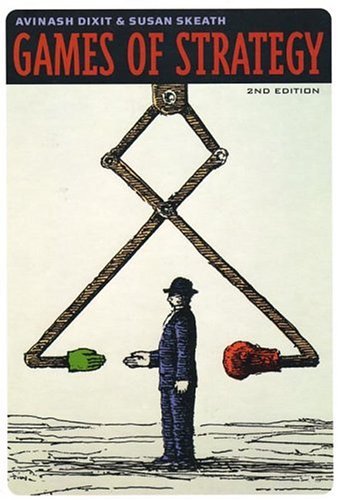
Games of Strategy
Book Description
In a world where every decision becomes a high-stakes game, "Games of Strategy" unveils the intricate dance of rivalry and cooperation that shapes our lives. Avinash K. Dixit expertly decodes the art of strategic thinking, bridging the gap between theory and real-world application. From negotiating deals to navigating personal relationships, this compelling guide showcases how understanding the strategies behind choices can lead to remarkable outcomes. Everyone is playing, but who will come out on top? What tactical moves are you missing that could change the game forever?
Quick Book Summary
"Games of Strategy" by Avinash K. Dixit offers a comprehensive introduction to the concept of strategic thinking, as seen through the lens of game theory. Blending accessible theory with real-world examples, the book explains how individuals and organizations make decisions when outcomes depend on the actions of others. It covers foundational concepts like Nash equilibrium, credible threats, and signaling, illustrating how people anticipate and influence the choices of rivals, partners, and competitors. The text equips readers with analytical tools to dissect situations from business negotiations to international diplomacy and everyday dilemmas. By demystifying the strategies behind competitive and cooperative interactions, Dixit empowers readers to recognize and deploy effective tactics, ultimately enhancing their ability to navigate complex, strategic environments both professionally and personally.



Summary of Key Ideas
Table of Contents
Making Rational Choices in Interactive Settings
Strategy is about anticipating and influencing the actions of others. Dixit begins by introducing key principles of rational choice, where each player in a game weighs potential outcomes and acts to maximize their benefit. The analysis starts with simple two-player games but rapidly expands to settings with multiple players and complex preferences. Game theory, as presented here, is not just mathematical but fundamentally intuitive—a tool to think clearly about choices in competitive and cooperative environments. By making explicit the strategies available to all players, the book illuminates why rational actors sometimes make choices that may seem counterintuitive at first glance.
Understanding and Predicting Opponent Behavior
A major theme is the importance of understanding your opponent's motives and likely actions. Strategic thinking isn't performed in a vacuum; rather, it requires modeling and predicting what others will do. Through examples drawn from business, politics, war, and even personal relationships, the book demonstrates how outcomes depend on the expectations and responses of all parties involved. Concepts like backward induction and best-response strategies are explained, helping readers forecast how a situation may unfold step by step.
Credible Commitments and Strategic Moves
Strategic moves—commitments, threats, and promises—form the backbone of real-world games. Dixit outlines the conditions under which these moves are credible and effective, showing that merely stating an intention is often insufficient unless it's backed by concrete commitment mechanisms or reputation. The analysis delves into how firms might deter entry by rivals or how countries can credibly signal their willingness to cooperate or retaliate in international negotiations. This section equips readers to recognize and construct robust strategic moves in their own endeavors.
Signaling and Information Asymmetry
Information plays a critical role in strategic games, and the book dedicates considerable attention to scenarios where players possess unequal information. Concepts such as signaling, screening, and the management of hidden information help explain outcomes in auctions, bargaining, and markets with uncertainty. By mastering these tools, players learn to interpret others' moves, reveal or conceal information effectively, and reshape the game to their advantage.
Balancing Competition and Cooperation
Finally, the book explores the tension between competition and cooperation. Not all games are zero-sum, and often the best outcomes require negotiating to enlarge the collective pie before dividing it. The discussion covers tacit collusion, coordination problems, and repeated interactions that give rise to trust, reputation, and enforcement mechanisms. By understanding these dynamics, readers appreciate how long-term relationships, enforcement of agreements, and mutual recognition of interests are essential for creating stable, mutually beneficial arrangements in business and beyond.
Download This Summary
Get a free PDF of this summary instantly — no email required.