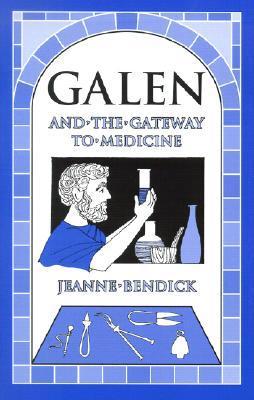
Galen and the Gateway to Medicine
Book Description
A young boy's fascination with healing sparks a journey that will change the course of medicine forever. Follow Galen as he navigates the bustling streets of ancient Rome, uncovering secrets hidden within the human body and battling the skepticism of those around him. With each groundbreaking discovery, he pushes the boundaries of knowledge, risking everything to stand against the tide of ignorance and superstition. The stakes are high, and lives hang in the balance. Will Galen rise to become a legend and unlock the true power of medicine, or will fear and doubt keep him from his destiny?
Quick Book Summary
"Galen and the Gateway to Medicine" by Jeanne Bendick presents the extraordinary life and pioneering discoveries of Galen, a Greek physician in ancient Rome whose curiosity and dedication transformed the field of medicine. Through vividly told anecdotes and illustrations, the book introduces young readers to Galen’s early fascination with healing, his relentless quest for knowledge, and his battles against prevailing ignorance and superstition. Readers explore how Galen’s experiments and observations advanced anatomy, surgery, and understanding of the human body. Despite skepticism and resistance from contemporaries, Galen’s methods and bold spirit set new standards, influencing medical science for centuries. Bendick crafts an inspiring biography that makes complex scientific achievements accessible and highlights the enduring value of reason, perseverance, and compassion in shaping progress.





Summary of Key Ideas
Table of Contents
Curiosity and the Origins of Medical Discovery
Galen’s story begins in ancient Pergamum, where his youthful curiosity about illness and health leads him to study under multiple teachers, including his father and prominent local physicians. Inspired by the healing arts and philosophy, he devotes himself to understanding how the body works. This early passion sets the stage for his lifelong quest for knowledge, as he observes, asks questions, and learns from every available source, always challenging accepted ideas and seeking the truth behind symptoms and disease.
Standing Against Ignorance and Superstition
As Galen travels to Alexandria and later to Rome, he faces a world rife with superstition and entrenched tradition. Doctors and scholars cling to ancient beliefs, often resisting new methods and knowledge out of fear or pride. Despite facing skepticism and sometimes hostility, Galen remains steadfast, performing demonstrations and engaging in debates to prove his findings. His willingness to dissect animals, observe injuries, and question authority marks a turning point, encouraging a more scientific and rational approach to medicine.
Scientific Observation and Experimentation
Galen’s methodical approach revolutionizes the study of anatomy and treatment. By emphasizing firsthand observation, detailed experiments, and logical reasoning, he moves away from reliance on mystical explanations. Galen’s experiments—such as nerve severing to demonstrate bodily functions—allow for unprecedented understanding of how organs and systems work. His insistence on careful diagnosis and treatment, tailored to the patient, shifts medicine from guesswork to a more systematic science.
Transforming Medicine and Anatomy
Through his groundbreaking discoveries, Galen raises the status of doctors and influences medicine for centuries. His extensive writings become textbooks for generations of physicians in both the Roman world and medieval Europe. Galen’s advocacy for knowledge, compassion for patients, and courage in challenging orthodoxy leave a profound legacy, demonstrating the enduring importance of scientific inquiry and critical thinking.
Legacy and Influence on Future Generations
Bendick’s biography not only recounts Galen’s remarkable achievements but also highlights the timeless value of curiosity and perseverance. The narrative portrays Galen as both a trailblazer and a human being—one whose story encourages readers to pursue truth, question accepted wisdom, and use knowledge to serve others. Ultimately, Galen’s journey through adversity to discovery offers an inspiring lesson about the power of reason—and the gateway it opens to progress for all humanity.
Download This Summary
Get a free PDF of this summary instantly — no email required.