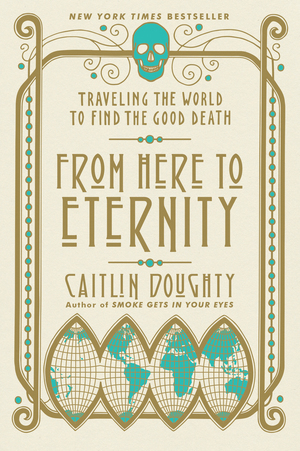
From Here to Eternity: Traveling the World to Find the Good Death
Book Description
What if the journey to the end of life could be a path to understanding? In "From Here to Eternity: Traveling the World to Find the Good Death," Caitlin Doughty embarks on a vivid quest across cultures, exploring how different societies confront mortality with grace and acceptance. With each destination, she unveils powerful stories that challenge Western taboos, revealing rituals that embrace death as a vital part of life. Through vivid narrative and thought-provoking insights, Doughty invites readers to reconsider their own perspectives on death. What does it truly mean to die well, and can we learn to live better in the process?
Quick Book Summary
"From Here to Eternity" by Caitlin Doughty is a thought-provoking exploration of death rituals and beliefs from cultures around the world. Doughty, a mortician and advocate for death acceptance, travels from rural Indonesia to colorful Bolivia, seeking out societies that treat death not with fear or avoidance, but as a natural and even beautiful part of life. Through her travels, she reveals the limitations and sterility of Western death practices, highlighting how rituals elsewhere foster community, healing, and enduring connections with the deceased. Blending memoir, travel writing, and cultural criticism, Doughty challenges readers to confront their own mortality and rethink what it means to achieve a "good death," suggesting that embracing mortality may ultimately teach us how to live more meaningfully.



Summary of Key Ideas
Table of Contents
Cultural Diversity in Death Practices
Caitlin Doughty embarks on a global journey to investigate how various cultures approach death, departing from the Western norms dominated by clinical, impersonal, and commercialized end-of-life rituals. She visits places such as Indonesia, Mexico, Spain, and Japan, each offering unique customs—from family members washing and dressing their dead to communal celebrations that affirm the ongoing presence of ancestors. These immersive encounters illuminate how death can be integrated into daily life rather than shunned or hidden away.
Challenging Western Death Taboos
Contrast with Western societies is a recurring theme, where conversations about death are often stifled and professionalized. Doughty exposes how the modern funeral industry in the U.S. and Europe has distanced families from death, resulting in both emotional detachment and a lack of meaningful mourning. By witnessing open-air cremations in Colorado or celebratory fareswells in Bolivia, she reveals how ritual and proximity can help to demystify and humanize death.
Death as Community and Continuity
A key insight throughout Doughty’s journey is the role of community and continuity. In many societies, death is not a rupture but a transition; living relatives maintain relationships with the dead through regular rituals, graveside gatherings, and altars at home. These customs foster a collective approach to grief and remembrance, ensuring that loss is both shared and integrated into community identity.
Rituals of Remembrance and Grief
Doughty’s vivid storytelling brings attention to rituals that celebrate, mourn, and honor the dead. Whether it’s the Day of the Dead in Mexico or the Ma’nene festival in Indonesia, she demonstrates how acts of remembrance help people process sorrow, find comfort, and keep memories alive. Such practices challenge the Western tendency to regard grief as a private, time-limited affair and show the healing power of communal remembrance.
Redefining the 'Good Death'
Ultimately, the book encourages readers to reflect on what constitutes a “good death.” Doughty argues that by acknowledging mortality and engaging in personal or collective rituals, we can reclaim autonomy over our final moments and offer greater compassion to ourselves and others. Her journey suggests that redefining our relationship to death—making it visible, participatory, and meaningful—can not only improve how we die but profoundly reshape how we live.
Download This Summary
Get a free PDF of this summary instantly — no email required.