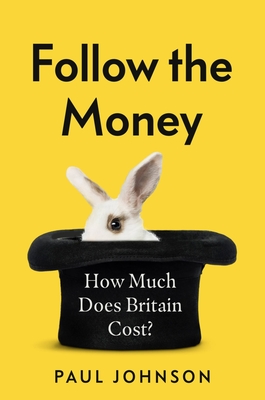
Follow The Money: How much does Britain cost?
Book Description
What if the true cost of a nation lay hidden beneath a sea of figures and policies? Dive into the gripping world of public finances with Paul Johnson's "Follow The Money: How much does Britain cost?" Unravel the tangled web of expenditure, taxation, and economic impact that shapes everyday life in Britain. With razor-sharp analysis and compelling insights, this book transforms dry data into a riveting exploration of choices that define a society. Will understanding the fiscal landscape empower citizens or plunge them deeper into disillusionment? Discover how much Britain really costs—and who pays the price.
Quick Book Summary
Paul Johnson’s "Follow The Money: How much does Britain cost?" offers an accessible, illuminating journey deep into the mechanics of Britain’s public finances. Johnson, director of the Institute for Fiscal Studies, pulls back the curtain on where government money comes from, how it's allocated, and what this means for citizens. He deciphers complex spending—lavished on health, pensions, education, and welfare—and casts a critical eye on taxation and its implications for fairness and sustainability. The book explores underlying economic trade-offs and the immense impact of political decisions on society’s fabric. With evidence-driven insights, Johnson challenges preconceived notions about government waste, the limits of public spending, and the tough choices ahead. Ultimately, readers are left empowered to question who really pays for Britain and the cost of the services and safety nets they rely upon.




Summary of Key Ideas
Table of Contents
The True Scale and Structure of Public Spending
Johnson begins by examining the sheer scale of government spending in Britain, highlighting how public funds are distributed across health, welfare, pensions, education, and infrastructure. He dismantles common misconceptions about where money goes, revealing that while some areas like foreign aid draw criticism, they form only a tiny part of total expenditure compared to massive commitments such as the National Health Service and state pensions. The book underscores the challenge of sustaining these big-ticket items as the population ages and demands grow.
Taxation: Who Pays and How
Next, Johnson scrutinizes Britain’s complex tax system—its primary means for funding public services. He elucidates the sources of government revenue, from income tax and value-added tax to less obvious levies like National Insurance and inheritance tax. Johnson illustrates who bears the bulk of the tax burden, exposes inconsistencies in the system, and discusses the perennial debate over what constitutes a fair share. He also explores the consequences of tax policy choices on inequality and incentivizing behavior.
Economic Trade-Offs and Policy Dilemmas
The narrative then pivots to the economic trade-offs inherent in any fiscal decision. Johnson emphasizes that every pound spent or saved involves tough choices: more investment in healthcare may mean fewer resources for education or infrastructure. He discusses the pressures of political cycles, voter expectations, and short-termism, all of which can undermine sound long-term budgeting. Johnson highlights dilemmas around borrowing, debt, and balancing immediate needs against future obligations, especially during crises like the COVID-19 pandemic.
The Social Impact of Fiscal Choices
Social implications loom large as Johnson assesses how public finances shape everyday life for ordinary Britons. He connects high-level policy decisions about benefits, taxes, and spending to their real-world impacts—on poverty, social mobility, and wellbeing. The book provides a sobering look at regional disparities, intergenerational equity, and the often-hidden effects government choices have on vulnerable populations. Johnson urges readers to reflect on the kind of society they want and the necessary cost to achieve it.
Transparency and Public Understanding
Throughout, Johnson champions greater transparency and public engagement in understanding national finances. He calls for clearer communication from policymakers, improved scrutiny of spending promises, and informed debate about taxation and investment. By demystifying government budgets and challenging oversimplified narratives about waste, he empowers citizens to hold leaders accountable. Johnson concludes that while Britain’s financial choices are difficult and complex, a better-informed public is essential for making not just affordable but sustainable and fair decisions for the nation’s future.
Download This Summary
Get a free PDF of this summary instantly — no email required.