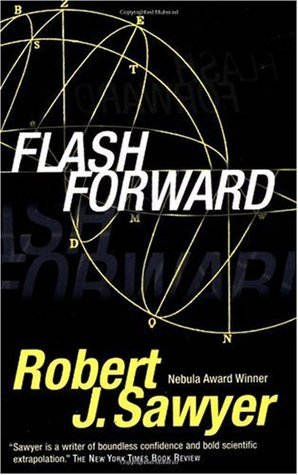
Flashforward
Book Description
What if one moment could change everything? A colossal experiment at the Large Hadron Collider sends the world spiraling into chaos as everyone experiences a vivid flash forward into their own futures. For some, it's a glimpse of hope; for others, a harbinger of disaster. As time begins to unravel, the lives of scientists, loved ones, and strangers collide in unexpected ways, revealing dark secrets and unquenchable desires. With humanity facing a ticking clock, can the truth be unraveled before it’s too late? What will you do when the future becomes your present?
Quick Book Summary
"Flashforward" by Robert J. Sawyer explores the chaos and wonder that ensue when a scientific experiment at CERN causes the entire world to blackout for two minutes, during which each person experiences a vision of their life more than twenty years in the future. The incident sets off a global crisis as people struggle with the implications of fate, free will, and destiny. Some see hopeful futures; others witness tragedy or death, dramatically altering relationships, ambitions, and the very fabric of society. As scientists at the center of the experiment attempt to uncover what triggered the phenomenon, they confront questions about time, reality, and human choice. The race to understand whether the future is set or mutable underpins a tense narrative where personal and collective destinies hang in the balance.



Summary of Key Ideas
Table of Contents
The Impact of Seeing the Future
When a particle physics experiment at CERN goes awry, the world’s population collectively blacks out for two minutes and experiences a vivid vision of their lives twenty-one years in the future. The immediate aftermath is chaos: accidents erupt globally as people lose consciousness, but the true upheaval comes as millions grapple with the meaning of what they saw—some experiencing joy, others terror or even the knowledge of their own future death. This unprecedented phenomenon ignites worldwide debate about fate, destiny, and the consequences of scientific progress.
Fate Versus Free Will
The scientists at CERN, including the novel’s protagonists, are quick to investigate the blackout and its cause. They consider that their actions might have fractured the fabric of time itself, and wrestle with the moral responsibilities of pushing the boundaries of human knowledge. As they probe the origins of the flash forward and its potential for inevitability versus changeability, they confront the possibility that observation fundamentally alters the observed future. The book probes the ethics of scientific discovery, especially when it intrudes on existential questions about humanity’s place in the universe.
Scientific Curiosity and Ethical Dilemmas
Meanwhile, individuals and societies worldwide react to their future glimpses in different ways. Relationships shift dramatically as characters try to either fulfill or prevent what they saw. Some embrace visions of happiness or success, pivoting their current lives; others become paralyzed by despair or driven to desperate acts. The so-called butterfly effect manifests as people’s actions ripple outward, sometimes in unintended and chaotic ways, altering lives and histories as the predicted future grows ever more ambiguous.
The Butterfly Effect on Relationships and Society
As the appointed date of the prophesied future approaches, tension mounts. Scientists and laypeople alike hope to determine whether the future is immutable or can be changed by conscious choice. The story weaves together intimate character arcs—of love, betrayal, ambition, and regret—with high-stakes scientific detective work. The looming question persists: do we truly have free will, or are our destinies locked in by the nature of the universe?
Coping with Uncertainty and Predestination
In the novel’s climax, a second planned experiment threatens to repeat or alter the original event. The world holds its breath, grappling with acceptance, resistance, and hope. The story ultimately leaves readers to ponder the meaning of fate, the responsibility of scientific discovery, and the courage it takes to face an uncertain future—whether it is the one we envision or the one we create by our choices.
Download This Summary
Get a free PDF of this summary instantly — no email required.