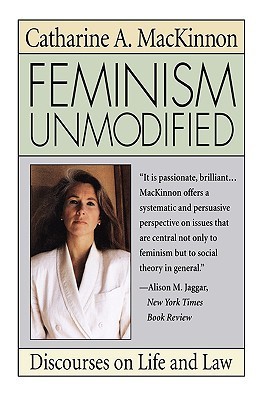
Feminism Unmodified: Discourses on Life and Law
Book Description
Power, vulnerability, and the intricate dance of life and law collide in "Feminism Unmodified: Discourses on Life and Law." Catharine A. MacKinnon unravels the harsh realities of gender inequality, boldly challenging the norms that bind women to systemic oppression. Through incisive discourse, she exposes the legal landscapes that perpetuate injustice, igniting a call for transformative change. Each argument resonates like a rallying cry, as MacKinnon deftly navigates the intersections of law, power, and feminism. What happens when the fight for equality dares to clash with institutional power? The answers lie within these pages—a journey of revelation and resistance awaits.
Quick Book Summary
"Feminism Unmodified: Discourses on Life and Law" by Catharine A. MacKinnon offers a powerful critique of legal and societal structures that maintain gender inequality. Through a collection of influential essays, MacKinnon challenges the notion that law is neutral, exposing how it often validates male dominance and silences women's experiences. She tackles wide-ranging issues such as sexual harassment, pornography, rape, and the limitations of traditional feminist legal theory, advocating for a transformative, radical feminism that acknowledges power imbalances and demands change. MacKinnon's arguments are both theoretical and practical, providing passionate, clear-eyed insight into the ways law can oppress as well as liberate. The book calls readers to recognize the profound connection between law and lived experience, and confronts the uncomfortable truths that underlie gender dynamics in society.






Summary of Key Ideas
Table of Contents
Law as an Instrument of Male Dominance
At the heart of "Feminism Unmodified" is MacKinnon's analysis of how law functions not as an impartial arbiter, but as an instrument that upholds male dominance. She dismantles the myth of legal neutrality, arguing that the law is created from a male perspective, inherently favoring men’s experiences and reinforcing existing hierarchies. Through landmark essays, MacKinnon shows how seemingly objective standards systematically disadvantage women, protecting those in power and marginalizing those who are vulnerable.
The Subjectivity of Women's Experience
MacKinnon centers women’s lived experiences, insisting that legal and societal analyses must start from, and be accountable to, the realities of women’s lives. She critiques frameworks that overlook or invalidate women's subjectivity, such as those that ignore the complexities of consent and coercion. By prioritizing women's perspectives, MacKinnon illuminates how deeply ingrained, often invisible assumptions shape legal outcomes and public perceptions surrounding gender-based harms.
Redefining Sexual Harassment and Sexual Violence
A core theme is MacKinnon's redefinition of sexual harassment and violence. She was instrumental in conceptualizing sexual harassment as a form of sex discrimination, fundamentally shifting legal understanding and public recognition of the harm. She exposes how rape law, pornography, and workplace misconduct standards are framed from a male point of view, masking the structural nature of abuse and blaming victims instead of holding perpetrators accountable.
Critiquing Equality and the Limits of Liberal Legalism
MacKinnon interrogates the limitations of liberal legal approaches, particularly the concept of formal equality. She contends that demanding identical treatment under the law fails to account for preexisting power imbalances, rendering equality superficial and insufficient. Liberal legal theory, in MacKinnon’s view, too often accepts the status quo, missing the deeper need for substantive, transformative justice that addresses real, structural inequalities between women and men.
Radical Feminism and Social Transformation
Ultimately, MacKinnon advocates for radical feminism, emphasizing the necessity of profound social and legal transformation. She urges the legal system to recognize and rectify the deep entrenchment of gendered power, to validate women’s realities, and to pursue justice beyond symbolic gestures. "Feminism Unmodified" stands as a passionate blueprint for feminist legal thought and action, inspiring readers to question institutions, challenge oppression, and envision a more equitable world.
Download This Summary
Get a free PDF of this summary instantly — no email required.