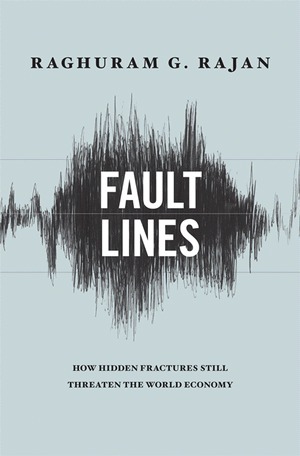
Fault Lines: How Hidden Fractures Still Threaten the World Economy
Book Description
Beneath the surface of global prosperity lies a web of hidden fractures, threatening the very foundations of economies everywhere. Raghuram G. Rajan unveils the tumultuous forces shaping our financial landscape, exposing the risks that lurk in the shadows of our interconnected world. From the unseen vulnerabilities in market systems to the powerful institutions grappling with their own failings, this gripping exploration reveals the delicate balance between success and upheaval. As economic storms brew on the horizon, one question echoes: Are we prepared to confront the fault lines that could unravel it all?
Quick Book Summary
In "Fault Lines: How Hidden Fractures Still Threaten the World Economy," Raghuram G. Rajan analyzes the underlying vulnerabilities in the global economic and financial systems that led to the 2008 financial crisis and threaten ongoing stability. Rajan argues that the crisis was not solely caused by mismanaged regulation or financial excess, but also by deep, often overlooked structural weaknesses in both developed and developing countries. He highlights political pressures in advanced economies, global imbalances, and the role of institutions in exacerbating risks. By examining the interplay between domestic policy decisions and international financial flows, Rajan warns that unless these fault lines are addressed through coordinated reforms and prudent policies, the potential for future crises remains significant and persistent.




Summary of Key Ideas
Table of Contents
Structural Weaknesses in Advanced Economies
Raghuram G. Rajan begins by identifying the key structural weaknesses in advanced economies, particularly the United States. He argues that rising income inequality and stagnant middle-class wages created immense political pressure for accessible credit and home ownership. In response, policies encouraged riskier lending, fueling a credit bubble in housing markets. This environment set the stage for vulnerabilities that would later manifest in the global financial crisis, as subprime loans proliferated and household debt soared.
Global Economic Imbalances and Capital Flows
Next, Rajan explores global economic imbalances, focusing on capital flows between countries. Emerging economies, notably China and oil-exporting nations, accumulated vast reserves, investing heavily in developed economies. This influx of capital kept interest rates low and contributed to risk-taking behavior in the financial sector. The imbalances made the global financial system interconnected and fragile, as disruptions in one region could quickly ripple through others, amplifying the dangers posed by already overstretched borrowers and lenders.
Institutional Failures and Inadequate Regulation
Rajan emphasizes how institutional failures and inadequate regulation contributed to the crisis. He critiques financial institutions that pursued short-term profits over long-term stability, often encouraged by perverse incentives. Regulators, in turn, failed to keep pace with rapidly evolving financial instruments and business models, allowing systemic risk to grow unchecked. This deficiency in oversight left the system vulnerable to shocks when housing prices reversed and financial products tied to mortgages collapsed in value.
Political Pressures and Social Inequality
Political pressures and growing social inequality are underscored as critical fault lines. Policymakers, seeking quick fixes to deeper structural issues, often prioritized immediate political gains over sustainable economic health. This fostered a cycle where easy credit temporarily masked, but did not resolve, underlying economic challenges faced by large segments of the population. Rajan contends that without addressing social disparities, democratic governments will remain inclined to adopt risky financial solutions.
Pathways Toward Reform and Resilience
To address these complex problems, Rajan proposes comprehensive reforms to improve resilience. He advocates for more targeted government intervention, better regulation of financial institutions, and international cooperation to reduce global imbalances. By strengthening social safety nets, investing in education, and aligning policy incentives with long-term stability, countries can build a more robust economic foundation. Rajan concludes that managing these hidden fault lines is essential to prevent future crises and ensure sustained prosperity.
Download This Summary
Get a free PDF of this summary instantly — no email required.