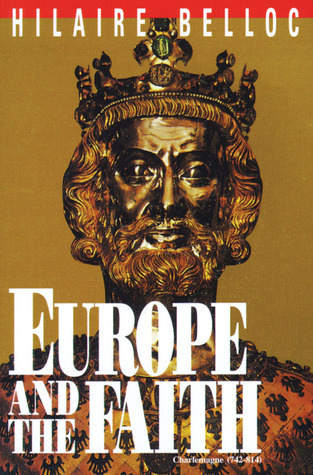
Europe and the Faith
Book Description
A clash of ideals unfolds as the heart of Europe beats to a rhythmic pulse of faith and reason. Hilaire Belloc weaves a tapestry of history, philosophy, and doctrine, revealing how Christianity shaped the continent's destiny and sparked both harmony and conflict. In a world teetering between enlightenment and belief, tensions rise as the fundamentals of identity, culture, and morality collide. Can a society find its footing amidst the chaos, or will it succumb to the shadows of doubt? Discover the profound legacy that continues to influence Europe—what will it take for the soul of a nation to be reborn?
Quick Book Summary
"Europe and the Faith" by Hilaire Belloc is a compelling exploration of the integral role Christianity, specifically Catholicism, played in shaping European civilization. Belloc asserts that Europe's unity, culture, and identity stem from its Christian roots, and that the faith has been both a source of cohesion and contention throughout history. He traces the continent’s trajectory from the Roman Empire through the Reformation and Enlightenment, identifying persistent struggles between spiritual authority and secular forces. Belloc challenges the narrative of unstoppable progress through secular reason, arguing instead for the continuous influence of Catholic tradition. The book invites readers to reevaluate how religious belief has molded Europe's past and questions what is at stake when that foundation is undermined, suggesting only through understanding this heritage can Europe hope for renewal and clarity in the modern world.




Summary of Key Ideas
Table of Contents
Christianity as the Foundation of European Identity
Belloc begins by asserting that Europe’s very essence and historical identity are inextricably linked to Christianity, and more specifically, Catholicism. He argues that before the faith’s arrival, Europe lacked the unity and cultural cohesion it later developed. The Christian worldview, with its unified vision of humanity and morality, provided the continent with a common language, law, and sense of purpose. This foundation enabled the flourishing of institutions, arts, and communal life that have come to define European civilization, distinguishing it from other societies influenced by purely tribal or imperial systems.
Conflict Between Faith and Secularism
However, Belloc identifies deep tensions that arose as Europe moved toward modernity. With the arrival of the Renaissance and Enlightenment, reason began to challenge faith’s central role. He underscores how these shifts led to fractures within European society, with secularism gradually eroding the centrality of Catholic doctrine in public and private life. Belloc critiques the rise of individualism and rationalism, expressing concern that without the guiding principles of faith, European culture would become fragmented and lose its distinct identity.
The Impact of the Reformation
A pivotal event in Belloc’s analysis is the Protestant Reformation, which he describes as a watershed moment that shattered religious unity. He examines how the fracturing of Christendom led to both intense conflict and the realignment of political power. The resulting wars of religion, along with the emergence of strong nation-states, signaled a shift away from a pan-European Christian identity toward localized, often antagonistic, national identities. For Belloc, this rupture introduced a spiritual and cultural crisis that continues to impact Europe.
Continuity and Change in European Culture
Despite these disruptions, Belloc assures that elements of continuity have persisted through centuries of transformation. He points to the enduring influence of Catholic thought in philosophy, education, and social doctrines, which have shaped the continent’s legal and moral frameworks. Yet, he warns that the dilution or abandonment of this heritage poses a threat to Europe’s mission and vitality. The core traditions fostered during the Catholic centuries remain the bedrock of civilization, even if often unacknowledged in the modern era.
The Role of History in Shaping Modern Europe
In concluding, Belloc calls for a renewed engagement with Europe’s Christian past, not as mere nostalgia but as a necessary reckoning with its formative truths. He contends that a society unaware of its roots is prone to existential drift and cultural amnesia. Only by honestly recognizing the role of faith in shaping Europe’s spirit can contemporary society chart a meaningful future and counter the rise of relativism and moral confusion. Through this historical reflection, Belloc offers a path toward the potential rebirth of Europe’s soul.
Download This Summary
Get a free PDF of this summary instantly — no email required.